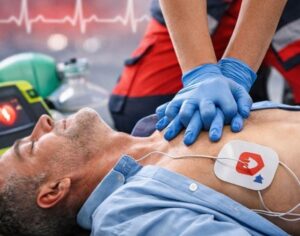
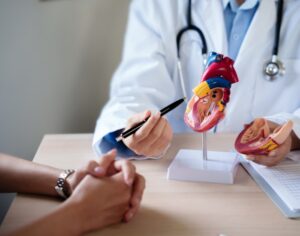
The most common heart tests are the EKG, echocardiogram, stress test, Holter or event monitor, blood tests, coronary calcium scan, CT angiography and cardiac catheterization. Each answers a different question: rhythm, pumping and valves, blood flow during exertion, plaque, or the detailed anatomy of the arteries. Your cardiologist chooses tests based on your symptoms and risk.

Medically reviewed by
Board-certified cardiologist · Katy & Sugar Land, TX
Fellowship-trained in cardiovascular disease, interventional cardiology, echocardiography and advanced heart failure and transplant cardiology. Former Assistant Professor of Cardiology at McGovern Medical School.
Common heart tests at a glance
No single test checks everything. Cardiologists combine tests to answer specific questions:
| Test | What it checks | What to expect |
|---|---|---|
| EKG (ECG) | Heart rhythm, rate, signs of strain or prior heart attack | Stickers on the chest; about 5 minutes; painless |
| Echocardiogram | Pumping strength (ejection fraction), valves, chamber size, fluid around the heart | Ultrasound probe on the chest; about 30 to 60 minutes |
| Exercise stress test | How the heart handles exertion; signs of reduced blood flow | Treadmill walking with EKG monitoring |
| Stress echo / nuclear stress test | Blood flow to heart muscle with imaging | Exercise or medicine to stress the heart, plus imaging |
| Holter, event monitor, MCT | Heart rhythm over 1 day to several weeks | Wearable monitor at home |
| Blood tests | Cholesterol, lipoprotein(a), blood sugar, kidney function, BNP, troponin, hs-CRP | Blood draw |
| Coronary calcium scan | Calcified plaque in heart arteries | Quick CT scan without dye |
| CT coronary angiography | Detailed images of coronary arteries | CT scan with contrast dye |
| Cardiac catheterization | Gold-standard view of arteries; can treat blockages | Hospital procedure through the wrist or groin |
| Transesophageal echo (TEE) | Close-up view of valves and heart chambers | Probe passed into the esophagus under sedation |
Which heart test do I need?
- Chest pain with exertion: stress testing, sometimes with imaging, or CT angiography.
- Shortness of breath or swelling: echocardiogram and BNP.
- Palpitations or fainting: EKG plus a heart monitor, and an echocardiogram.
- No symptoms but risk factors: cholesterol testing, risk assessment and sometimes a coronary calcium scan. See heart disease risk assessment.
- Murmur: echocardiogram. See heart murmur.
- Before surgery: depends on your risk; see preoperative clearance.
How to prepare
- EKG and echo: no special preparation; wear a top that is easy to remove.
- Stress test: wear walking shoes; you may be asked to avoid caffeine and some medicines beforehand. Follow the instructions you are given.
- Nuclear stress test: often requires fasting and avoiding caffeine for a set time.
- CT scans: tell staff about kidney problems or contrast allergies.
- Catheterization: fasting and medicine instructions; arrange a ride home.
The MedlinePlus encyclopedia describes what to expect during an exercise stress test.
If a test is abnormal
An abnormal result is a starting point, not a diagnosis. Your cardiologist will interpret it with your symptoms and other findings and may recommend another test to confirm. See abnormal EKG and abnormal stress test.
Heart testing in Katy and Sugar Land
EKG and echocardiogram testing are available in our Katy and Sugar Land offices, and Dr. Adnan Khalid reviews results himself. Other tests, including stress imaging, CT and catheterization, are arranged with partner facilities and affiliated hospitals as needed. See all tests and treatments.
Katy office: 410 W Grand Pkwy S, Suite 4D, Katy, TX 77494
Sugar Land office: 7102 Tarrington Ave, Suite 505, Sugar Land, TX 77479
Phone: (713) 258-6111
We also see patients from Fulshear, Richmond, Rosenberg, Stafford, Missouri City and west Houston.
Need a heart test ordered or reviewed?
Request a cardiology visit in Katy or Sugar Land.
Having symptoms right now? Call 911. Do not wait for an appointment.
Frequently asked questions
What are the most common heart tests?
EKG, echocardiogram, stress test, Holter or event monitor, blood tests, coronary calcium scan, CT angiography and cardiac catheterization.
What heart test shows blocked arteries?
Stress testing can suggest reduced blood flow; CT angiography and cardiac catheterization show the arteries directly. A calcium scan shows calcified plaque.
Is an EKG enough to check my heart?
An EKG checks rhythm and some structural clues, but it can be normal even with heart disease. Other tests may be needed depending on symptoms.
What is the difference between an EKG and an echocardiogram?
An EKG records electrical activity. An echocardiogram is an ultrasound that shows the heart’s structure, pumping and valves.
How do I prepare for a stress test?
Wear comfortable shoes and follow instructions about caffeine, food and medicines. Nuclear tests have additional preparation.
Are heart tests painful?
Most are painless. Catheterization involves a small puncture with local anesthetic and sedation.
Trusted health resources
- Echocardiogram, MedlinePlus Medical Encyclopedia
- Exercise stress test, MedlinePlus Medical Encyclopedia
- Nuclear stress test, MedlinePlus Medical Encyclopedia
- Heart Attack: Diagnosis, National Heart, Lung, and Blood Institute (NIH)
Medical disclaimer: This article is for general education and is not a diagnosis or a substitute for care from your own doctor. If you think you may be having a heart attack, stroke or another emergency, call 911 right away.