

How to Perform CPR on an Adult: Step-by-Step Guide
How to perform CPR on an adult: call 911, push hard and fast 2 inches deep at 100 to 120 per minute, and use an AED. Step-by-step hands-only CPR guide.
Cardiologist Serving Katy, Sugar Land, Greater Houston

Dr. Khalid reviews your symptoms, history and test results himself
Visits in Katy and Sugar Land
Catheter and device procedures at an affiliated hospital
Office follow-up on medicines and risk factors
Advanced Cardiology does not have an office in Fulshear. Patients from Fulshear see Adnan Khalid, MD, at our Katy office (410 W Grand Pkwy S, Suite 4D) or our Sugar Land office (7102 Tarrington Ave, Suite 505). Dr. Khalid evaluates and treats coronary artery disease, heart failure, high blood pressure, heart rhythm problems, high cholesterol and peripheral artery disease.
Many patients from Fulshear choose our Katy office on the Grand Parkway, while others prefer our Sugar Land office because it fits their work or family routine. Both offices belong to the same practice, and you see the same physician, Adnan Khalid, MD, at either location. Your records, test results and follow-up plan stay with one practice, whichever office you use.
When you call (713) 258-6111, tell our team which office you prefer. Hours can differ between locations, so please call to confirm office hours for each location before your visit. Phone messages and online requests are not monitored for emergencies.
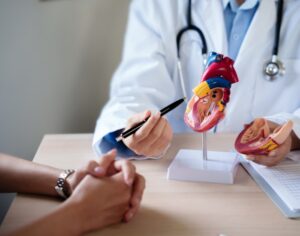
What happens at a first cardiology visit? It usually starts with a conversation. Dr. Khalid asks about your symptoms – when they happen and what makes them better or worse – along with your medical history, family history, medicines and habits such as smoking, activity and sleep. A physical exam follows, including blood pressure and a heart and lung exam. An EKG may be recorded in the office if it is useful. Before you leave, you should understand what Dr. Khalid thinks may be going on, which tests (if any) he recommends and when to follow up.
It helps to bring notes on when your symptoms started and how often they happen, plus home blood pressure readings if you keep them.
Some people are referred by a primary care doctor after a finding that needs a closer look; others make an appointment on their own because of a symptom or a family history. Common reasons include:
If your primary care doctor practices in Fulshear or elsewhere, ask the office to send the referral and recent notes before your visit. After your evaluation, Dr. Khalid sends a summary back so everyone works from the same plan. You do not always need a referral to see a cardiologist, but some insurance plans require one, and our staff can help you check.

Adnan Khalid, MD, Cardiologist
Adnan Khalid, MD, specializes in treating coronary artery disease, peripheral artery disease, heart failure, hypertension, arrhythmias, and hyperlipidemia. He has over 10 years of experience in the field of cardiovascular medicine.
Dr. Khalid graduated from his medical school among the top 10 out of 250 medical students in his class. He is fellowship trained in cardiovascular diseases, interventional cardiology, advanced heart failure, and transplant cardiology. He is focused on providing personalized and compassionate care. Dr. Khalid believes in spending time with his patients and listening to their needs and is committed to offering excellent care.
Dr. Khalid is an avid reader. He is eager to learn new things; he likes to work out and spend time with his family. When off from work, he likes to travel and spend time in nature along with family and friends. He is married with three children.
American Board of Internal Medicine
Interventional Cardiology
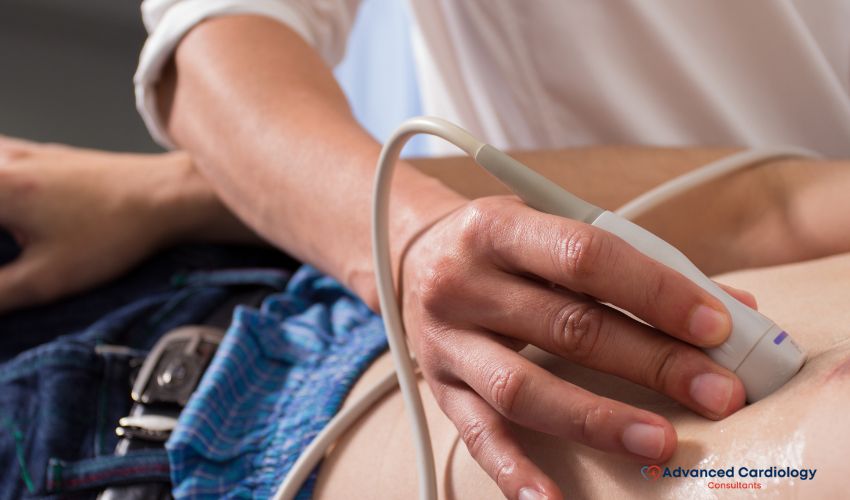
Sometimes. Not everyone needs a cardiologist, and primary care doctors manage many heart risk factors well. A cardiology visit can help when your risk is uncertain or higher than average, for example:
The 2026 ACC/AHA cholesterol guideline uses risk estimates for adults 30 to 79 and, for selected people at borderline or intermediate risk, a coronary calcium score can help guide treatment decisions. The guideline also suggests measuring lipoprotein(a) at least once in adulthood. Dr. Khalid can explain whether these steps apply to you. Read more about our heart disease risk assessment.
If you already have symptoms, do not wait for a routine check-up. Call our office to ask about scheduling, and call 911 for the warning signs listed further down this page.
The practice accepts new patients. To request an appointment, call (713) 258-6111 or use our secure appointment request form. Our team will ask which office you prefer and whether your insurance plan requires a referral.
Advanced Cardiology accepts most major insurance plans. Coverage is verified individually, so our staff will check your benefits before your visit. For a later follow-up, you can ask our office whether a video visit is appropriate; telehealth rules depend on where you are located during the visit.
Conditions
Dr. Khalid cares for people with conditions of the heart and blood vessels, from early risk factors to long-term disease. Some patients need a single evaluation; others are followed over time alongside their primary care doctor.
Coronary artery disease: narrowing of the arteries that supply the heart muscle, which can cause chest discomfort or breathlessness with exertion.
Heart rhythm disorders: arrhythmias such as atrial fibrillation, which can make the heart beat too fast, too slowly or irregularly.
Heart valve disease: valves that leak or do not open fully, sometimes first noticed as a heart murmur.
Heart failure: the heart does not pump or fill as well as the body needs, often causing breathlessness, tiredness or leg swelling.
High blood pressure and high cholesterol: common, often silent risk factors for heart attack and stroke.
Peripheral artery disease: narrowed leg arteries that can cause leg pain when walking.
Leg and ankle swelling: which can have heart, vein or other causes and is worth having checked.
Testing
Not every patient needs testing, and no single test answers every question. Dr. Khalid chooses tests based on your symptoms, exam and risk. EKGs are done in the office; other tests are performed or arranged by our office, and our team will tell you where and when each one takes place.
Your care team will give you preparation instructions for each test. Do not stop any medicine before a test unless your care team specifically tells you to.
Treatment
Once Dr. Khalid has a clear picture, he discusses the options with you. A plan may include:
Dr. Khalid works with your primary care doctor and other specialists and reviews your plan at follow-up visits. For refills between visits, use our prescription request page.
Our offices are not an emergency department. Call 911 for chest discomfort that lasts more than a few minutes or goes away and comes back; shortness of breath; discomfort in the arms, back, neck, jaw or stomach; or a cold sweat, nausea or lightheadedness. For stroke signs – face drooping, arm weakness or speech difficulty – call 911 right away, even if the symptoms go away.
Sources: American Heart Association: Warning Signs of a Heart Attack · American Stroke Association: Stroke Symptoms · ACC: 2026 ACC/AHA Dyslipidemia Guideline · NHLBI: Heart Tests
Please print out your paperwork and bring it to your appointment at Advanced Cardiology. If your insurance requires authorization, please be sure to have that information sent to our office or bring it with you to your appointment, along with any medical records you may have. Please also make sure to bring your insurance cards, photo ID, and medication list.
Thank you, and we look forward to meeting you! Contact us today with any questions.
Most insurance plans accepted
(713) 258-6111
Katy & Sugar Land Cardiologist
# Cooperative & professional staff. Dr. Khalid is highly competent & experienced. Very kind & friendly too.
# He’s A Very Caring & Concerned Doctor. He Asks Important Questions, He Allows Me To Ask Questions & Fully Answers To My Satisfaction. He Diagnosis & Does Whatever It Takes To Fix My Health Issues. He’s A Wonderful Doctor…& Most Of All, I Trust Him & His Staff.
Read More…..
How to perform CPR on an adult: call 911, push hard and fast 2 inches deep at 100 to 120 per minute, and use an AED. Step-by-step hands-only CPR guide.
Cardiac failure and heart failure mean the same thing. Learn the types (HFrEF, HFpEF, left vs right), how it differs from cardiac arrest and how it is treated.

Reasons for shortness of breath include heart failure, coronary disease, asthma, COPD, anemia and anxiety. Learn the clues, when to worry and when to call 911.
When should you see a cardiologist? Learn the symptoms, risk factors and test results that call for a heart specialist, and what to expect at a first visit.
What doctor should you see for chest pain? Learn when to call 911, when to see a cardiologist and which tests to expect in Katy and Sugar Land, TX.
Short of breath walking upstairs? Learn what is normal, when it may signal heart disease or heart failure, the tests a cardiologist uses and when to call 911.
Katy & Sugar Land Cardiologist
Advanced Cardiology welcomes new patients at its offices in Katy and Sugar Land. Call our office or send an appointment request, and our staff will follow up.
Most major insurance plans accepted; coverage is verified individually.
For possible heart attack or stroke symptoms, call 911.