
Abnormal EKG Evaluation
Abnormal EKG Evaluation in Katy & Sugar Land, TX
An abnormal EKG does not automatically mean you have heart disease. Some findings are minor variations that need no treatment, while others can point to a rhythm problem, a prior heart injury, thickening of the heart muscle, or an electrical pattern that deserves a closer look. At Advanced Cardiology, Adnan Khalid, MD reviews abnormal EKG results in the context of your symptoms, history, and risk factors, and determines whether further testing is needed or whether reassurance is the right answer.
Patients are seen in Katy and Sugar Land, often within days of receiving an unexpected result from a physical, a pre-operative visit, or an urgent care clinic.
Board-Certified Cardiologist • Katy & Sugar Land • New Patients Welcome
Important Safety Information
When an Abnormal EKG Is an Emergency
If you were told your EKG showed signs of a heart attack, a dangerous rhythm, or a very slow or very fast heart rate, and you have chest pain, shortness of breath, fainting, or a racing or pounding heartbeat right now, call 911 rather than waiting for an office visit. This page is for stable patients who received an abnormal or borderline result and want to understand what it means and what should happen next.
Understanding Your Result
What Does an Abnormal EKG Mean?
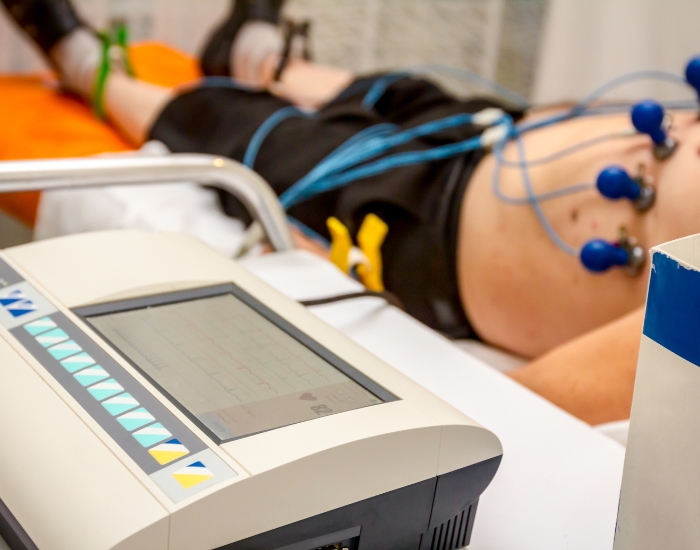
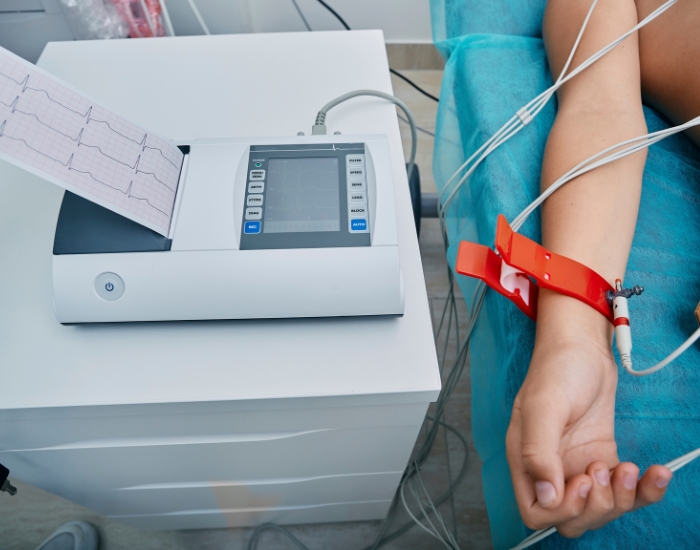
An electrocardiogram (EKG or ECG) records about ten seconds of the heart's electrical activity through electrodes on the chest, arms, and legs. It shows how fast the heart is beating, whether the rhythm is regular, how electrical signals travel through the heart, and whether there are patterns that suggest strain, prior damage, or reduced blood flow.
“Abnormal” is a broad label. The machine's automated reading flags anything outside statistical norms, and a large share of those flags turn out to be harmless: a slow rate in a fit person, a benign variation in the shape of a wave, or a lead placed slightly off. Other findings, such as atrial fibrillation, a conduction block, signs of a previous heart attack, or a prolonged QT interval, carry real meaning and change what a cardiologist recommends.
Two things make the difference: who reads the tracing, and the context around it. A cardiologist reading the actual tracing, alongside your symptoms and risk factors, can usually tell within one visit whether a result is a footnote or a starting point.
When to Seek Evaluation
When Should You See a Cardiologist for an Abnormal EKG?
If your primary care physician or the clinic that performed the test recommended cardiology follow-up, that recommendation is reason enough. Beyond that, a visit is worthwhile when:
- The report mentions atrial fibrillation, atrial flutter, heart block, bundle branch block, or a prolonged QT interval
- The report mentions a possible prior heart attack (“old infarct,” “Q waves”) or ischemic changes
- The report mentions ventricular hypertrophy or left atrial enlargement
- You have symptoms alongside the result: palpitations, chest discomfort, breathlessness, dizziness, or fainting
- You have risk factors such as high blood pressure, diabetes, high cholesterol, smoking, or a family history of early heart disease or sudden death
- The EKG was ordered before surgery and clearance is required
- A previous EKG was normal and this one is different
A borderline result in a young, symptom-free patient with no risk factors often needs nothing more than a repeat tracing and an explanation. Seeing a cardiologist is how you find out which category you are in without guessing.
Common Findings
Common Abnormal EKG Findings
These are the terms patients most often bring to the office. What each one means depends on the rest of your picture.
Sinus Bradycardia or Tachycardia
A normal rhythm that is simply slow (under 60) or fast (over 100). Common in athletes, with anxiety, illness, or certain medications; occasionally a sign of thyroid or heart disease.
Atrial Fibrillation
An irregular rhythm from the upper chambers that raises stroke risk. It is one of the most important findings an EKG can make and always warrants cardiology follow-up.
Bundle Branch Block
Delayed electrical conduction through part of the heart. A right bundle branch block is often benign; a new left bundle branch block deserves a closer look at heart structure.
Heart Block (AV Block)
Signals moving slowly from the upper to lower chambers. First-degree block is usually harmless; higher degrees can cause a slow pulse and may need a pacemaker.
ST or T-Wave Abnormalities
Changes in the ST segment or T wave can reflect reduced blood flow, inflammation, electrolyte shifts, or nothing at all. These are the findings most likely to need a stress test or echocardiogram.
Old Infarct or Hypertrophy
Q waves suggesting an old heart attack, or voltage patterns suggesting a thickened heart muscle from long-standing high blood pressure, both call for an echocardiogram.

Meet Your Cardiologist
Evaluation With Adnan Khalid, MD
Adnan Khalid, MD is a board-certified cardiologist with fellowship training in cardiovascular disease, interventional cardiology, and advanced heart failure and transplant cardiology. Reading EKGs is a daily part of that work, and the value he adds is not the reading itself but the judgment around it: recognizing which patterns are normal variants, which reflect a treatable condition, and which need testing before a conclusion can be drawn.
Dr. Khalid reviews the original tracing rather than relying on the machine's summary, compares it with any prior EKGs, and weighs it against your symptoms and risk profile. Testing is ordered only when it will change the plan. When the result is benign, he says so plainly; when it is not, he explains what it means and what comes next.
Possible Causes
What Can Cause an Abnormal EKG?
The same abnormal tracing can have very different explanations. A cardiologist works through them in roughly this order.
Normal Variants and Technical Factors
Athletic conditioning, body shape, a deep breath during the recording, muscle tremor, or an electrode placed a few centimeters off can all produce a flagged result. A repeat tracing with careful lead placement resolves many “abnormal” EKGs on the spot.
Heart Rhythm and Conduction Problems
Atrial fibrillation, premature beats, SVT, and conduction blocks show up directly on the EKG. Some are intermittent and appear on one tracing but not the next, which is why Holter or event monitoring is often the next step for palpitations.
Structural and Blood Flow Causes
A previous heart attack leaves a lasting signature. Long-standing high blood pressure thickens the heart muscle and changes the voltages. Reduced blood flow from coronary artery disease can alter the ST segment and T waves, particularly on a tracing taken during symptoms.
Medications, Electrolytes, and Other Conditions
Potassium, calcium, and magnesium levels affect the tracing, as do many medications, including some antibiotics, antidepressants, and rhythm drugs that lengthen the QT interval. Thyroid disease, lung disease, sleep apnea, anemia, and fever can all leave marks on an EKG that resolve when the underlying condition is treated.
Your Evaluation
How a Cardiologist Evaluates an Abnormal EKG
Bring the actual EKG printout or a copy of the report, not just the summary line, along with any earlier tracings. Comparing old and new EKGs is often the single most useful step, because a finding that has been present and unchanged for years is much less concerning than a new one.
Symptoms and History
Dr. Khalid asks whether you have noticed palpitations, chest discomfort, breathlessness, dizziness, or fainting, and reviews your blood pressure, cholesterol, diabetes, smoking history, family history, and medications, including supplements and over-the-counter drugs that can affect the heart's rhythm.
Examination and Repeat EKG
The exam includes heart rate and rhythm, blood pressure, and heart and lung sounds. A repeat EKG is performed in the office with careful lead placement so that the two tracings can be compared directly.
Deciding on Testing
From there, one of three things happens. The finding is explained as a normal variant and no further testing is needed. The finding points to a specific question that a targeted test can answer. Or the finding is significant enough that treatment begins right away, as with newly discovered atrial fibrillation.
Cardiac Testing
Cardiac Testing That May Be Recommended
Each test answers a different question. Most patients with an abnormal EKG need at most one or two of these, and some need none.
Repeat EKG
The first step when a finding could be technical or transient. A clean repeat with proper lead placement resolves many flagged results.
Echocardiogram
Answers whether the EKG change reflects a real structural problem: a weakened or thickened heart muscle, a prior heart attack, or a valve issue.
Holter or Event Monitor
For rhythm findings that come and go, a wearable monitor records for days to weeks and matches symptoms to what the heart was doing at the time.
Stress Testing
When ST or T-wave changes raise the question of reduced blood flow, exercise or pharmacologic stress testing shows how the heart responds to workload.
Blood Tests
Electrolytes, thyroid function, and a blood count identify reversible causes of EKG changes and are often ordered alongside the visit.
Advanced Imaging When Needed
Coronary calcium scoring, cardiac CT, or cardiac MRI may be coordinated at an outside facility when the findings warrant a more detailed look at the arteries or heart muscle.
Management
Treatment Depends on the Underlying Cause
An EKG finding is not treated on its own; the condition behind it is. For many patients, the outcome of the visit is a clear explanation and no treatment at all.
When a rhythm disorder is found, management follows the rhythm: blood thinners and rate or rhythm control for atrial fibrillation, medication or ablation for SVT or frequent extra beats, and a pacemaker for significant heart block. When the tracing reflects high blood pressure or a thickened heart, better blood pressure control is the treatment. When stress testing suggests reduced blood flow, care shifts to coronary artery disease management and, if indicated, interventional evaluation coordinated with the hospital.
Medication- and electrolyte-related changes are addressed by adjusting the drug or correcting the imbalance, in coordination with the prescribing physician. In every case, patients leave knowing what the finding means for them, what is being done about it, and when the EKG should be repeated.
Your Visit
What to Expect During Your Cardiology Visit
Bring the EKG itself, or ask the office that performed it to send the tracing ahead of your appointment. Any prior EKGs, even from years ago, are worth tracking down. Bring a full medication and supplement list and any recent lab results.
The visit includes a review of your history and symptoms, a physical examination, and a repeat EKG in the office. Dr. Khalid will show you the tracing, point out what was flagged, and explain whether it matters. If testing is recommended, you will know which test, why, and what each possible result would mean for your plan.
Most patients leave with either a clear answer or a clear next step, and with instructions on which symptoms should prompt a call or a 911 response.
Katy Cardiology Care
Abnormal EKG Cardiologist in Katy, TX
Patients from Katy, Cinco Ranch, Fulshear, and West Houston come to the Grand Parkway office after an EKG at a physical, an urgent care visit, or a pre-surgical screening came back flagged. Many arrive worried by a word on the report; most leave with the finding explained and, often, with no further testing required.
Repeat EKGs are performed in the office, and Holter or event monitors and echocardiography can be arranged promptly when the tracing calls for them. If your surgeon is waiting on cardiac clearance, mention that when scheduling so the visit can be prioritized. For other services at this location, see cardiology care in Katy.
Advanced Cardiology – Katy
410 W Grand Pkwy S Ste 4D
Katy, TX 77494
Phone: (713) 258-6111
Advanced Cardiology – Sugar Land
7102 Tarrington Ave Suite 505
Sugar Land, TX 77479
Phone: (713) 258-6111
Sugar Land Cardiology Care
Abnormal EKG Cardiologist in Sugar Land, TX
At the Tarrington Avenue office, Dr. Khalid sees patients from Sugar Land, Richmond, Rosenberg, Missouri City, and Stafford whose EKG was flagged during a routine visit, an employment or insurance physical, or an emergency room evaluation that did not find an acute problem. Patients with diabetes or high blood pressure, who are more likely to have a meaningful finding, make up a large share of these visits.
The office performs repeat EKGs and arranges rhythm monitoring, echocardiography, and stress testing when indicated. If you have EKGs from other providers, bring them; a side-by-side comparison often answers the question. Learn more about cardiology care in Sugar Land.
Serving Greater Houston
Serving Patients Across Greater Houston
Patients come to the Katy and Sugar Land offices from across Greater Houston, including Cypress, Richmond, Rosenberg, Fulshear, and West Houston, for a second look at an abnormal EKG. Both offices offer the same physician and the same approach; choose the one that is easier to reach, and the scheduling team can help if you are unsure.
Patient-Centered Cardiology
Why Patients Choose Advanced Cardiology
Board-Certified Cardiology Expertise
Care led by Adnan Khalid, MD, with fellowship training in cardiovascular disease, interventional cardiology, and advanced heart failure.
The Tracing, Not the Summary
The original EKG is reviewed and compared with prior tracings, not just the machine's summary line.
Testing With a Purpose
Tests are ordered only when they will change the plan; a benign variant gets an explanation, not a workup.
Clear Patient Communication
You see your own tracing and leave knowing what the finding means and what happens next.
Two Convenient Locations
Offices in Katy and Sugar Land serving surrounding Greater Houston communities.
New Patients Welcome
New patients are welcome. Most major insurance plans are accepted, subject to eligibility and coverage verification.
Common Questions
Frequently Asked Questions About Abnormal EKG Results
What does it mean if my EKG is abnormal?
It means the recording showed something outside the machine's statistical norms. That can be a harmless variation, a technical artifact, a treatable rhythm problem, or a sign of underlying heart disease. The report alone cannot tell you which; a cardiologist reading the tracing alongside your symptoms and history can.
Does an abnormal EKG mean I have heart disease?
Often, no. Slow or fast sinus rhythm, minor conduction delays, and many wave-shape variations are common in healthy people. Findings such as atrial fibrillation, evidence of a prior heart attack, or a prolonged QT interval do point to a real problem. The purpose of the visit is to sort your result into the right group.
Can a healthy person have an abnormal EKG?
Yes. Athletic conditioning, anxiety, caffeine, a deep breath during the recording, muscle tremor, cold skin, and electrodes placed slightly off can all produce a flagged tracing. This is why a repeat EKG with careful lead placement is usually the first step and frequently resolves the question.
When should I see a cardiologist for an abnormal EKG?
See a cardiologist if your physician recommended it, if the report mentions atrial fibrillation, heart block, a bundle branch block, a prolonged QT, or a possible old heart attack, if you have symptoms such as palpitations, chest discomfort, or fainting, or if you have risk factors such as high blood pressure, diabetes, or a family history of early heart disease.
Can an EKG detect blocked arteries?
Not reliably. A resting EKG can show signs of a previous heart attack or reduced blood flow during symptoms, but a normal resting EKG does not exclude coronary artery disease, and many abnormal EKGs have nothing to do with the arteries. Stress testing, calcium scoring, or CT angiography are the tests that evaluate the arteries themselves.
What tests come after an abnormal EKG?
It depends on the finding. A repeat EKG is common. An echocardiogram is used for structural findings such as hypertrophy or a possible old infarct, a Holter or event monitor for intermittent rhythm findings, stress testing for ST or T-wave changes that raise concern about blood flow, and blood tests for electrolyte or thyroid causes. Many patients need only one of these, and some need none.
What does sinus tachycardia on an EKG mean?
Sinus tachycardia is a normal rhythm that is faster than 100 beats per minute. It is usually a response to something else: anxiety, pain, fever, dehydration, anemia, thyroid overactivity, stimulants, or deconditioning. It is rarely a heart disease in itself, but a persistently fast resting rate is worth investigating for its cause.
My EKG says possible ischemia. Should I be worried?
Yes, and it is a common reason for cardiology referral. Ischemic changes on an EKG suggest, but do not prove, that part of the heart is not getting enough blood. Comparison with prior tracings, an echocardiogram, and stress testing are used to determine whether coronary artery disease is present and how significant it is.
Is a bundle branch block or heart block serious?
Sometimes. A first-degree AV block or an incomplete right bundle branch block is often benign and simply monitored. A new left bundle branch block or a higher-degree AV block can indicate structural heart disease or a conduction system that may eventually need a pacemaker, so those findings are evaluated more thoroughly.
Keep Reading
Related Heart Health Resources
- What Are Signs of Blocked Arteries in the Heart?
- What Do Heart Palpitations Feel Like? When to Worry
- Why Is My Heart Racing Suddenly?
- Can Anxiety Cause Chest Pain and Palpitations?
Related services: EKG Testing • Holter Monitor • Event Monitor • Exercise Stress Testing • Echocardiography • Palpitations & Irregular Heartbeat • Chest Pain Evaluation
Medical Review: Adnan Khalid, MD
Cardiology Appointments
Take the Next Step
If you have been told your EKG is abnormal, a cardiology visit can tell you whether the finding matters, what caused it, and what, if anything, should be done. Adnan Khalid, MD welcomes new patients at Advanced Cardiology's Katy and Sugar Land offices.
Katy: 410 W Grand Pkwy S Ste 4D, Katy, TX 77494
Sugar Land: 7102 Tarrington Ave Suite 505, Sugar Land, TX 77479
If you have chest pain, severe shortness of breath, fainting, or a racing heartbeat right now, call 911.