Cardiopulmonary resuscitation (CPR) is one of the most important emergency lifesaving skills anyone can learn. Whether someone suddenly collapses at home, at work, or in a public place, performing CPR immediately can help keep oxygen-rich blood flowing to the brain and other vital organs until emergency medical professionals arrive. Every minute without CPR significantly reduces a person’s chance of survival, making quick action critical.
Many people hesitate because they worry about performing CPR incorrectly or causing harm. However, in a true cardiac emergency, doing something is almost always better than doing nothing. Modern CPR guidelines emphasize simple, effective chest compressions that nearly anyone can perform, even without formal medical training.
This guide explains when CPR should be performed, how to recognize cardiac arrest, the correct CPR technique for adults, children, and infants, and how an automated external defibrillator (AED) can improve survival. Understanding these steps can help you respond confidently during a life-threatening emergency.
Table of Contents
Important Note
CPR is intended for medical emergencies when a person is unresponsive and not breathing normally. Performing CPR immediately while someone calls 911 can dramatically improve survival after sudden cardiac arrest. Even if you are unsure, starting CPR promptly is often safer than waiting for help to arrive.
Quick Answer
CPR (Cardiopulmonary Resuscitation) is an emergency lifesaving technique used when someone’s heart stops beating or they are not breathing normally. It involves performing hard, fast chest compressions and, if trained, providing rescue breaths until emergency medical services arrive or an automated external defibrillator (AED) becomes available.
What Is CPR?
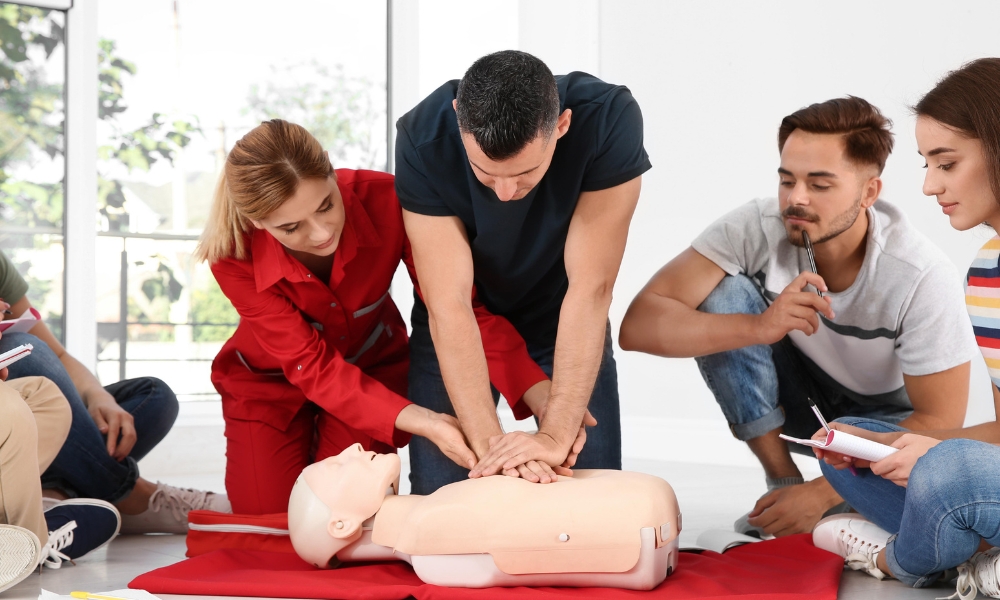
Cardiopulmonary resuscitation, commonly known as CPR, is an emergency procedure designed to temporarily maintain blood circulation and oxygen delivery when the heart has stopped pumping effectively. By pressing firmly and rhythmically on the chest, CPR helps move blood to the brain and other vital organs, buying valuable time until advanced medical treatment can restore normal heart function.
CPR is most commonly performed during sudden cardiac arrest, a condition in which the heart unexpectedly stops beating due to an electrical problem. Cardiac arrest is different from a heart attack, although a heart attack can sometimes lead to cardiac arrest if not treated promptly.
| CPR | Purpose |
|---|---|
| Chest Compressions | Keeps blood circulating to the brain and vital organs. |
| Rescue Breaths (when trained) | Provides oxygen to the lungs while compressions maintain circulation. |
| AED Use | Delivers an electrical shock when needed to help restore a normal heart rhythm. |
When Should You Perform CPR?
Recognizing when CPR is needed is just as important as knowing how to perform it. CPR should only be started if a person is unresponsive and is not breathing normally or is only gasping. Gasping is not considered normal breathing and may be one of the earliest signs of cardiac arrest.
If you witness someone suddenly collapse, first ensure the scene is safe. Gently tap the person’s shoulders and ask loudly if they are okay. If there is no response, immediately call 911 or instruct someone nearby to do so while another person locates an AED if one is available.
Starting CPR as soon as possible can double or even triple survival rates in cases of sudden cardiac arrest because it helps maintain blood flow until emergency medical professionals arrive.
| Signs CPR May Be Needed | Recommended Action |
|---|---|
| Person is unconscious and does not respond. | Call 911 immediately and begin CPR. |
| No normal breathing or only gasping. | Start chest compressions without delay. |
| No detectable pulse (for trained rescuers). | Begin CPR and continue until help arrives. |
What Should You Do Before Starting CPR?
Before beginning CPR, take a few seconds to assess the situation. Make sure you and the victim are not in immediate danger from traffic, fire, electricity, or other hazards. Once the area is safe, check for responsiveness, call 911, and ask someone nearby to bring an AED if available.
If you are alone with an adult victim, call emergency services first using your mobile phone on speaker mode whenever possible, then begin CPR immediately. If additional people are present, assign specific tasks, such as calling 911 or locating an AED, while you start chest compressions.
Emergency Reminder
Never delay CPR while searching for a pulse if you are not medically trained. If an adult is unresponsive and not breathing normally, begin chest compressions immediately after calling 911. Early CPR saves lives.
How to Perform CPR on an Adult: Step-by-Step
If an adult suddenly collapses, is unresponsive, and is not breathing normally, begin CPR immediately after calling 911 and sending someone to locate an automated external defibrillator (AED), if one is available. High-quality chest compressions are the most important part of CPR because they help maintain blood flow to the brain and vital organs until professional medical help arrives.
Step 1: Position the Person Correctly
Carefully place the person on their back on a firm, flat surface. Kneel beside their chest so you can comfortably perform chest compressions without interruption.
Step 2: Place Your Hands
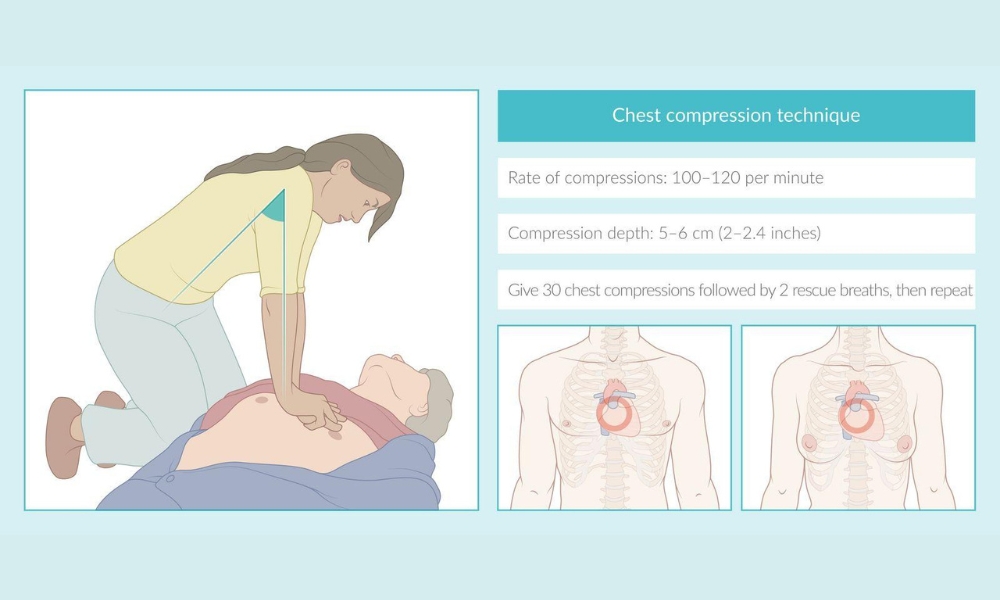
Place the heel of one hand in the center of the chest, on the lower half of the breastbone (sternum). Place your other hand on top of the first hand and interlock your fingers. Keep your arms straight and position your shoulders directly above your hands to use your body weight effectively.
Step 3: Begin Chest Compressions
Push hard and fast, allowing the chest to fully recoil after each compression. Continue compressions at a steady rhythm while minimizing interruptions. If another trained person is present, switch every two minutes to prevent fatigue.
| Adult CPR Guideline | Recommendation |
|---|---|
| Compression Rate | 100–120 compressions per minute. |
| Compression Depth | About 2 inches (5 cm) deep. |
| Hand Position | Center of the chest on the lower half of the breastbone. |
| Chest Recoil | Allow the chest to return fully after every compression. |
| Interruptions | Keep pauses as short as possible. |
What Is Hands-Only CPR?
Hands-only CPR is a simplified form of CPR that involves continuous chest compressions without rescue breaths. It is recommended for most adult cardiac arrest emergencies when the rescuer has not received formal CPR training or is uncomfortable giving mouth-to-mouth breaths.
Research has shown that continuous, high-quality chest compressions can significantly improve survival in adults who experience sudden cardiac arrest outside the hospital. The goal is to keep blood circulating until emergency responders arrive.
Good to Know
If you are not trained in CPR, hands-only CPR is still an effective lifesaving technique. Call 911, push hard and fast in the center of the chest, and continue until emergency medical services take over or an AED is ready to use.
Should Rescue Breaths Be Given?
Rescue breaths remain an important part of CPR for trained rescuers, especially for children, infants, drowning victims, and certain breathing emergencies. However, if you are not trained or are unwilling to provide rescue breaths, hands-only CPR is recommended for most adults.
When rescue breaths are provided by a trained rescuer, they are combined with cycles of chest compressions to help maintain both blood circulation and oxygen delivery until advanced medical care becomes available.
| Situation | Recommended CPR |
|---|---|
| Untrained rescuer helping an adult. | Hands-only CPR with continuous chest compressions. |
| Trained rescuer. | Chest compressions combined with rescue breaths according to current CPR guidelines. |
| Child or infant cardiac arrest. | Chest compressions with rescue breaths whenever possible. |
Important Note
Many people hesitate because they fear doing CPR incorrectly. In reality, delaying CPR is often far more dangerous than performing imperfect chest compressions. If someone is unresponsive and not breathing normally, starting CPR immediately can provide the best chance of survival until emergency medical professionals arrive.
Common CPR Mistakes to Avoid
Even well-intentioned rescuers can make mistakes that reduce the effectiveness of CPR. Being aware of these common errors can help you provide higher-quality chest compressions during an emergency.
- Waiting too long before beginning CPR.
- Performing compressions too slowly or too gently.
- Not allowing the chest to fully recoil between compressions.
- Stopping compressions for unnecessary reasons.
- Incorrect hand placement on the chest.
- Forgetting to call 911 or send someone to retrieve an AED.
High-quality CPR focuses on continuous, effective chest compressions with minimal interruptions until emergency responders arrive or the person begins breathing normally.
How to Perform CPR on a Child
CPR for children follows the same basic principles as adult CPR, but the technique is modified because a child’s body is smaller and more delicate. Cardiac arrest in children is often caused by breathing problems, drowning, choking, or severe illness rather than primary heart disease, making early CPR especially important.
If a child is unresponsive and not breathing normally, call 911 immediately or have someone nearby make the call while you begin CPR. If you are alone and no phone is immediately available, provide about two minutes of CPR before leaving briefly to call for emergency assistance.
| Child CPR Guideline | Recommendation |
|---|---|
| Hand Position | Use one or two hands depending on the child’s size. |
| Compression Rate | 100–120 compressions per minute. |
| Compression Depth | About one-third of the chest’s depth. |
| Rescue Breaths | Recommended whenever the rescuer has received CPR training. |
How to Perform CPR on an Infant
Infant CPR differs slightly from adult and child CPR because infants require a gentler technique. Chest compressions should be performed carefully using two fingers placed just below the nipple line in the center of the chest, or by using the two-thumb encircling technique if two trained rescuers are present.
As with older children, infants often experience cardiac arrest because of breathing emergencies rather than primary heart conditions. Immediate CPR can help maintain circulation until emergency medical care is available.
| Infant CPR Guideline | Recommendation |
|---|---|
| Hand Position | Use two fingers in the center of the chest or the two-thumb encircling technique when appropriate. |
| Compression Rate | 100–120 compressions per minute. |
| Compression Depth | Approximately one-third of the chest’s depth. |
| Rescue Breaths | Should be included whenever the rescuer is trained to provide them. |
How to Use an Automated External Defibrillator (AED)
An automated external defibrillator (AED) is a portable device that analyzes the heart’s rhythm and, when appropriate, delivers an electrical shock to help restore a normal heartbeat. AEDs are commonly available in airports, schools, shopping centers, sports facilities, and many public buildings.
Modern AEDs are designed for use by both healthcare professionals and members of the public. The device provides clear voice prompts that guide each step of the process, making it easier to assist someone during a cardiac emergency.
| AED Step | What to Do |
|---|---|
| Turn on the AED. | Follow the device’s voice instructions. |
| Attach the electrode pads. | Place the pads exactly as illustrated on the device. |
| Allow rhythm analysis. | Do not touch the patient while the AED analyzes the heart rhythm. |
| Deliver a shock if advised. | Ensure everyone is clear before pressing the shock button if instructed. |
| Resume CPR. | Continue chest compressions immediately after the shock or if no shock is advised. |
Important Note
CPR and AED use work together to improve survival after sudden cardiac arrest. CPR keeps blood circulating, while an AED can restore a normal heart rhythm in certain life-threatening arrhythmias. Using both as quickly as possible offers the best chance of survival.
What Happens After CPR?
Even if a person begins breathing or regains consciousness after CPR, emergency medical evaluation is still essential. Healthcare professionals will assess the underlying cause of the cardiac arrest, monitor heart function, and determine whether additional treatments or hospitalization are needed.
CPR Saves Lives
Learning CPR gives you the ability to act during one of the most critical medical emergencies. While no one hopes to use these skills, knowing how to recognize cardiac arrest, call 911, begin chest compressions, and use an AED can make a life-saving difference for a family member, friend, coworker, or even a stranger.
Frequently Asked Questions
Can I hurt someone by performing CPR?
Broken ribs or chest soreness can occur during CPR, but these injuries are generally treatable. In a true cardiac arrest, providing CPR is far safer than doing nothing.
Should I perform CPR if I’m not certified?
Yes. If someone is unresponsive and not breathing normally, hands-only CPR is recommended while waiting for emergency medical services to arrive.
How long should CPR continue?
Continue CPR until emergency responders take over, an AED instructs you otherwise, the person begins breathing normally, or you are physically unable to continue safely.
What is the difference between a heart attack and cardiac arrest?
A heart attack occurs when blood flow to part of the heart is blocked, while cardiac arrest is an electrical problem that causes the heart to stop pumping effectively. A heart attack can sometimes lead to cardiac arrest.
Can an AED be used by someone without medical training?
Yes. AEDs are designed with simple voice prompts that guide users through each step, making them suitable for use by members of the public during emergencies.
Emergency Heart Care in Katy, Sugar Land, and Greater Houston
Knowing CPR can save a life, but preventing and managing heart disease is equally important. At Advanced Cardiology, Dr. Adnan Khalid provides comprehensive cardiovascular evaluations, advanced diagnostic testing, preventive heart care, and treatment for conditions such as coronary artery disease, heart failure, arrhythmias, hypertension, and other cardiovascular disorders for patients throughout Katy, Sugar Land, Houston, and surrounding communities.
Medical Disclaimer
This article is intended for educational purposes only and should not replace professional medical advice or certified CPR training. If someone is unresponsive and not breathing normally, call 911 immediately and begin CPR if it is safe to do so. Always follow the guidance of emergency medical professionals.