
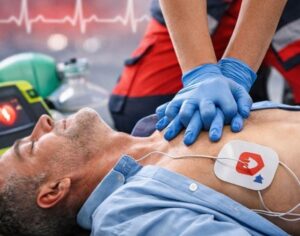
How to Perform CPR on an Adult: Step-by-Step Guide
How to perform CPR on an adult: call 911, push hard and fast 2 inches deep at 100 to 120 per minute, and use an AED. Step-by-step hands-only CPR guide.
Cardiologist Serving Katy, Sugar Land, Greater Houston
A transesophageal echocardiogram (TEE) gives a close-up ultrasound view of the heart to evaluate valve problems, blood clots, heart infections and other concerns when a standard echocardiogram is not enough. Patients are evaluated at our Katy and Sugar Land offices by a board-certified cardiologist, and the TEE itself is performed at an affiliated hospital.
Dr. Khalid reviews your symptoms, history and test results himself
Visits in Katy and Sugar Land
Catheter and device procedures at an affiliated hospital
Office follow-up on medicines and risk factors
A transesophageal echocardiogram (TEE) is an ultrasound test of the heart. Instead of moving a probe across the chest, as in a standard transthoracic echocardiogram (TTE), a thin, flexible probe is passed through the mouth into the esophagus (the food pipe), which sits directly behind the heart. Because there is less tissue and bone in the way, TEE can show structures such as the heart valves, the left atrium and its appendage, and the upper aorta in more detail.
TEE is not a first test for most people. It is usually recommended when a standard echocardiogram leaves an important question unanswered or when a procedure, such as cardioversion, needs detailed imaging first. Because it involves sedation and monitoring, TEE is a hospital-based procedure. It is scheduled at an affiliated hospital, and our office will explain where yours will take place.
Dr. Adnan Khalid, a board-certified cardiologist, evaluates whether a TEE is appropriate for you, explains the findings and uses them to plan your next steps.

Adnan Khalid, MD, Cardiologist
Adnan Khalid, MD, specializes in treating coronary artery disease, peripheral artery disease, heart failure, hypertension, arrhythmias, and hyperlipidemia. He has over 10 years of experience in the field of cardiovascular medicine.
Dr. Khalid graduated from his medical school among the top 10 out of 250 medical students in his class. He is fellowship trained in cardiovascular diseases, interventional cardiology, advanced heart failure, and transplant cardiology. He is focused on providing personalized and compassionate care. Dr. Khalid believes in spending time with his patients and listening to their needs and is committed to offering excellent care.
Dr. Khalid is an avid reader. He is eager to learn new things, and he likes to work out and spend time with his family. When off from work, he likes to travel and spend time in nature along with family and friends. He is married with three children. Dr. Adnan Khalid is now seeing patients at our Katy and Sugar Land clinics—accepting new patients from Houston and surrounding areas.
American Board of Internal Medicine
Interventional Cardiology
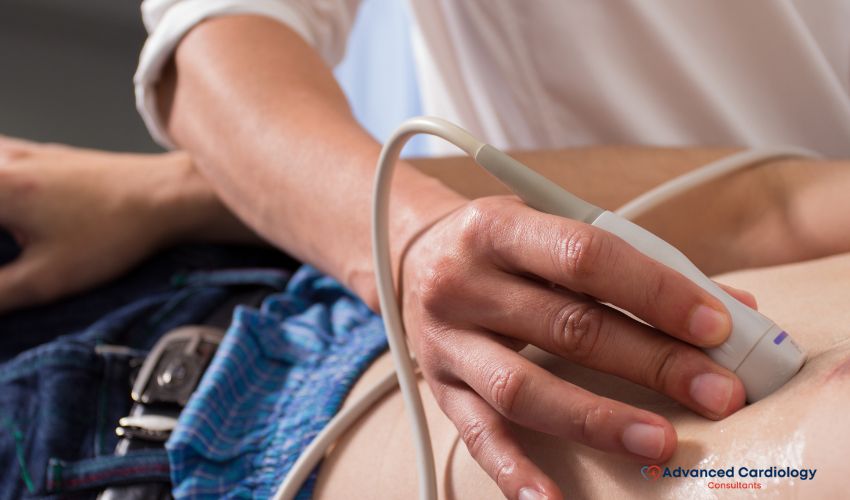
Some heart questions need a closer look. Your cardiologist may recommend a TEE when a transthoracic echocardiogram (TTE) does not provide enough detail, especially for structures toward the back of the heart.
Heart Valve Disease
Why it matters: Leaky or narrowed valves can cause fatigue, shortness of breath, chest discomfort and, over time, heart failure.
How TEE helps: Provides detailed images of valve structure and movement to help assess stenosis (narrowing), regurgitation (leakage) or infection and to plan repair or replacement when needed.
Infective Endocarditis (Heart Infection)
Why it matters: Infections on heart valves can be life-threatening if untreated.
How TEE helps: Can show growths (vegetations) or abscesses that may be missed on a standard echo.
Blood Clots in the Heart
Why it matters: In people with atrial fibrillation or atrial flutter, clots can form in the left atrium or left atrial appendage and may lead to stroke.
How TEE helps: TEE is commonly used to look for these clots, for example before cardioversion.
Septal Openings Such as PFO or ASD
Why it matters: An opening between the upper chambers, such as a patent foramen ovale (PFO) or atrial septal defect (ASD), can be relevant after certain strokes.
How TEE helps: Gives a clearer view of the wall between the chambers and helps evaluate whether PFO closure should be discussed.
Before Certain Procedures
Why it matters: Procedures such as valve repair or ablation require detailed knowledge of heart anatomy.
How TEE helps: Supplies images that help the procedural team plan.
Emergency symptoms come first. If you have chest discomfort lasting more than a few minutes or that comes and goes, shortness of breath, discomfort in the arms, back, neck, jaw or stomach, a cold sweat, nausea or lightheadedness, or stroke signs such as face drooping, arm weakness or speech difficulty, call 911—even if symptoms go away.
A transesophageal echocardiogram provides detailed images that can clarify findings that are unclear on a standard echocardiogram. It helps your cardiologist make decisions about treatment, prevention and further testing.
Heart valve abnormalities:
Detailed views of the mitral, aortic, tricuspid and pulmonary valves can show regurgitation (leakage), stenosis (narrowing) or infection that may need medicine, monitoring or a procedure.
Blood clots in the heart:
Especially useful in patients with atrial fibrillation who are preparing for cardioversion, TEE can look for clots in the left atrium or left atrial appendage.
Septal defects:
TEE provides better angles to evaluate an ASD or PFO, which may need monitoring or, in selected adults, closure.
Infective endocarditis:
When a heart infection is suspected, TEE can help detect vegetations or abscesses on the valves, which guides antibiotic treatment and decisions about surgery.
Aortic disease:
TEE can show parts of the aorta close to the heart and help evaluate an enlarged aorta or a tear (dissection). Other imaging, such as CT, may also be needed.
A TEE does not show whether the coronary arteries are narrowed or blocked; tests such as stress testing or cardiac catheterization address that question. A TEE is also a snapshot of the heart at one time and does not monitor heart rhythm over days.
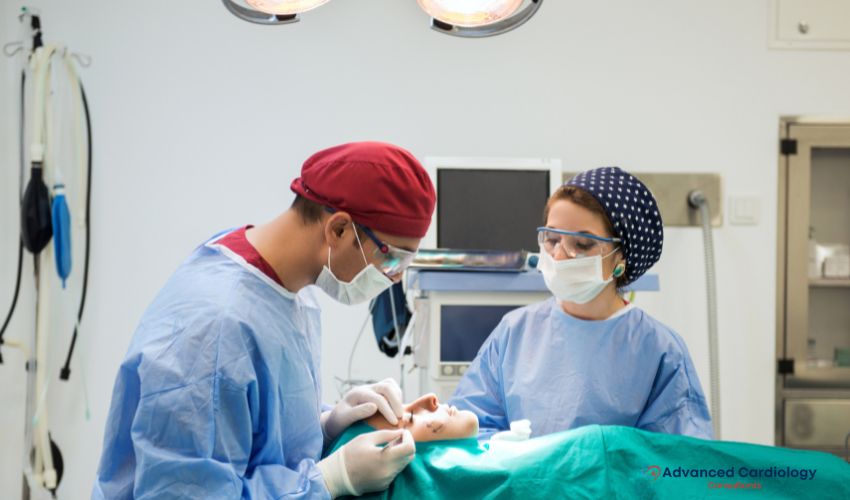
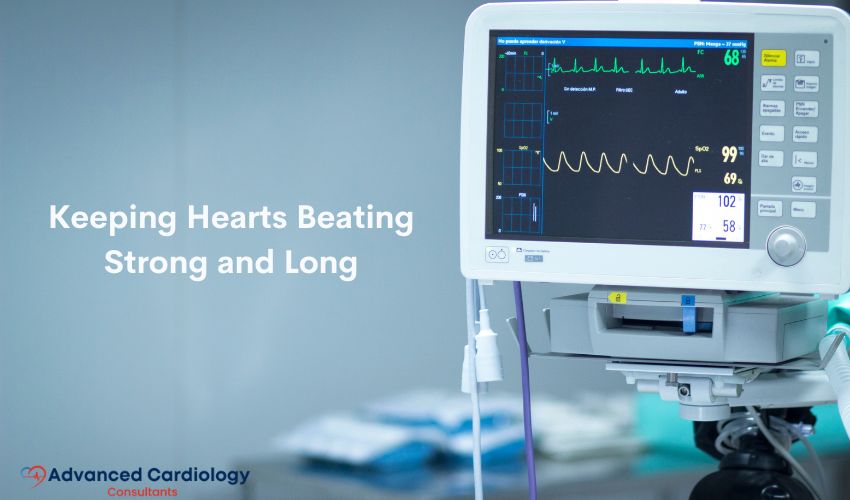
A transesophageal echocardiogram (TEE) is recommended when standard heart imaging does not provide enough detail. Your evaluation starts with a visit at Advanced Cardiology in Katy or Sugar Land, where Dr. Khalid reviews your symptoms, prior tests and treatment goals.
You may need a TEE if:
You have suspected heart valve disease, sometimes first noticed as a heart murmur, that needs a closer look
You have atrial fibrillation and are being prepared for cardioversion
Your doctor suspects a heart infection (endocarditis)
A possible clot, PFO or other structural finding needs further evaluation, such as after a stroke
Your care team needs detailed images of the aorta near the heart
When more detail is needed, TEE can provide information that helps guide important treatment decisions.
Advanced Cardiology accepts most major insurance plans, and coverage is verified individually. Because TEE is a hospital-based procedure, there may be separate charges from the hospital and other providers. For specific coverage details, contact your insurance company or our office—we are happy to help you check benefits before your procedure.
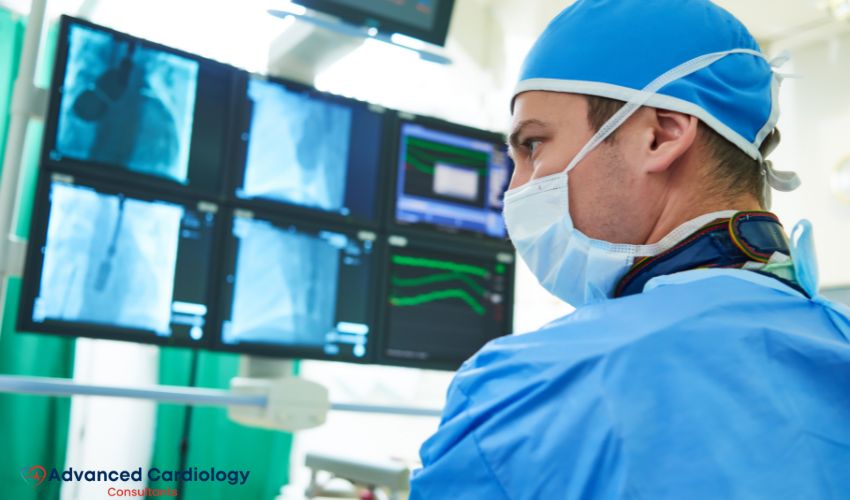
A transesophageal echocardiogram (TEE) provides detailed heart images that help guide care decisions. Whether you have complex valve disease or a stroke without a clear cause, TEE results can help your cardiologist:
Plan or adjust treatment for valve disorders, infections or clots
Decide whether surgery or another procedure should be considered
Confirm or rule out conditions when other tests are unclear
Check results after heart surgery or other interventions
Your care team will tell you when to stop eating and drinking before the test and how to handle each of your medicines, including blood thinners and diabetes medicines—follow those specific instructions rather than stopping anything on your own. Tell your team about any swallowing problems, esophagus or stomach conditions, dental work or allergies. Because sedation is usually used, plan for someone to drive you home.
At the hospital, an IV line is placed, your heart rhythm, blood pressure and oxygen are monitored, and your throat is numbed. After you receive sedation, the probe is gently guided into the esophagus while images are recorded. The imaging part usually takes less than an hour, though you will spend additional time preparing and recovering.
TEE is generally considered safe, but it is more involved than a standard echo. Common effects include a sore throat and drowsiness from sedation. Less common risks include reactions to sedation, breathing problems and, rarely, injury to the throat or esophagus. Avoid eating or drinking until the numbness wears off, as instructed. Seek urgent care for severe throat or chest pain, trouble swallowing, vomiting blood or fever after the test.
Preliminary findings may be discussed after the procedure. Dr. Khalid will review the final results with you and explain the next steps in your care.
Both use ultrasound. A regular echocardiogram (TTE) is done from the outside of the chest without sedation, often in an outpatient setting. A TEE places the probe in the esophagus for a closer view, requires sedation and is done in a hospital. Most people have a TTE first.
Most people receive sedation that makes them relaxed and drowsy, and many remember little of the test. The type of sedation depends on your health and the hospital team’s plan.
Sources: NHLBI: Heart Tests; NHLBI: Atrial Fibrillation; MedlinePlus: Heart Diseases; American Heart Association: Warning Signs of a Heart Attack.
Please print out your paperwork and bring it to your appointment at Advanced Cardiology. If your insurance requires authorization, please be sure to have that information sent to our office or bring it with you to your appointment, along with any medical records you may have. Please also make sure to bring your insurance cards, photo ID, and medication list.
Thank you, and we look forward to meeting you! Contact us with any questions.
Most insurance plans accepted
(713) 258-6111
Katy & Sugar Land Cardiologist
# Cooperative & professional staff. Dr. Khalid is highly competent & experienced. Very kind & friendly too.
# He’s A Very Caring & Concerned Doctor. He Asks Important Questions, He Allows Me To Ask Questions & Fully Answers To My Satisfaction. He Diagnosis & Does Whatever It Takes To Fix My Health Issues. He’s A Wonderful Doctor…& Most Of All, I Trust Him & His Staff.
Read More…..
How to perform CPR on an adult: call 911, push hard and fast 2 inches deep at 100 to 120 per minute, and use an AED. Step-by-step hands-only CPR guide.
Cardiac failure and heart failure mean the same thing. Learn the types (HFrEF, HFpEF, left vs right), how it differs from cardiac arrest and how it is treated.

Reasons for shortness of breath include heart failure, coronary disease, asthma, COPD, anemia and anxiety. Learn the clues, when to worry and when to call 911.
When should you see a cardiologist? Learn the symptoms, risk factors and test results that call for a heart specialist, and what to expect at a first visit.
What doctor should you see for chest pain? Learn when to call 911, when to see a cardiologist and which tests to expect in Katy and Sugar Land, TX.
Short of breath walking upstairs? Learn what is normal, when it may signal heart disease or heart failure, the tests a cardiologist uses and when to call 911.
Katy & Sugar Land Cardiologist
Advanced Cardiology welcomes new patients at its offices in Katy and Sugar Land. Call our office or send an appointment request, and our staff will follow up.
Most major insurance plans accepted; coverage is verified individually.
For possible heart attack or stroke symptoms, call 911.