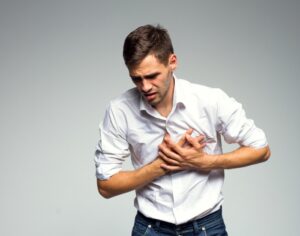
Chest tightness and shortness of breath together can come from asthma, anxiety, a chest infection or reflux, but they are also key signs of a heart attack, angina, heart failure or a blood clot in the lungs. Sudden tightness with breathlessness, sweating, fainting or pain spreading to the arm or jaw needs 911. Tightness that recurs with exertion needs a cardiology check.

Medically reviewed by
Board-certified cardiologist · Katy & Sugar Land, TX
Fellowship-trained in cardiovascular disease, interventional cardiology, echocardiography and advanced heart failure and transplant cardiology. Former Assistant Professor of Cardiology at McGovern Medical School.
What causes chest tightness and shortness of breath?
The heart and lungs work as a team: the lungs load oxygen into the blood and the heart pumps it to the body. When either one struggles, the result is often the same pair of symptoms, a tight or heavy chest and the feeling of not getting enough air. The table below lists the most common causes.
| Cause | Typical pattern | Urgency |
|---|---|---|
| Heart attack | Pressure or tightness with breathlessness, sweating, nausea; may spread to arm, jaw or back | Emergency: call 911 |
| Pulmonary embolism (lung clot) | Sudden breathlessness, sharp pain worse with breathing, fast heartbeat, sometimes a swollen leg | Emergency: call 911 |
| Angina | Tightness and breathlessness with exertion that ease with rest | Prompt cardiology visit |
| Heart failure | Breathlessness with activity or lying flat, swollen legs, weight gain | See a doctor soon; ER if severe |
| Heart rhythm problem | Racing or irregular heartbeat with breathlessness or dizziness | Urgent if fainting or ongoing |
| Asthma or COPD flare | Wheezing, cough, triggers such as allergens, cold air or infection | Urgent if inhaler does not help |
| Pneumonia or bronchitis | Fever, cough, mucus, pain with deep breaths | See a doctor; ER if breathing is hard |
| Anxiety or panic attack | Sudden fear, fast breathing, tingling, peaks within minutes | See a doctor; rule out the heart first |
| Acid reflux | Burning after meals, worse lying down | See a doctor |
- It starts suddenly or is severe
- You have chest pressure lasting more than a few minutes or spreading to the arm, jaw, neck or back
- You are sweating, nauseated, lightheaded or faint
- Your lips or face look blue or gray, or you cannot speak in full sentences
- You cough up blood or have sharp pain with breathing after recent surgery or travel
Heart causes of chest tightness and breathlessness
Heart attack. Shortness of breath is one of the main heart attack symptoms listed by the National Heart, Lung, and Blood Institute, and it can happen with or without chest discomfort.
Angina and coronary artery disease. Narrowed arteries limit blood flow during exertion. People often describe it as a band around the chest or a heaviness that arrives with walking or stairs, together with breathlessness. Learn the signs of blocked arteries in the heart.
Heart failure. When the heart cannot pump or fill well, fluid backs up into the lungs, causing breathlessness, chest heaviness, needing extra pillows at night and swelling in the legs. See early signs of heart failure.
Valve disease, rhythm problems and pericarditis can also cause both symptoms. Our page on shortness of breath and the heart explains how cardiologists evaluate breathlessness.
Lung and other causes
Pulmonary embolism is a blood clot that travels to the lungs, usually from a leg vein. Risk is higher after surgery, long flights or car rides, during pregnancy, with cancer or with hormone therapy. Asthma tightens the airways, causing wheezing and chest tightness. Pneumonia and pleurisy cause pain with deep breaths and often fever. Anxiety causes rapid breathing that itself creates chest tightness and tingling, a cycle that can feel frightening but is treatable once more serious causes are excluded.
Chest tightness and breathlessness with exercise
Getting winded during hard exercise is normal. It is not normal if:
- You become breathless with less activity than before, such as one flight of stairs.
- Breathlessness comes with chest tightness, pressure or pain.
- Symptoms reliably appear at the same level of effort and ease with rest.
- You also feel dizzy, faint or notice a racing or irregular heartbeat.
These are classic reasons to see a cardiologist. Read shortness of breath walking upstairs for more.
How doctors find the cause
- Exam and vital signs, including oxygen level.
- EKG to check rhythm and signs of heart strain or injury.
- Blood tests, such as troponin, BNP (a heart failure marker), blood count and D-dimer when a clot is possible.
- Chest X-ray and sometimes CT imaging of the lungs.
- Echocardiogram to see heart pumping, valves and pressures.
- Stress testing if symptoms appear with exertion.
- Breathing tests when asthma or COPD is suspected.
Treatment depends on the cause
Angina and coronary disease are treated with medicines, risk factor control and, when needed, angioplasty and stenting. Heart failure is treated with guideline-based medications and close monitoring; learn about heart failure treatment. Clots are treated with blood thinners, asthma with inhalers, and anxiety with therapy, breathing techniques and sometimes medication. Cardiac rehabilitation helps many heart patients rebuild exercise tolerance safely.
Shortness of breath and chest tightness care in Katy and Sugar Land
Advanced Cardiology evaluates chest tightness and breathlessness at our Katy and Sugar Land offices. Dr. Khalid looks for heart causes such as coronary disease, heart failure, valve disease and rhythm problems, with EKG and echocardiogram testing available in the office. See also dizziness and shortness of breath and chest pain care.
Katy office: 410 W Grand Pkwy S, Suite 4D, Katy, TX 77494
Sugar Land office: 7102 Tarrington Ave, Suite 505, Sugar Land, TX 77479
Phone: (713) 258-6111
We also see patients from Fulshear, Richmond, Rosenberg, Stafford, Missouri City and west Houston.
Tight chest and short of breath with activity?
Effort-related symptoms can be an early sign of heart disease. Request a cardiology visit in Katy or Sugar Land.
Having symptoms right now? Call 911. Do not wait for an appointment.
Frequently asked questions
What causes chest tightness and shortness of breath?
Causes include heart attack, angina, heart failure, heart rhythm problems, blood clots in the lungs, asthma, pneumonia, anxiety and reflux. Sudden or severe symptoms need 911.
Is chest tightness with shortness of breath a heart attack?
It can be. Both are major heart attack symptoms, especially with sweating, nausea or pain spreading to the arm or jaw. Call 911 rather than waiting to see if it passes.
Can anxiety cause chest tightness and shortness of breath?
Yes. Anxiety and panic attacks often cause a tight chest and the feeling of not getting enough air. Because these symptoms overlap with heart and lung emergencies, a first episode should be evaluated.
Why do I get chest tightness and shortness of breath when walking?
Symptoms that come with walking and ease with rest may be angina from narrowed heart arteries, heart failure, valve disease, anemia or a lung condition. A cardiologist can evaluate with an EKG, echocardiogram and stress test.
Can heart failure cause chest tightness?
Yes. Fluid buildup and a strained heart can cause chest heaviness, breathlessness with activity or when lying flat, and swelling in the legs.
When should I see a doctor for chest tightness?
See a doctor promptly if tightness keeps returning, happens with exertion, or you have heart risk factors. Call 911 for sudden, severe or persistent symptoms.
What tests check chest tightness and shortness of breath?
Common tests include an EKG, chest X-ray, blood tests such as troponin and BNP, an echocardiogram, stress testing and breathing tests, chosen according to your symptoms.
Trusted health resources
- Heart Attack: Symptoms, National Heart, Lung, and Blood Institute (NIH)
- Breathing difficulty, MedlinePlus Medical Encyclopedia
- Venous Thromboembolism, National Heart, Lung, and Blood Institute (NIH)
- Stable angina, MedlinePlus Medical Encyclopedia
- Panic Disorder, MedlinePlus, U.S. National Library of Medicine
Medical disclaimer: This article is for general education and is not a diagnosis or a substitute for care from your own doctor. If you think you may be having a heart attack, stroke or another emergency, call 911 right away.