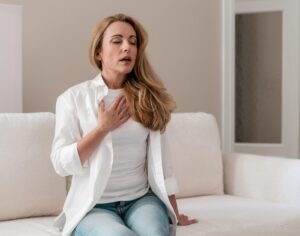
Getting a little winded on stairs is normal, especially if you are out of shape. Shortness of breath walking upstairs is not normal if it is new, getting worse, happens after only one flight, or comes with chest tightness, dizziness, palpitations or ankle swelling. These can be early signs of coronary artery disease, heart failure, valve disease or a lung problem and deserve a doctor visit.

Medically reviewed by
Board-certified cardiologist · Katy & Sugar Land, TX
Fellowship-trained in cardiovascular disease, interventional cardiology, echocardiography and advanced heart failure and transplant cardiology. Former Assistant Professor of Cardiology at McGovern Medical School.
Is it normal to be out of breath after climbing stairs?
Stair climbing is real exercise. It raises heart rate and breathing quickly, and most people breathe harder by the top of two or three flights. Being briefly winded that settles within a minute or two is usually just a sign of fitness level. Doctors pay attention to change: if you could climb stairs easily six months ago and now need to stop halfway, something has shifted.
| Probably normal | Worth a doctor visit |
|---|---|
| Breathing harder after several flights, recovering within 1 to 2 minutes | Winded after one flight, or needing to stop partway |
| Same as always for your fitness level | New, or steadily worse over weeks or months |
| No other symptoms | Chest tightness, pressure, dizziness, palpitations or fatigue |
| Improves as you exercise more | Ankle swelling, needing more pillows at night, weight gain |
| Recovery takes much longer than it used to |
Heart causes of breathlessness on stairs
- Coronary artery disease and angina: narrowed arteries cannot meet the heart’s higher oxygen demand during stair climbing. Breathlessness may be the main symptom instead of chest pain. See signs of blocked arteries.
- Heart failure: a weak or stiff heart cannot increase output enough, and fluid builds up in the lungs. Learn the early signs of heart failure.
- Valve disease: aortic stenosis in particular causes breathlessness, chest pain or dizziness with exertion.
- Arrhythmias: atrial fibrillation or a heart rate that does not rise properly with activity (chronotropic incompetence).
- Chest pressure or pain that does not ease within a few minutes of rest
- Fainting or nearly fainting
- Severe breathlessness that does not settle with rest
- A racing or irregular heartbeat with dizziness
Other causes
Lung conditions such as asthma, COPD and pulmonary hypertension. Anemia, which reduces oxygen delivery. Extra weight, which increases the work of every step. Deconditioning after illness or a sedentary period. Medicines such as some beta blockers can limit heart rate response. See the full list in reasons for shortness of breath.
A simple self-check
Note how many flights or steps you can climb before needing to slow down, how long it takes to recover, and whether any other symptoms appear. Repeat the same check in a week or two. Bring these notes to your appointment; they help your cardiologist judge severity and track improvement after treatment. Stop and rest if you feel chest discomfort, dizziness or palpitations.
How a cardiologist evaluates breathlessness on exertion
An exertional symptom calls for testing under exertion. A cardiologist may recommend an EKG, an echocardiogram to check pumping, valves and lung pressures, an exercise stress test or stress echo to reproduce symptoms safely, blood tests including BNP and blood count, and sometimes a coronary calcium scan or CT angiography. If an earlier stress test was abnormal, further imaging or catheterization may be considered.
Improving stamina safely
Once serious causes are excluded or treated, a gradual walking program, interval stair practice, strength training and weight loss improve breathlessness for most people. Patients with heart disease often benefit from supervised cardiac rehabilitation.
Exertional breathlessness evaluation in Katy and Sugar Land
Advanced Cardiology evaluates shortness of breath with activity at our Katy and Sugar Land offices. Dr. Khalid uses EKG and echocardiogram testing in the office and arranges stress testing to find out whether the heart is the cause. See our shortness of breath heart doctor page.
Katy office: 410 W Grand Pkwy S, Suite 4D, Katy, TX 77494
Sugar Land office: 7102 Tarrington Ave, Suite 505, Sugar Land, TX 77479
Phone: (713) 258-6111
We also see patients from Fulshear, Richmond, Rosenberg, Stafford, Missouri City and west Houston.
Stairs harder than they used to be?
New breathlessness on exertion is worth checking. Request a cardiology visit in Katy or Sugar Land.
Having symptoms right now? Call 911. Do not wait for an appointment.
Frequently asked questions
Is it normal to be short of breath walking upstairs?
Mild breathlessness after several flights that settles quickly is usually normal. Breathlessness that is new, worsening, after one flight, or with chest tightness or dizziness should be checked.
Can shortness of breath on stairs be a sign of heart disease?
Yes. It can be an early sign of coronary artery disease, heart failure, valve disease or an arrhythmia, especially in people with risk factors.
Why am I suddenly out of breath walking up stairs?
A sudden change may come from anemia, a new arrhythmia, heart failure, a lung condition, infection or a blood clot. Sudden severe breathlessness needs emergency care.
What tests check shortness of breath with exertion?
An EKG, echocardiogram, exercise stress test or stress echo, blood tests such as BNP and blood count, and sometimes breathing tests or coronary imaging.
Can being overweight cause breathlessness on stairs?
Yes. Extra weight increases the effort of climbing. However, weight should not be assumed to be the only cause without an evaluation if symptoms are new.
How can I improve my breathing when climbing stairs?
After a medical check, gradual exercise, interval training, strength work and weight loss help. Heart patients may benefit from cardiac rehabilitation.
Trusted health resources
- Breathing Problems, MedlinePlus, U.S. National Library of Medicine
- Heart Failure, National Heart, Lung, and Blood Institute (NIH)
- Coronary Heart Disease: Symptoms, National Heart, Lung, and Blood Institute (NIH)
- Anemia, National Heart, Lung, and Blood Institute (NIH)
Medical disclaimer: This article is for general education and is not a diagnosis or a substitute for care from your own doctor. If you think you may be having a heart attack, stroke or another emergency, call 911 right away.