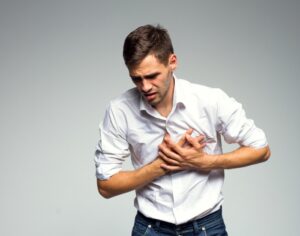
Shortness of breath is an emergency when it starts suddenly or is severe, comes with chest pain, fainting, confusion or blue or gray lips, or makes it hard to speak in full sentences. These can signal a heart attack, a blood clot in the lungs, severe asthma or fluid in the lungs from heart failure. Call 911. Breathlessness that builds over weeks needs a prompt doctor visit.

Medically reviewed by
Board-certified cardiologist · Katy & Sugar Land, TX
Fellowship-trained in cardiovascular disease, interventional cardiology, echocardiography and advanced heart failure and transplant cardiology. Former Assistant Professor of Cardiology at McGovern Medical School.
When is shortness of breath an emergency?
Shortness of breath, also called dyspnea, is the uncomfortable feeling of not getting enough air. It is normal after hard exercise and abnormal when it appears at rest, with light activity, or suddenly. Use this guide to decide how quickly to act:
| What you notice | What to do |
|---|---|
| Sudden or severe breathlessness, or struggling to breathe | Call 911 |
| Breathlessness with chest pain, pressure or pain spreading to the arm, jaw or back | Call 911 |
| Blue or gray lips or face, confusion, fainting, or unable to speak in full sentences | Call 911 |
| Sudden breathlessness with sharp chest pain, coughing blood, or after surgery or a long trip | Call 911 (possible lung clot) |
| Waking up gasping, needing to sleep upright, rapid weight gain or leg swelling | Same-day doctor contact; ER if worsening |
| Wheezing not relieved by your rescue inhaler | ER or urgent care |
| Gradually increasing breathlessness with activity over weeks | Doctor or cardiologist visit soon |
- Sudden onset or severe difficulty breathing
- Chest pain or pressure, or pain spreading to the arm, jaw or back
- Blue or gray lips, face or fingertips
- Confusion, fainting or extreme drowsiness
- Coughing up blood, or pink frothy sputum
- Inability to speak in full sentences
Heart causes of breathlessness
Heart attack. Shortness of breath is a core heart attack symptom and may be the main symptom in women, older adults and people with diabetes. Heart failure. When the heart cannot pump or fill well, fluid backs up into the lungs. Classic signs are breathlessness with activity, trouble lying flat, waking up short of breath and swelling of the legs. Severe fluid buildup (pulmonary edema) is an emergency. Arrhythmias such as atrial fibrillation can cause sudden breathlessness with a racing or irregular pulse. Valve disease and pericardial effusion (fluid around the heart) are other causes. Learn more on our shortness of breath and the heart page.
Lung and other causes
Pulmonary embolism, a blood clot in the lungs, causes sudden breathlessness, often with sharp chest pain and a fast heartbeat. Asthma and COPD flares cause wheezing and chest tightness. Pneumonia brings fever and cough. A collapsed lung causes sudden one-sided pain. Severe allergic reactions can swell the throat. Anemia, anxiety and deconditioning are common non-emergency causes. See reasons for shortness of breath for a full list.
What to do while waiting for help
- Sit upright, leaning slightly forward if it helps, and loosen tight clothing.
- Use prescribed rescue inhalers or medicines as directed.
- Stay as calm as possible; slow, pursed-lip breathing can help.
- Unlock the door and keep your phone with you.
- If the person becomes unresponsive and is not breathing normally, start CPR.
Breathlessness that develops slowly
Shortness of breath that has crept up over weeks or months is not usually an emergency, but it is a common early sign of heart disease, especially when it comes with fatigue, swollen ankles or chest tightness on exertion. Common examples include getting winded on one flight of stairs or needing to stop while walking. Read shortness of breath walking upstairs and early signs of heart failure.
How a cardiologist evaluates shortness of breath
Evaluation focuses on when breathlessness happens and what accompanies it. Testing may include an EKG, a BNP blood test for heart strain, an echocardiogram to assess pumping, valves and lung pressures, a stress test, heart rhythm monitoring, and coordination with lung testing when needed. Treatment then targets the cause, for example medicines and fluid management for heart failure, rhythm control for atrial fibrillation or opening narrowed arteries.
Shortness of breath evaluation in Katy and Sugar Land
If you are becoming breathless with less activity than before, Advanced Cardiology can check whether your heart is the cause. Dr. Khalid, fellowship-trained in advanced heart failure, sees patients at our Katy and Sugar Land offices with EKG and echocardiogram testing in the office. See also dizziness and shortness of breath.
Katy office: 410 W Grand Pkwy S, Suite 4D, Katy, TX 77494
Sugar Land office: 7102 Tarrington Ave, Suite 505, Sugar Land, TX 77479
Phone: (713) 258-6111
We also see patients from Fulshear, Richmond, Rosenberg, Stafford, Missouri City and west Houston.
Getting winded more easily than before?
Gradual breathlessness can be an early sign of heart disease. Request a cardiology visit in Katy or Sugar Land.
Having symptoms right now? Call 911. Do not wait for an appointment.
Frequently asked questions
When should I go to the ER for shortness of breath?
Go to the ER or call 911 if breathlessness is sudden or severe, comes with chest pain, fainting, confusion or blue lips, or you cannot speak in full sentences.
Can shortness of breath be a sign of a heart attack?
Yes. Shortness of breath is a common heart attack symptom and may be the main symptom, especially in women, older adults and people with diabetes.
What heart problems cause shortness of breath?
Heart attack, heart failure, arrhythmias such as atrial fibrillation, valve disease, cardiomyopathy and fluid around the heart can all cause breathlessness.
How do I know if my shortness of breath is heart or lung related?
Heart-related breathlessness often worsens lying flat, comes with leg swelling or chest pressure and appears with exertion. Lung causes often involve wheezing, cough or fever. Testing such as an EKG, echocardiogram and chest imaging is needed to be sure.
Is sudden shortness of breath while resting dangerous?
It can be. Sudden breathlessness at rest may signal a lung clot, heart attack, arrhythmia or fluid in the lungs and should be treated as an emergency.
Can anxiety cause shortness of breath?
Yes. Anxiety and panic attacks often cause a feeling of air hunger. A first episode, or breathlessness with chest pain, should be evaluated to rule out heart and lung causes.
Trusted health resources
- Breathing Problems, MedlinePlus, U.S. National Library of Medicine
- Breathing difficulty, MedlinePlus Medical Encyclopedia
- Heart Failure, National Heart, Lung, and Blood Institute (NIH)
- Venous Thromboembolism, National Heart, Lung, and Blood Institute (NIH)
- Heart Attack: Symptoms, National Heart, Lung, and Blood Institute (NIH)
Medical disclaimer: This article is for general education and is not a diagnosis or a substitute for care from your own doctor. If you think you may be having a heart attack, stroke or another emergency, call 911 right away.