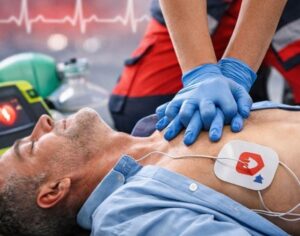
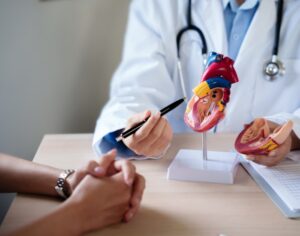
Jaw pain with chest pain is a recognized heart attack warning sign, because heart pain can travel along shared nerves to the jaw, neck and arm. It is more common in women. Jaw and chest discomfort together, especially with exertion, sweating, nausea or breathlessness, needs 911. Dental, TMJ and muscle problems usually cause jaw pain alone.

Medically reviewed by
Board-certified cardiologist · Katy & Sugar Land, TX
Fellowship-trained in cardiovascular disease, interventional cardiology, echocardiography and advanced heart failure and transplant cardiology. Former Assistant Professor of Cardiology at McGovern Medical School.
Why does my jaw hurt with chest pain?
Pain signals from the heart enter the spinal cord at the same levels as nerves from the neck, jaw, shoulders and arms. The brain cannot always tell which organ is sending the signal, so heart pain may be felt somewhere else. Doctors call this referred pain. That is why a heart attack can show up as an aching jaw, a sore throat-like tightness or pain in the left arm, sometimes with only mild chest discomfort.
When jaw pain and chest pain happen together, the heart moves to the top of the list of possible causes. When jaw pain happens on its own, a dental or jaw joint problem is more common, but there are exceptions described below.
Jaw pain as a heart attack symptom
The National Heart, Lung, and Blood Institute lists pain or discomfort in the jaw, neck, back, arms or shoulders among the main heart attack symptoms. Heart-related jaw pain often:
- Feels like a dull ache, pressure or tightness rather than a sharp, pinpoint pain.
- Is felt on both sides or on the left side of the jaw, sometimes spreading to the neck or throat.
- Comes with chest pressure, shortness of breath, cold sweat, nausea, lightheadedness or unusual tiredness.
- Is not affected by chewing, opening the mouth or pressing on the jaw.
Women, older adults and people with diabetes are more likely to have these less typical symptoms. See heart attack symptoms in women and signs of a silent heart attack.
- Chest pain, pressure or tightness
- Pain in the arm, shoulder, neck or back
- Shortness of breath, cold sweat, nausea or lightheadedness
- Sudden unusual weakness or fatigue
- Jaw or chest discomfort lasting more than a few minutes, or returning at rest
Jaw pain with exertion: a sign of angina
Some people with narrowed coronary arteries notice an ache in the jaw or throat when they walk quickly, climb stairs or carry something heavy, and it fades within minutes of resting. This is angina, and jaw discomfort can be its only symptom. Angina is not a heart attack, but it is a warning that the heart is not getting enough blood during effort. It should be evaluated soon, and immediately if it starts happening at rest or more easily than before.
Heart-related jaw pain vs. dental or TMJ pain
These patterns help doctors think about the source, though they are guides, not rules:
| Feature | More likely heart-related | More likely jaw, tooth or muscle |
|---|---|---|
| Trigger | Exertion, stress, cold air, or no trigger | Chewing, clenching, yawning, hot or cold food |
| Feel | Dull ache, pressure, tightness | Sharp, throbbing or clicking |
| Location | Both sides or left jaw, neck or throat | One tooth, one jaw joint, in front of the ear |
| Other symptoms | Chest pressure, breathlessness, sweating, nausea, fatigue | Swelling, tooth sensitivity, jaw clicking or locking, headache |
| Pressing on the area | Does not change the pain | Tender to touch |
Other causes of jaw and chest pain
- Temporomandibular joint (TMJ) disorder: pain and clicking in the jaw joint, often with teeth grinding or clenching.
- Dental problems: an abscess, cracked tooth or gum infection can cause jaw pain that sometimes spreads.
- Anxiety and panic attacks: can cause chest tightness, a racing heart and jaw clenching at the same time. Read can anxiety cause chest pain and palpitations?
- Acid reflux: mainly causes chest burning, but may cause throat and jaw discomfort in some people.
- Nerve pain: conditions such as trigeminal neuralgia cause brief, electric jaw or face pain.
These conditions are common, but the heart should be considered first whenever jaw pain appears with chest symptoms.
How doctors evaluate jaw pain with chest pain
In the ER, an EKG and troponin blood tests check for a heart attack. In the office, a cardiologist may add an echocardiogram, an exercise stress test or nuclear stress imaging to see whether symptoms are caused by reduced blood flow. If testing shows significant blockages, cardiac catheterization may be recommended. If the heart is normal, a dentist or primary care doctor can look for jaw, tooth or nerve causes.
Lowering your heart attack risk
Controlling blood pressure, cholesterol and blood sugar, not smoking, staying active and keeping a healthy weight lower the chance that narrowed arteries cause angina or a heart attack. A preventive cardiology visit can help you understand your personal risk and build a plan.
Jaw and chest pain evaluation in Katy and Sugar Land
If you have had jaw discomfort with exertion or chest symptoms, Advanced Cardiology can help find out whether your heart is involved. Dr. Khalid evaluates patients at our Katy and Sugar Land offices, with EKG and echocardiogram testing available in the office and stress testing arranged as needed. Learn about our chest pain care.
Katy office: 410 W Grand Pkwy S, Suite 4D, Katy, TX 77494
Sugar Land office: 7102 Tarrington Ave, Suite 505, Sugar Land, TX 77479
Phone: (713) 258-6111
We also see patients from Fulshear, Richmond, Rosenberg, Stafford, Missouri City and west Houston.
Jaw ache with exertion? Have your heart checked
Angina can show up as jaw or throat discomfort. Request a cardiology visit in Katy or Sugar Land.
Having symptoms right now? Call 911. Do not wait for an appointment.
Frequently asked questions
Can jaw pain be a sign of a heart attack?
Yes. Jaw pain, especially with chest discomfort, breathlessness, sweating or nausea, is a recognized heart attack symptom. It is more common in women. Call 911 if jaw pain comes with any of these symptoms.
Which side of the jaw hurts during a heart attack?
Heart-related jaw pain is often on the left side or both sides and may spread to the neck or throat. It can occur on the right side too, so the side alone does not rule the heart in or out.
How do I know if jaw pain is from my heart or my teeth?
Dental and jaw joint pain usually worsens with chewing, is tender to touch and comes with tooth sensitivity, swelling or clicking. Heart-related jaw pain is a dull pressure that may come with exertion or chest symptoms and is not changed by touch.
Can anxiety cause jaw pain and chest pain?
Yes. Anxiety can cause chest tightness, a fast heartbeat and jaw clenching. Because these symptoms overlap with heart attack symptoms, a first episode should be checked by a doctor.
Can angina cause jaw pain without chest pain?
Yes. Some people with angina feel only jaw, throat, neck or arm discomfort during exertion that eases with rest. This pattern should be evaluated by a cardiologist.
What should I do if my jaw and chest hurt at the same time?
Stop what you are doing and call 911 if the discomfort lasts more than a few minutes, keeps returning or comes with breathlessness, sweating, nausea or lightheadedness. Do not drive yourself.
Trusted health resources
- Heart Attack: Symptoms, National Heart, Lung, and Blood Institute (NIH)
- Heart Attack, MedlinePlus, U.S. National Library of Medicine
- Stable angina, MedlinePlus Medical Encyclopedia
- Coronary Heart Disease: Symptoms, National Heart, Lung, and Blood Institute (NIH)
- Anxiety, MedlinePlus, U.S. National Library of Medicine
Medical disclaimer: This article is for general education and is not a diagnosis or a substitute for care from your own doctor. If you think you may be having a heart attack, stroke or another emergency, call 911 right away.