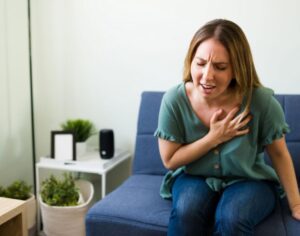
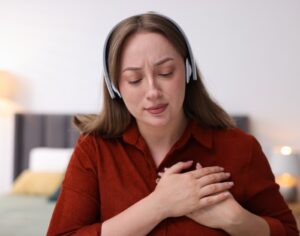
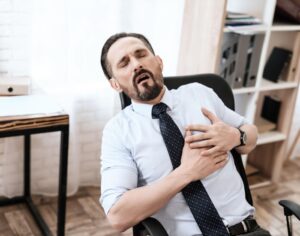
Heart palpitations feel like your heart is pounding, racing, fluttering, flip-flopping or skipping a beat. You may feel them in your chest, throat or neck, often when lying down or resting. Most are harmless and triggered by caffeine, stress or premature beats, but palpitations with dizziness, fainting, chest pain or breathlessness need prompt care.

Medically reviewed by
Board-certified cardiologist · Katy & Sugar Land, TX
Fellowship-trained in cardiovascular disease, interventional cardiology, echocardiography and advanced heart failure and transplant cardiology. Former Assistant Professor of Cardiology at McGovern Medical School.
What do heart palpitations feel like?
Palpitations are simply an awareness of your own heartbeat. Normally you do not notice it; when you do, it can feel unsettling. People describe them in several ways, and the description gives cardiologists useful clues:
| How it feels | What it often means |
|---|---|
| A skip, pause or “thump” | Premature beats (PACs or PVCs), usually benign |
| A flip-flop or flutter in the chest | Premature beats or short runs of extra beats |
| Sudden racing that starts and stops like a switch | Possible SVT |
| Fast, irregular, chaotic beating | Possible atrial fibrillation |
| Pounding with a fast, regular rate that builds gradually | Sinus tachycardia from anxiety, exercise, caffeine, fever or dehydration |
| Pounding in the neck or throat | Premature beats or SVT; sometimes valve conditions |
| Very slow or heavy beats with lightheadedness | Possible bradycardia or heart block |
Where you may feel palpitations
Most people feel palpitations in the chest. Some feel them in the throat or neck, in the ears when lying on a pillow, or as a pulsing in the stomach. Lying on your left side brings the heart closer to the chest wall, which is why many people first notice palpitations at night.
Common causes of palpitations
- Lifestyle triggers: caffeine, energy drinks, nicotine, alcohol, poor sleep and heavy meals.
- Emotions: stress, anxiety and panic. See anxiety and palpitations.
- Body changes: exercise, fever, dehydration, pregnancy and hormonal changes around menstruation or menopause.
- Medical conditions: overactive thyroid, anemia, low blood sugar and low potassium or magnesium.
- Medicines: decongestants, asthma inhalers, thyroid medicine and some supplements.
- Heart rhythm problems: premature beats, SVT, atrial fibrillation and, less commonly, ventricular arrhythmias.
- Structural heart disease: valve problems, cardiomyopathy or prior heart attack.
When should you worry about palpitations?
According to MedlinePlus, many arrhythmias are harmless but some can be serious. See a doctor promptly if palpitations:
- Are frequent, last more than a few minutes or keep getting worse.
- Feel irregular and chaotic.
- Happen during exercise.
- Occur in someone with known heart disease, a prior heart attack or a weak heart.
- Run in a family with sudden cardiac death or inherited heart conditions.
- Fainting or nearly fainting
- Chest pain or pressure
- Severe shortness of breath
- Confusion or one-sided weakness
- A very fast heartbeat that does not slow down with rest
How doctors diagnose palpitations
The key is capturing the heart rhythm while you feel symptoms. Options include an EKG, a Holter monitor, an event monitor, mobile cardiac telemetry and, for rare episodes, an implantable loop recorder. An echocardiogram checks heart structure, and blood tests look at thyroid, blood count and electrolytes. Smartwatch EKG recordings can be helpful to bring.
Tips to reduce palpitations
- Cut back on caffeine, energy drinks, alcohol and nicotine.
- Prioritize 7 to 9 hours of sleep.
- Stay hydrated, especially in Texas heat.
- Practice slow breathing or other stress-reduction techniques.
- Review medicines and supplements with your doctor.
Palpitations care in Katy and Sugar Land
Advanced Cardiology evaluates palpitations at our Katy and Sugar Land offices. Dr. Khalid can review your smartwatch tracings, perform an EKG in the office and arrange heart rhythm monitoring to find the cause. Learn more about our heart palpitations doctor services.
Katy office: 410 W Grand Pkwy S, Suite 4D, Katy, TX 77494
Sugar Land office: 7102 Tarrington Ave, Suite 505, Sugar Land, TX 77479
Phone: (713) 258-6111
We also see patients from Fulshear, Richmond, Rosenberg, Stafford, Missouri City and west Houston.
Palpitations that keep coming back?
Find out what your heart is doing. Request a cardiology visit in Katy or Sugar Land.
Having symptoms right now? Call 911. Do not wait for an appointment.
Frequently asked questions
What do heart palpitations feel like?
They can feel like pounding, racing, fluttering, flip-flopping or skipped beats in the chest, throat or neck.
Are heart palpitations dangerous?
Most are harmless, but palpitations with fainting, chest pain, breathlessness, during exercise or in people with heart disease need evaluation.
Why do I get palpitations at night?
Lying down, especially on the left side, makes heartbeats easier to notice. Late caffeine or alcohol, anxiety, reflux and sleep apnea can also trigger them.
Can palpitations be a sign of a heart attack?
Palpitations alone are rarely a heart attack, but they can accompany one. Palpitations with chest pressure, sweating or breathlessness need 911.
What is the difference between palpitations and AFib?
Palpitations are a sensation; AFib is a specific irregular rhythm. AFib often feels like fast, chaotic beating and needs an EKG to confirm.
How do doctors find the cause of palpitations?
By recording the rhythm during symptoms with an EKG, Holter, event monitor or telemetry, plus an echocardiogram and blood tests.
Can dehydration cause heart palpitations?
Yes. Dehydration and low electrolytes can make the heart beat faster and trigger premature beats.
Trusted health resources
- Arrhythmia, MedlinePlus, U.S. National Library of Medicine
- Arrhythmias, National Heart, Lung, and Blood Institute (NIH)
- Anxiety, MedlinePlus, U.S. National Library of Medicine
Medical disclaimer: This article is for general education and is not a diagnosis or a substitute for care from your own doctor. If you think you may be having a heart attack, stroke or another emergency, call 911 right away.