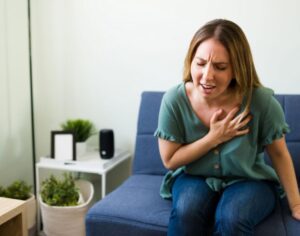
Yes, anxiety can cause chest pain and palpitations. Stress hormones speed up the heart, tighten chest muscles and cause fast breathing, producing sharp or tight chest pain and a pounding heartbeat. Because heart attacks and rhythm problems cause the same symptoms, anxiety should be diagnosed only after heart causes are ruled out, especially for a first episode or if you have heart risk factors.

Medically reviewed by
Board-certified cardiologist · Katy & Sugar Land, TX
Fellowship-trained in cardiovascular disease, interventional cardiology, echocardiography and advanced heart failure and transplant cardiology. Former Assistant Professor of Cardiology at McGovern Medical School.
How anxiety causes chest pain and palpitations
When the brain senses threat, it releases adrenaline and other stress hormones. This fight-or-flight response raises heart rate and blood pressure, makes the heart beat more forcefully, tenses muscles across the chest and shoulders, and speeds up breathing. Fast, shallow breathing (hyperventilation) lowers carbon dioxide in the blood, which can cause tingling, lightheadedness and more chest tightness. The result:
- Palpitations: pounding, racing or fluttering, often with more noticeable skipped beats.
- Chest pain: sharp, stabbing or tight, often in one spot, sometimes lasting seconds, sometimes lingering as soreness.
- Shortness of breath, trembling, sweating, nausea, numbness or tingling, and a sense of dread.
Anxiety chest pain vs. heart attack
These patterns can help, but they overlap a lot and are not a safe way to self-diagnose:
| Feature | More typical of anxiety | More typical of heart attack |
|---|---|---|
| Pain | Sharp, stabbing or tight; often one spot | Pressure, squeezing, heaviness; diffuse |
| Spread | Usually stays in the chest | Arm, jaw, neck, back or upper stomach |
| Onset | During stress or worry, or out of the blue in panic | Exertion, or at rest without a trigger |
| Course | Peaks within about 10 minutes and eases | Persists or worsens over minutes |
| Other signs | Tingling hands, fast breathing, fear | Cold sweat, nausea, breathlessness, fatigue |
People with anxiety can also have heart disease. If you have heart risk factors, or symptoms are different from your usual pattern, get checked.
- Chest pressure or pain lasting more than a few minutes, or that feels different from your usual anxiety
- Pain spreading to the arm, jaw, neck or back
- Cold sweat, nausea, severe breathlessness or fainting
- A very fast or irregular heartbeat that does not settle with rest
Anxiety palpitations vs. heart rhythm problems
Anxiety typically causes a fast but regular heartbeat (sinus tachycardia) that rises and falls gradually with your stress level. Rhythm disorders behave differently: SVT switches on and off abruptly, and atrial fibrillation is irregular. Anxiety and arrhythmias also feed each other: rhythm problems can trigger panic, and anxiety can increase premature beats. Read why your heart may race suddenly and what causes skipped heartbeats.
How doctors rule out heart causes
A cardiology evaluation often provides real reassurance. It may include an EKG, an echocardiogram, a Holter or event monitor to record the rhythm during symptoms, blood tests for thyroid and anemia, and a stress test if chest pain happens with exertion. A normal workup lets you and your doctor focus on treating anxiety with confidence.
Managing anxiety-related chest symptoms
- Slow breathing: breathe in through your nose for about 4 seconds and out through pursed lips for about 6 seconds.
- Grounding: name five things you can see, four you can touch, three you can hear.
- Limit stimulants: caffeine, energy drinks, nicotine and decongestants.
- Regular exercise and sleep reduce baseline anxiety and heart rate.
- Professional help: cognitive behavioral therapy and, when appropriate, medication are effective. NIMH describes treatment options for anxiety and panic disorders.
Learn more in how long can an anxiety attack last?
Chest pain and palpitation evaluation in Katy and Sugar Land
If anxiety-like symptoms keep sending you to urgent care or the ER, a cardiology evaluation can bring clarity. Dr. Khalid sees patients at our Katy and Sugar Land offices, with EKG and echocardiogram testing in the office and heart monitoring available. See our heart palpitations and chest pain pages.
Katy office: 410 W Grand Pkwy S, Suite 4D, Katy, TX 77494
Sugar Land office: 7102 Tarrington Ave, Suite 505, Sugar Land, TX 77479
Phone: (713) 258-6111
We also see patients from Fulshear, Richmond, Rosenberg, Stafford, Missouri City and west Houston.
Is it anxiety or your heart? Get a clear answer
A focused heart evaluation can rule out rhythm and blood flow problems. Request a visit in Katy or Sugar Land.
Having symptoms right now? Call 911. Do not wait for an appointment.
Frequently asked questions
Can anxiety cause chest pain and heart palpitations?
Yes. Stress hormones raise heart rate, tighten chest muscles and speed breathing, which can cause chest pain and a pounding or racing heart.
How do I know if chest pain is anxiety or my heart?
Anxiety pain is often sharp, localized and peaks within minutes during stress. Heart pain is more often pressure that spreads and comes with sweating or breathlessness. Testing is the only reliable way to tell.
How long does anxiety chest pain last?
The intense part usually peaks within about 10 minutes and eases within 20 to 30 minutes, though muscle soreness can linger. Pain that persists or worsens needs evaluation.
Can anxiety cause an irregular heartbeat?
Anxiety usually causes a fast regular heartbeat, but it can make premature beats more frequent and noticeable. A truly irregular rhythm should be checked for atrial fibrillation.
Should I see a cardiologist for anxiety chest pain?
Yes, if you have not had a heart evaluation, have heart risk factors, or symptoms are changing. A normal workup makes anxiety treatment easier and more confident.
How can I calm heart palpitations from anxiety?
Slow breathing, grounding techniques, limiting caffeine and nicotine, regular exercise and treatment for anxiety all help.
Trusted health resources
- Anxiety Disorders, National Institute of Mental Health (NIH)
- Panic Disorder, MedlinePlus, U.S. National Library of Medicine
- Heart Attack: Symptoms, National Heart, Lung, and Blood Institute (NIH)
- Arrhythmias, National Heart, Lung, and Blood Institute (NIH)
Medical disclaimer: This article is for general education and is not a diagnosis or a substitute for care from your own doctor. If you think you may be having a heart attack, stroke or another emergency, call 911 right away.