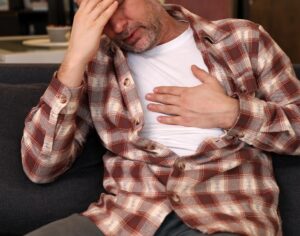
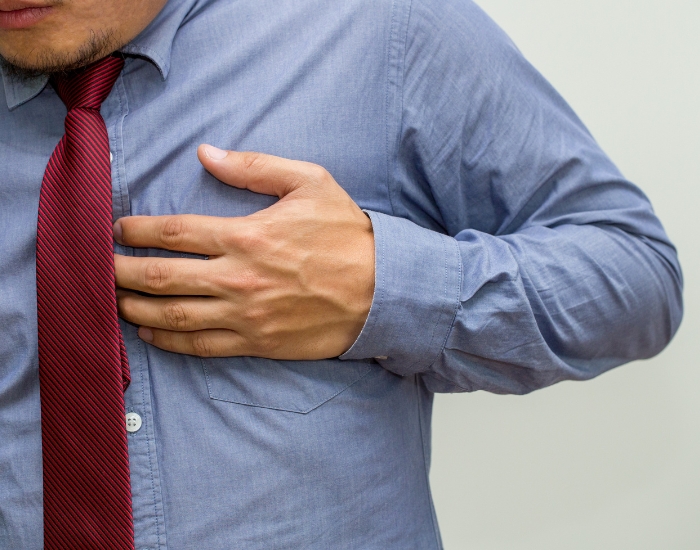
Should I go to the ER for chest pain? Yes, call 911, if the pain is new, severe, feels like pressure or squeezing, lasts more than a few minutes, or comes with shortness of breath, sweating, nausea, fainting or pain in the arm, jaw or back. Do not drive yourself. Mild pain that has fully gone away still deserves a doctor visit within a few days.

Medically reviewed by
Board-certified cardiologist · Katy & Sugar Land, TX
Fellowship-trained in cardiovascular disease, interventional cardiology, echocardiography and advanced heart failure and transplant cardiology. Former Assistant Professor of Cardiology at McGovern Medical School.
When should you go to the ER for chest pain?
Chest pain has many causes, from heartburn to a strained muscle, but some of the most dangerous conditions in medicine also start with chest pain: heart attack, a tear in the aorta (aortic dissection) and a blood clot in the lungs (pulmonary embolism). Because these can look alike in the first minutes, emergency doctors treat chest pain as a heart problem until tests show otherwise.
| What you notice | What to do |
|---|---|
| Pressure, squeezing, tightness or heaviness in the chest lasting more than a few minutes, or that goes away and comes back | Call 911 |
| Chest pain with shortness of breath, cold sweat, nausea, lightheadedness or fainting | Call 911 |
| Pain spreading to the arm, shoulder, jaw, neck or back | Call 911 |
| Sudden, severe tearing or ripping pain into the back | Call 911 |
| Sharp chest pain with sudden breathlessness, especially after surgery, a long trip or with a swollen leg | Call 911 |
| Brief chest discomfort that has completely resolved and you feel well | Doctor or cardiologist visit within a few days |
| Chest discomfort only with exertion that eases quickly with rest | Prompt cardiology visit; ER if it gets worse or happens at rest |
| Pain clearly tied to a recent strain and tender to touch, with no other symptoms | Primary care visit; ER if new warning signs appear |
If you are unsure, treat it as an emergency. ER teams would much rather rule out a heart attack than see a patient who waited too long.
- Chest pressure, squeezing or pain lasting more than a few minutes, or that returns
- Pain spreading to the arms, jaw, neck, back or upper stomach
- Shortness of breath, cold sweat, nausea or vomiting
- Lightheadedness, fainting or a very fast or irregular heartbeat
- Sudden tearing pain in the chest or back, or sudden breathlessness with sharp chest pain
Unlock your door, sit down and follow the 911 dispatcher’s instructions, including any advice about aspirin.
Why calling 911 is better than driving to the ER
It is tempting to have someone drive you, or to drive yourself, but calling 911 is safer for several reasons:
- Paramedics can record an EKG on the way and send it ahead, so the hospital’s heart team is ready when you arrive.
- They can treat dangerous heart rhythms immediately if your heart stops or races.
- They take you to a hospital equipped to open a blocked artery.
- You avoid the risk of passing out while driving.
The National Heart, Lung, and Blood Institute advises calling 911 for heart attack symptoms instead of driving, because treatment works best when started quickly.
ER or urgent care for chest pain?
Urgent care clinics are useful for sprains, infections and minor injuries, but they are usually not set up to diagnose or treat a heart attack. Many will send a patient with chest pain straight to the ER, which costs precious time.
Choose the ER (via 911) for any chest pain with warning signs. Urgent care may be reasonable only when pain is mild, clearly linked to a minor injury or a cough, and there are no other symptoms. When in doubt, choose the ER.
What happens in the ER for chest pain?
Knowing what to expect can make an ER visit less stressful:
- EKG within minutes of arrival to look for a heart attack or rhythm problem.
- Troponin blood tests, which detect heart muscle injury. These are often repeated a few hours apart because levels rise over time.
- Chest X-ray to look at the lungs, heart size and aorta.
- CT scans when a blood clot in the lungs or an aortic tear is suspected.
- Observation or admission for patients who need more monitoring or stress testing.
If a heart attack is found, a cardiology team may open the blocked artery with angioplasty and a stent during cardiac catheterization.
Who should have a lower threshold for going to the ER?
Some people have heart attacks that feel milder or different than expected. Act quickly on chest discomfort if you:
- Have diabetes, which can dull pain signals.
- Are a woman; women more often report breathlessness, nausea, back or jaw pain and unusual fatigue. See heart attack symptoms in women.
- Are older than 65.
- Already have coronary artery disease, a stent, bypass surgery or heart failure.
- Have high blood pressure, high cholesterol, kidney disease, smoke, or have a strong family history of early heart disease.
Some heart attacks cause almost no chest pain at all. Learn the signs of a silent heart attack.
What to do after the ER sends you home
A normal ER workup is reassuring: it means you were not having a heart attack at that moment. It does not always explain why you had chest pain, and it does not rule out narrowed arteries that only cause symptoms with exertion.
Most discharge instructions recommend follow-up with a cardiologist within a few days. That visit may include a stress test, an echocardiogram, a coronary calcium scan or a review of risk factors such as blood pressure and cholesterol. Bring your ER paperwork, test results and medication list.
Chest pain causes that may not need the ER
Many chest pains turn out to come from the esophagus, stomach, lungs, muscles or anxiety. Common examples include acid reflux, costochondritis, a pulled chest muscle and panic attacks. These can be treated once a heart cause has been considered. The catch is that only testing can reliably separate them from heart pain, so a first episode of unexplained chest pain should still be checked promptly. If you are not sure who to see, read what doctor should you see for chest pain.
Follow-up chest pain care in Katy and Sugar Land
After an ER visit, or for chest pain that has settled, Advanced Cardiology offers follow-up evaluations at our Katy and Sugar Land offices. Dr. Khalid reviews your ER records and test results, and EKG and echocardiogram testing are available in the office. Learn more about our chest pain evaluation and treatment.
Katy office: 410 W Grand Pkwy S, Suite 4D, Katy, TX 77494
Sugar Land office: 7102 Tarrington Ave, Suite 505, Sugar Land, TX 77479
Phone: (713) 258-6111
We also see patients from Fulshear, Richmond, Rosenberg, Stafford, Missouri City and west Houston.
Seen in the ER for chest pain? Schedule your follow-up
Discharge papers often say to see a cardiologist within a few days. Request a visit and bring your ER records; our team can help gather them.
Having symptoms right now? Call 911. Do not wait for an appointment.
Frequently asked questions
Should I go to the ER for mild chest pain?
Go to the ER if mild chest pain feels like pressure, lasts more than a few minutes, keeps returning or comes with breathlessness, sweating, nausea or dizziness. Heart attacks can start mildly. If mild pain clearly came from a strain and has gone away, see a doctor within a few days.
How long should chest pain last before going to the ER?
Do not wait a set amount of time. Chest discomfort that lasts more than a few minutes, or goes away and comes back, is a reason to call 911. Waiting to see if it passes can allow more heart muscle damage.
Is it better to call 911 or drive to the hospital for chest pain?
Call 911. Paramedics can start an EKG and treatment on the way, manage dangerous rhythms, and alert the hospital heart team before you arrive. Driving yourself also risks passing out at the wheel.
Can the ER tell if I had a heart attack?
Yes. An EKG and troponin blood tests, often repeated a few hours apart, can show whether heart muscle was injured. Imaging may be added to check for other causes such as a lung clot or aortic problem.
What if the ER says my heart is fine but I still have chest pain?
See a cardiologist within a few days. ER tests show whether you were having a heart attack, but stress testing or imaging may be needed to find narrowed arteries or other causes that only appear with exertion.
Can anxiety chest pain send you to the ER?
Panic attacks can cause chest pain, a racing heart and breathlessness that feel like a heart attack. Because the symptoms overlap, a first episode should be evaluated. Once heart causes are ruled out, a doctor can help you manage anxiety-related symptoms.
Should I take aspirin for chest pain?
Only if a 911 dispatcher or your doctor tells you to. Aspirin can help during a heart attack but is unsafe for some people, including those with certain bleeding problems or allergies.
Trusted health resources
- Heart Attack: Symptoms, National Heart, Lung, and Blood Institute (NIH)
- Heart Attack, MedlinePlus, U.S. National Library of Medicine
- Chest pain, MedlinePlus Medical Encyclopedia
- Aortic dissection, MedlinePlus Medical Encyclopedia
- Pulmonary Embolism, MedlinePlus, U.S. National Library of Medicine
Medical disclaimer: This article is for general education and is not a diagnosis or a substitute for care from your own doctor. If you think you may be having a heart attack, stroke or another emergency, call 911 right away.