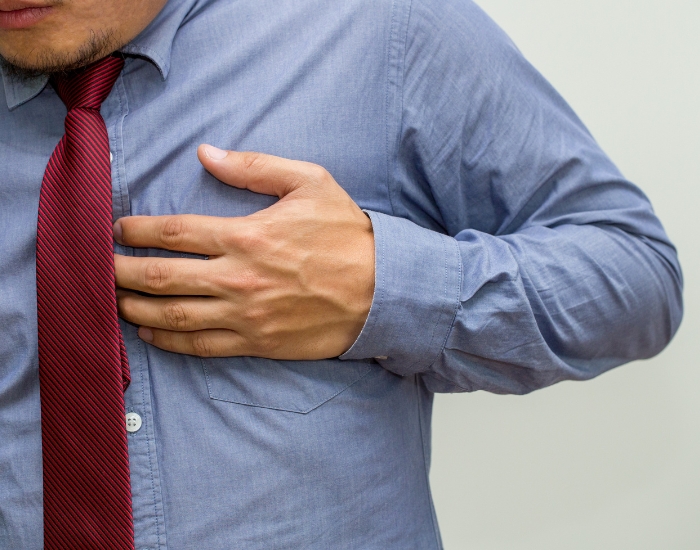
A burning sensation in the chest is most often heartburn from acid reflux, but it can also come from an ulcer, esophagitis, a chest infection, shingles or anxiety. Some people describe angina or a heart attack as burning, so burning that comes with exertion, sweating, breathlessness or pain in the arm or jaw needs urgent care.

Medically reviewed by
Board-certified cardiologist · Katy & Sugar Land, TX
Fellowship-trained in cardiovascular disease, interventional cardiology, echocardiography and advanced heart failure and transplant cardiology. Former Assistant Professor of Cardiology at McGovern Medical School.
What causes a burning sensation in the chest?
Burning is one of the most common ways people describe chest discomfort. Usually the source is the esophagus, but nerves, lungs, skin and the heart can all produce a burning feeling.
| Cause | Clues | What to do |
|---|---|---|
| Heartburn (acid reflux, GERD) | Burning behind the breastbone after meals or lying down, sour taste | Lifestyle steps, acid reducers; see a doctor if frequent |
| Esophagitis or esophageal spasm | Painful or difficult swallowing, squeezing pain | See a doctor |
| Peptic ulcer | Gnawing upper abdominal burning, may change with meals | See a doctor; ER if vomiting blood or black stools |
| Angina or heart attack | Burning or pressure with exertion or stress, spreading to arm, jaw or back; sweating, breathlessness | 911 for ongoing symptoms; cardiology for exertional pattern |
| Chest infection (bronchitis, pneumonia) | Cough, fever, burning with breathing or coughing | See a doctor |
| Shingles | Burning or tingling on one side in a band, followed by a rash days later | See a doctor promptly for antiviral treatment |
| Anxiety or panic | Burning or tightness with racing heart, fast breathing | See a doctor; rule out heart causes first |
| Costochondritis | Burning or aching on the chest wall, tender to touch | See a doctor if it persists |
Can a burning chest be a heart problem?
Yes. Many people expect heart pain to be crushing, but patients with angina or a heart attack sometimes describe it as burning, indigestion or a vague discomfort. This is especially true of women, older adults and people with diabetes. The National Heart, Lung, and Blood Institute notes that heart attack symptoms can include indigestion-like discomfort and nausea.
Burning is more likely to be heart-related if it:
- Comes on with walking, stairs, cold weather or emotional stress and eases with rest.
- Spreads to the arm, shoulder, neck, jaw or back.
- Comes with shortness of breath, sweating, nausea or unusual fatigue.
- Does not respond to antacids, or is new after age 50.
- Occurs in someone with high blood pressure, diabetes, high cholesterol, smoking or a family history of heart disease.
- Pressure or tightness lasting more than a few minutes
- Pain in the arm, shoulder, jaw, neck or back
- Shortness of breath, cold sweat, nausea or lightheadedness
- Fainting or a racing, irregular heartbeat
- Vomiting blood or black, tarry stools
Heartburn: the most common cause
Heartburn happens when stomach acid flows back into the esophagus. It typically starts after meals, worsens when lying down or bending over, and improves with antacids. Frequent heartburn, more than twice a week, may be GERD. For a full comparison of reflux and heart pain, read can acid reflux feel like chest pain or a heart attack? and why your chest hurts after eating.
Burning from nerves, skin, lungs and anxiety
Shingles can cause burning, tingling or sharp pain in a band on one side of the chest days before a blistering rash appears. Early antiviral treatment works best, so see a doctor promptly. Chest infections cause burning in the airways, especially with coughing. Anxiety can produce burning or tightness along with a racing heart; learn more in can anxiety cause chest pain and palpitations?
How doctors find the cause of chest burning
When burning could be cardiac, testing starts with the heart: an EKG, blood tests and often a stress test. An echocardiogram may be added. If the heart is normal, treatment for reflux, an upper endoscopy or other tests can follow with your primary care doctor or gastroenterologist.
Relief for chest burning
For burning confirmed to be reflux: eat smaller meals, avoid lying down for about three hours after eating, raise the head of your bed, limit alcohol, fatty foods, caffeine and late-night snacks, and stop smoking. Use acid reducers as directed. If you need them often, or burning keeps returning despite these steps, see a doctor rather than continuing to self-treat.
Chest burning evaluation in Katy and Sugar Land
If you are not sure whether chest burning is heartburn or your heart, Advanced Cardiology can help. Dr. Khalid evaluates patients at our Katy and Sugar Land offices, with EKG and echocardiogram testing available in the office and stress testing arranged when needed. Learn about our chest pain care.
Katy office: 410 W Grand Pkwy S, Suite 4D, Katy, TX 77494
Sugar Land office: 7102 Tarrington Ave, Suite 505, Sugar Land, TX 77479
Phone: (713) 258-6111
We also see patients from Fulshear, Richmond, Rosenberg, Stafford, Missouri City and west Houston.
Burning chest with activity? Check your heart
Burning that comes with exertion can be angina. Request a cardiology visit in Katy or Sugar Land.
Having symptoms right now? Call 911. Do not wait for an appointment.
Frequently asked questions
What causes a burning sensation in the chest?
The most common cause is heartburn from acid reflux. Other causes include ulcers, esophagitis, chest infections, shingles, anxiety, costochondritis and, less often, angina or a heart attack.
Can a burning sensation in the chest be a heart attack?
Yes. Some people feel heart attack or angina pain as burning or indigestion. Burning with exertion, sweating, breathlessness, nausea or pain spreading to the arm or jaw needs 911.
How do I know if chest burning is heartburn or my heart?
Heartburn usually follows meals, worsens lying down, rises toward the throat and improves with antacids. Burning with exertion, spreading pain or other symptoms points toward the heart. Testing is the only reliable way to know.
Can anxiety cause a burning sensation in the chest?
Anxiety can cause chest burning or tightness with a racing heart and fast breathing. A first episode should be checked to rule out heart causes.
Why does my chest burn when I cough?
Coughing irritates inflamed airways in bronchitis, colds and pneumonia, causing a burning feeling. See a doctor if you have fever, breathlessness or symptoms lasting more than a few weeks.
When should I see a doctor for chest burning?
See a doctor if burning happens more than twice a week, does not respond to antacids, comes with exertion, or causes trouble swallowing or weight loss. Call 911 for severe or spreading symptoms.
Trusted health resources
- Acid Reflux (GER and GERD) in Adults, National Institute of Diabetes and Digestive and Kidney Diseases (NIH)
- Heart Attack: Symptoms, National Heart, Lung, and Blood Institute (NIH)
- Peptic Ulcer, MedlinePlus, U.S. National Library of Medicine
- Shingles, MedlinePlus, U.S. National Library of Medicine
- Stable angina, MedlinePlus Medical Encyclopedia
Medical disclaimer: This article is for general education and is not a diagnosis or a substitute for care from your own doctor. If you think you may be having a heart attack, stroke or another emergency, call 911 right away.