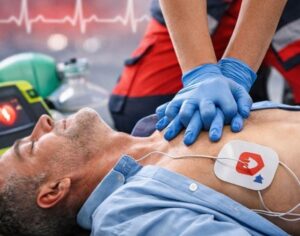
Yes, dehydration can cause chest discomfort and dizziness. Losing fluid lowers blood volume and blood pressure, so the heart beats faster to compensate, and low potassium or magnesium can trigger palpitations. But chest pain should not be blamed on dehydration until heart causes are ruled out. Chest pain with fainting, confusion or breathlessness needs 911.

Medically reviewed by
Board-certified cardiologist · Katy & Sugar Land, TX
Fellowship-trained in cardiovascular disease, interventional cardiology, echocardiography and advanced heart failure and transplant cardiology. Former Assistant Professor of Cardiology at McGovern Medical School.
How dehydration affects your heart
About half of your blood is plasma, which is mostly water. When you lose more fluid than you take in, through sweating, vomiting, diarrhea, fever or not drinking enough, blood volume drops. The heart responds by beating faster to keep blood pressure up. That extra work, along with lower blood pressure and shifts in electrolytes, can cause:
- Dizziness or lightheadedness, especially when standing up quickly.
- A racing or pounding heartbeat and palpitations.
- Chest discomfort or tightness, particularly in people with narrowed heart arteries, because the heart needs more oxygen while blood pressure is lower.
- Fatigue, weakness, headache and muscle cramps.
- Fainting in more severe cases.
Signs of dehydration to watch for
MedlinePlus lists thirst, dark urine, urinating less often, dry mouth, fatigue, dizziness and confusion as signs of dehydration in adults. In Houston’s heat and humidity, dehydration can develop quickly during yard work, sports, outdoor jobs or even a long commute in a hot car.
| Mild to moderate | Severe (seek urgent care) |
|---|---|
| Thirst, dry mouth | Confusion or extreme sleepiness |
| Dark yellow urine, urinating less | Little or no urine for many hours |
| Headache, fatigue | Fainting or inability to stand without collapsing |
| Lightheaded when standing | Very fast heartbeat or breathing |
| Muscle cramps | Chest pain, hot dry skin or temperature above 103°F (possible heat stroke) |
When chest pain is not just dehydration
It is easy to blame chest discomfort on a hot day, but dehydration and heat stress can also unmask existing heart disease. A heart with narrowed arteries may cope at rest but struggle when it has to beat faster with less blood volume. Heat and dehydration can also trigger rhythm problems such as atrial fibrillation.
Chest pain is more likely to be cardiac if it feels like pressure or squeezing, spreads to the arm, jaw or back, comes with breathlessness or sweating out of proportion to the heat, or does not improve within a short time of resting in a cool place and drinking fluids.
- Chest pain or pressure that does not ease quickly with rest, cooling and fluids
- Fainting, confusion, slurred speech or seizures
- A very fast, pounding or irregular heartbeat that does not settle
- Hot, dry skin or a body temperature of 103°F or higher
- Shortness of breath or pain spreading to the arm, jaw or back
Who is at higher risk?
- Older adults, who may feel less thirsty.
- People taking diuretics (water pills), certain blood pressure medicines or SGLT2 inhibitors, which increase fluid loss or lower blood pressure.
- People with heart failure, who must balance fluid carefully and may be on a fluid limit. Never change your fluid intake or medicines without talking to your care team. Learn about living with heart failure.
- People with diabetes, since high blood sugar increases urination.
- Outdoor workers and athletes in hot weather.
Dizziness, low blood pressure and fainting
Dizziness when standing is often caused by orthostatic hypotension, a drop in blood pressure on standing, which dehydration makes worse. If you often feel lightheaded, read about low blood pressure, POTS and why you may feel dizzy and weak suddenly. Fainting with exertion, or fainting with chest pain or palpitations, always needs a cardiology evaluation; see our dizziness and fainting page.
What to do and how to prevent it
- Stop activity, move to a cool, shaded place and sit or lie down.
- Sip water or an oral rehydration drink if you can swallow and are alert.
- Call 911 for any warning sign below, or if symptoms do not improve quickly.
To prevent dehydration: drink regularly through the day, more in heat or with exercise; check that your urine stays pale yellow; schedule outdoor activity for cooler hours; limit alcohol; and ask your doctor how to adjust fluids on hot days if you take diuretics or have heart failure.
When to see a cardiologist
See a cardiologist if chest discomfort, palpitations or dizziness keep happening, occur even when you are well hydrated, or come with exertion. Evaluation may include an EKG, blood tests for electrolytes and kidney function, an echocardiogram, a Holter monitor or a stress test.
Heart evaluation in Katy and Sugar Land
Texas heat puts extra strain on the heart. If you notice chest discomfort, palpitations or dizziness in hot weather or with exertion, Advanced Cardiology can check your heart rhythm, blood pressure and blood flow. Dr. Khalid sees patients at our Katy and Sugar Land offices, where EKG and echocardiogram testing are available.
Katy office: 410 W Grand Pkwy S, Suite 4D, Katy, TX 77494
Sugar Land office: 7102 Tarrington Ave, Suite 505, Sugar Land, TX 77479
Phone: (713) 258-6111
We also see patients from Fulshear, Richmond, Rosenberg, Stafford, Missouri City and west Houston.
Dizzy spells or chest discomfort in the heat?
Find out whether your heart is part of the picture. Request a cardiology visit in Katy or Sugar Land.
Having symptoms right now? Call 911. Do not wait for an appointment.
Frequently asked questions
Can dehydration cause chest pain?
Dehydration can cause chest discomfort by lowering blood pressure, speeding up the heart and upsetting electrolytes. It can also reveal underlying heart disease. Chest pain should be evaluated rather than assumed to be dehydration.
Can dehydration cause dizziness and a fast heartbeat?
Yes. Lower blood volume makes blood pressure drop, especially on standing, and the heart beats faster to compensate. This can cause lightheadedness, palpitations and fainting.
How long does it take to feel better after rehydrating?
Mild dehydration often improves within an hour or so of resting and drinking fluids. If chest pain, dizziness or palpitations persist, seek medical care.
Can dehydration cause heart palpitations?
Yes. Dehydration and low levels of potassium or magnesium can cause extra beats or a racing heart. Palpitations that keep recurring should be evaluated with an EKG or heart monitor.
Should heart failure patients drink more water in hot weather?
Not without guidance. Many heart failure patients have a daily fluid limit and take diuretics. Ask your cardiologist how to adjust fluids and medicines during hot weather.
When is dehydration an emergency?
Seek emergency care for confusion, fainting, no urine for many hours, a very fast heartbeat, chest pain that does not settle, or signs of heat stroke such as hot, dry skin and high temperature.
Trusted health resources
- Dehydration, MedlinePlus, U.S. National Library of Medicine
- Heart Attack: Symptoms, National Heart, Lung, and Blood Institute (NIH)
- Fatigue, MedlinePlus Medical Encyclopedia
- Heart Failure, MedlinePlus, U.S. National Library of Medicine
Medical disclaimer: This article is for general education and is not a diagnosis or a substitute for care from your own doctor. If you think you may be having a heart attack, stroke or another emergency, call 911 right away.