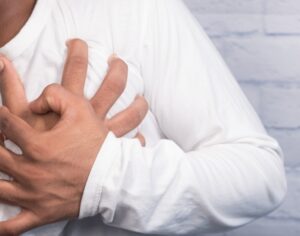
Chest pain when breathing, often sharp and worse with a deep breath or cough, is called pleuritic chest pain. Common causes are a strained chest muscle, costochondritis, pleurisy and pneumonia. It can also signal a blood clot in the lungs, a collapsed lung or pericarditis, so sudden pain with breathlessness, a fast heartbeat or coughing blood needs 911.

Medically reviewed by
Board-certified cardiologist · Katy & Sugar Land, TX
Fellowship-trained in cardiovascular disease, interventional cardiology, echocardiography and advanced heart failure and transplant cardiology. Former Assistant Professor of Cardiology at McGovern Medical School.
Why does my chest hurt when I breathe?
Every breath moves the ribs, chest muscles, the lining of the lungs (the pleura) and, indirectly, the sac around the heart (the pericardium). Inflammation or injury in any of these structures can make breathing painful. Doctors call this pleuritic chest pain: a sharp, stabbing pain that gets worse when you breathe in deeply, cough, sneeze or laugh.
| Cause | Clues | Urgency |
|---|---|---|
| Pulmonary embolism (lung clot) | Sudden breathlessness, fast heartbeat, coughing blood, recent surgery, travel or a swollen leg | Emergency: call 911 |
| Collapsed lung (pneumothorax) | Sudden one-sided sharp pain and breathlessness, sometimes in tall, thin young adults or people with lung disease | Emergency: call 911 |
| Pericarditis | Sharp central pain, worse lying flat, better sitting up and leaning forward; often after a viral illness | Same-day medical care |
| Pneumonia | Fever, chills, cough with mucus, breathlessness | See a doctor; ER if breathing is hard |
| Pleurisy | Sharp pain with each breath, often after a viral infection | See a doctor |
| Costochondritis or muscle strain | Tender spot on the chest wall, worse with movement or pressing | See a doctor if it persists |
| Rib injury | Recent fall or blow to the chest, pain with breathing and movement | See a doctor; ER if breathing is difficult |
- Sudden shortness of breath or trouble catching your breath
- A fast or irregular heartbeat, fainting or lightheadedness
- Coughing up blood
- Chest pressure spreading to the arm, jaw, neck or back
- Recent surgery, a long trip, a swollen painful leg, or blue or gray lips
Heart causes of chest pain when breathing
Pericarditis is inflammation of the thin sac surrounding the heart. The MedlinePlus encyclopedia describes sharp, stabbing chest pain that may get worse with deep breathing or lying down and improve when sitting up and leaning forward. It often follows a viral infection and is usually treated with anti-inflammatory medicines, but it should be diagnosed by a doctor because fluid can collect around the heart. An echocardiogram checks for that fluid, and in rare severe cases pericardiocentesis is needed to drain it.
Myocarditis, inflammation of the heart muscle, can cause chest pain, breathlessness, fatigue and palpitations.
Heart attacks usually cause pressure rather than pain that changes with breathing, but there are exceptions, so pain with other warning signs should never be dismissed.
Lung causes: clots, pneumonia, pleurisy and collapsed lung
A pulmonary embolism is a blood clot, usually from a leg vein, that blocks blood flow in the lungs. According to the National Heart, Lung, and Blood Institute, symptoms can include shortness of breath, chest pain that worsens with breathing, a fast heartbeat and coughing up blood. It is an emergency.
Pneumonia and pleurisy inflame the lungs or their lining and often follow infections such as flu or COVID-19. A pneumothorax happens when air leaks into the space around a lung, causing sudden one-sided pain and breathlessness.
Chest wall causes: costochondritis and muscle strain
Many cases of painful breathing come from the chest wall itself. Costochondritis is inflammation where the ribs join the breastbone. A strained intercostal muscle from coughing, lifting or exercise can also hurt with every breath. Chest wall pain is often tender to touch and changes with twisting or stretching. It usually improves with rest, heat and over-the-counter pain relievers, if your doctor says they are safe for you.
How doctors diagnose painful breathing
- Physical exam, including listening for a pericardial rub or abnormal lung sounds, and checking oxygen level.
- EKG, which shows characteristic changes in pericarditis and helps rule out a heart attack.
- Chest X-ray for pneumonia, collapsed lung or fluid.
- Blood tests, including D-dimer, troponin and markers of inflammation.
- CT pulmonary angiography when a clot is suspected.
- Echocardiogram to look for fluid around the heart or strain on the right side of the heart.
When it is safe to manage at home
Once a doctor has confirmed a minor cause such as a muscle strain or costochondritis, rest, warm compresses, gentle stretching and avoiding heavy lifting usually help within days to weeks. Return for care if pain gets worse, you develop fever, breathlessness or palpitations, or pain lasts longer than expected.
Chest pain evaluation in Katy and Sugar Land
If painful breathing keeps coming back, or you were told you may have pericarditis, Advanced Cardiology can help. Dr. Khalid evaluates patients at our Katy and Sugar Land offices, with EKG and echocardiogram testing available in the office. Learn about our chest pain care and our page on why your chest may hurt.
Katy office: 410 W Grand Pkwy S, Suite 4D, Katy, TX 77494
Sugar Land office: 7102 Tarrington Ave, Suite 505, Sugar Land, TX 77479
Phone: (713) 258-6111
We also see patients from Fulshear, Richmond, Rosenberg, Stafford, Missouri City and west Houston.
Sharp chest pain that will not settle?
Pericarditis and other heart causes are easy to check with an EKG and echocardiogram. Request a visit in Katy or Sugar Land.
Having symptoms right now? Call 911. Do not wait for an appointment.
Frequently asked questions
Why does my chest hurt when I take a deep breath?
Common causes include muscle strain, costochondritis, pleurisy and pneumonia. More serious causes include a blood clot in the lungs, a collapsed lung and pericarditis. Sudden pain with breathlessness needs 911.
Is chest pain when breathing a heart problem?
Sometimes. Pericarditis, an inflammation of the sac around the heart, causes sharp pain that worsens with breathing and lying flat. Most pain that changes with breathing comes from the lungs or chest wall, but a doctor should check.
How do I know if chest pain when breathing is serious?
Pain is more serious if it starts suddenly, comes with shortness of breath, a fast heartbeat, fainting, coughing blood or fever, or follows surgery or a long trip. These need urgent care.
Can anxiety cause chest pain when breathing?
Anxiety can cause rapid breathing and chest muscle tension that hurt. Because the symptoms overlap with lung and heart problems, a first episode should be evaluated.
How long does pleurisy or costochondritis last?
Costochondritis often improves within days to weeks, though it can linger. Pleurisy usually improves as the underlying infection clears. Pain that worsens or lasts should be rechecked.
What does pericarditis pain feel like?
It is usually a sharp, stabbing pain in the center or left side of the chest that worsens with deep breaths or lying down and eases when sitting up and leaning forward.
Should I go to the ER for chest pain when breathing?
Go to the ER if the pain is sudden or severe, or comes with breathlessness, a racing heart, coughing blood or fainting. Milder pain that is clearly from a strain can be checked by a doctor within a few days.
Trusted health resources
- Pericarditis, MedlinePlus Medical Encyclopedia
- Venous Thromboembolism, National Heart, Lung, and Blood Institute (NIH)
- Heart Inflammation, National Heart, Lung, and Blood Institute (NIH)
- Costochondritis, MedlinePlus Medical Encyclopedia
- Chest Pain, MedlinePlus, U.S. National Library of Medicine
Medical disclaimer: This article is for general education and is not a diagnosis or a substitute for care from your own doctor. If you think you may be having a heart attack, stroke or another emergency, call 911 right away.