
What Are the Signs of Blocked Arteries in the Heart?
Signs of blocked heart arteries include chest pressure with exertion, breathlessness and fatigue. Learn the warning signs, risk factors, tests and treatment.
Cardiologist Serving Katy, Sugar Land, Greater Houston
A nuclear stress test uses a small amount of radioactive tracer and a special camera to compare blood flow to the heart muscle at rest and under stress. At Advanced Cardiology, nuclear testing is performed or arranged by our office for patients of our Katy and Sugar Land locations, and Adnan Khalid, MD reviews the results as part of your evaluation.
Dr. Khalid reviews your symptoms, history and test results himself
Visits in Katy and Sugar Land
Catheter and device procedures at an affiliated hospital
Office follow-up on medicines and risk factors
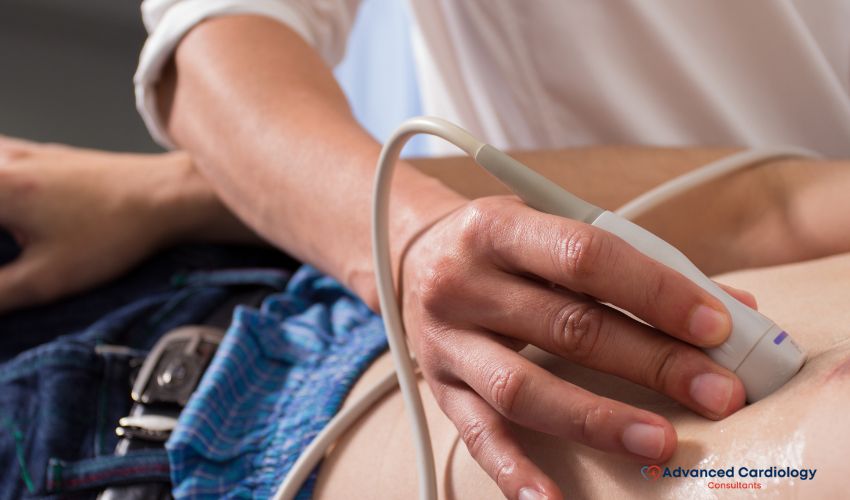
Nuclear cardiac testing, often called a nuclear stress test or myocardial perfusion imaging, is a non-invasive imaging test that shows how well blood reaches different areas of the heart muscle. A small amount of radioactive tracer is injected into a vein, and a special camera takes pictures once at rest and once after the heart has been stressed with exercise or medication. Comparing the two sets of images can show areas that receive less blood during stress, areas of scar from a prior heart attack, and an estimate of pumping function.
It is often chosen when a standard exercise stress test or EKG is not enough on its own, for example when the resting EKG is abnormal or when someone cannot exercise. Dr. Khalid uses the results, together with your symptoms and history, to help decide whether further testing or treatment is needed.

Adnan Khalid, MD, Cardiologist
Adnan Khalid, MD, specializes in treating coronary artery disease, peripheral artery disease, heart failure, hypertension, arrhythmias, and hyperlipidemia. He has over 10 years of experience in the field of cardiovascular medicine.
Dr. Khalid graduated from his medical school among the top 10 out of 250 medical students in his class. He is fellowship trained in cardiovascular diseases, interventional cardiology, advanced heart failure, and transplant cardiology. He is focused on providing personalized and compassionate care. Dr. Khalid believes in spending time with his patients and listening to their needs and is committed to offering excellent care.
Dr. Khalid is an avid reader. He is eager to learn new things; He likes to work out and spend time with his family. When off from work, he likes to travel and spend time in nature along with family and friends. He is married with three children. Dr. Adnan Khalid is now seeing patients at our Katy and Sugar Land offices and welcomes new patients from across the greater Houston area.
American Board of Internal Medicine
Interventional Cardiology
Compared with an exercise stress test alone, a nuclear test adds pictures of blood flow to the heart muscle. Dr. Khalid may recommend it when:
Chest discomfort or pressure: may reflect reduced blood flow; the images can show which area of the heart is affected.
Shortness of breath: can come from the heart or the lungs; the test can show reduced blood flow or weakened pumping.
Fatigue with mild activity: the test shows how the heart responds to stress, although fatigue has many non-heart causes.
Prior heart events or procedures: imaging can help assess blood flow after a stent or bypass when symptoms return. It is not routinely repeated in people without symptoms.
It can show: areas of heart muscle that get less blood during stress (ischemia); areas of scar from a prior heart attack, including one that went unnoticed; and an estimate of how well the left ventricle pumps.
It cannot show: the arteries themselves. It shows the effect of a narrowing on blood flow, not its exact location or how severe it is. Results can occasionally be falsely abnormal (for example from breast or abdominal tissue blocking part of the image) or falsely reassuring when narrowing affects all arteries evenly. It does not evaluate heart valves in detail; an echocardiogram does that.
Not every stress test uses a radiotracer. An exercise stress test uses only the EKG, blood pressure, and symptoms. A stress echocardiogram uses ultrasound, with no radiation, to look at heart-wall motion. A nuclear stress test uses a tracer and involves a small dose of radiation. Each has strengths and limits, and Dr. Khalid recommends the one that fits your situation.
Depending on the results, Dr. Khalid may recommend lifestyle changes, medication adjustments, further testing such as cardiac catheterization and angiography, or discussion of procedures such as angioplasty and stenting or bypass surgery. The choice between these depends on symptoms, test results, overall health, and the anatomy of the arteries, not just the number of narrowed arteries.

Risk factors such as diabetes, high blood pressure, or high cholesterol matter, but they are not by themselves a reason for nuclear testing in someone without symptoms. Before surgery, stress testing is reserved for selected patients whose results would change their care; see preoperative cardiac evaluation.
Most major insurance plans are accepted, and coverage is verified individually. Nuclear testing often requires prior authorization, and our staff can help with that process. Please call our office if you have questions about your benefits.
Follow the specific instructions your care team gives you. You will usually be asked not to eat for several hours and to avoid caffeine, including coffee, tea, soda, chocolate, and some pain relievers, for a set time beforehand, because caffeine can block the stress medicine. Some heart medicines may affect the results, but do not stop or change any medication unless Dr. Khalid or the office tells you to. If you have diabetes, ask how to manage your diabetes medicines and meals that day.
A nuclear stress test usually takes several hours, much of it waiting while the tracer circulates. An IV is placed in your arm. A small amount of tracer is injected, and after a wait you lie still under a camera for the first (rest) set of pictures. Next comes the stress portion: either walking on a treadmill or, if you cannot exercise, receiving a medicine through the IV that increases blood flow the way exercise does. More tracer is given at peak stress, followed by a second set of pictures. Your EKG and blood pressure are monitored throughout. Some labs perform the two parts on different days.
The test involves a small dose of radiation, which is weighed against the benefit of the information. Stress medicines can cause brief flushing, headache, chest pressure, or shortness of breath that usually fades within minutes. Serious problems such as dangerous rhythms or a heart attack are uncommon, and the test is supervised so it can be stopped and treated promptly. Lying still under the camera can be uncomfortable for people with back or shoulder pain.
Nuclear testing is done in a facility licensed to handle radioactive tracers. Our office will tell you where your test will be performed. Dr. Khalid reviews the report and images and explains the findings at a follow-up visit or by another method the office arranges; timing varies. If something needs prompt attention, the office will contact you.
Is the tracer safe? The tracer is used in small amounts and leaves the body over time; drinking fluids afterward may help. Allergic reactions are rare. Your care team weighs the small radiation exposure against what the test can tell them.
Do I need a nuclear test instead of a stress echo? Not necessarily. Both look for reduced blood flow during stress. The choice depends on your body build, resting EKG, prior heart history, and which test is more likely to give a clear answer for you.
Will I be around other people afterward? Yes. The amount of tracer is small, and most people return to normal activities the same day. Ask the staff about any specific precautions, such as contact with infants or pregnant family members.
Do not wait for a scheduled test if you have chest discomfort that lasts more than a few minutes or comes and goes, discomfort in the arm, back, neck, jaw, or stomach, shortness of breath, a cold sweat, nausea, or lightheadedness, or stroke signs such as face drooping, arm weakness, or speech difficulty. Call 911, even if symptoms go away.
Sources: NHLBI: Heart Tests · NHLBI: Coronary Heart Disease · ACC: 2024 AHA/ACC Perioperative Guideline · AHA: Warning Signs of a Heart Attack
Please print out your paperwork and bring it to your appointment at Advanced Cardiology. If your insurance requires authorization, please be sure to have that information sent to our office or bring it with you to your appointment, along with any medical records you may have. Please also make sure to bring your insurance cards, photo ID, and medication list.
Thank you, and we look forward to meeting you! Contact us today with any questions.
Most insurance plans accepted
(713) 258-6111
Katy & Sugar Land Cardiologist
# Cooperative & professional staff. Dr. Khalid is highly competent & experienced. Very kind & friendly too.
# He’s A Very Caring & Concerned Doctor. He Asks Important Questions, He Allows Me To Ask Questions & Fully Answers To My Satisfaction. He Diagnosis & Does Whatever It Takes To Fix My Health Issues. He’s A Wonderful Doctor…& Most Of All, I Trust Him & His Staff.
Read More…..
Signs of blocked heart arteries include chest pressure with exertion, breathlessness and fatigue. Learn the warning signs, risk factors, tests and treatment.
Sudden high blood pressure can come from stress, pain, caffeine, missed pills or decongestants. Learn when 180/120 is an emergency and how to prevent spikes.
Skipped heartbeats are usually premature beats (PACs or PVCs) triggered by caffeine, stress or poor sleep. Learn when they are harmless and when to get checked.
Anxiety can cause chest pain and a pounding heart, but so can heart problems. Learn how they differ, how doctors rule out heart causes and when to call 911.
Early signs of heart failure include breathlessness, fatigue, ankle swelling and rapid weight gain. Learn the symptoms, risk factors and how it is diagnosed.
A suddenly racing heart is often stress, caffeine or dehydration, but can be SVT or atrial fibrillation. Learn the causes, warning signs and when to call 911.
Katy & Sugar Land Cardiologist
Advanced Cardiology welcomes new patients at its offices in Katy and Sugar Land. Call our office or send an appointment request, and our staff will follow up.
Most major insurance plans accepted; coverage is verified individually.
For possible heart attack or stroke symptoms, call 911.