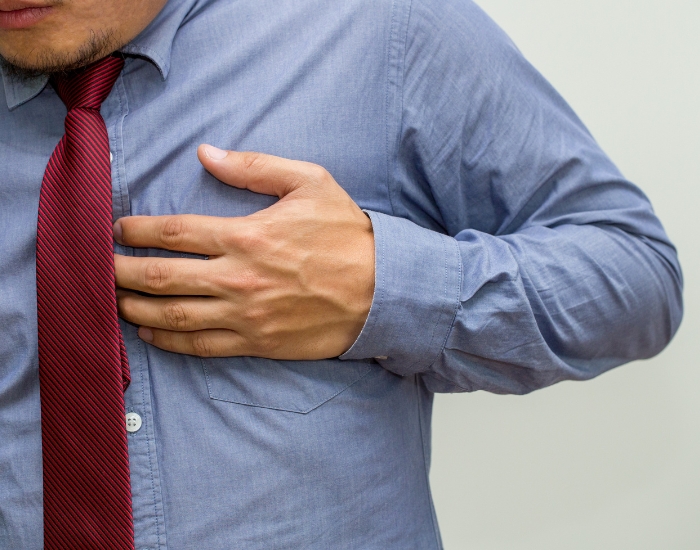
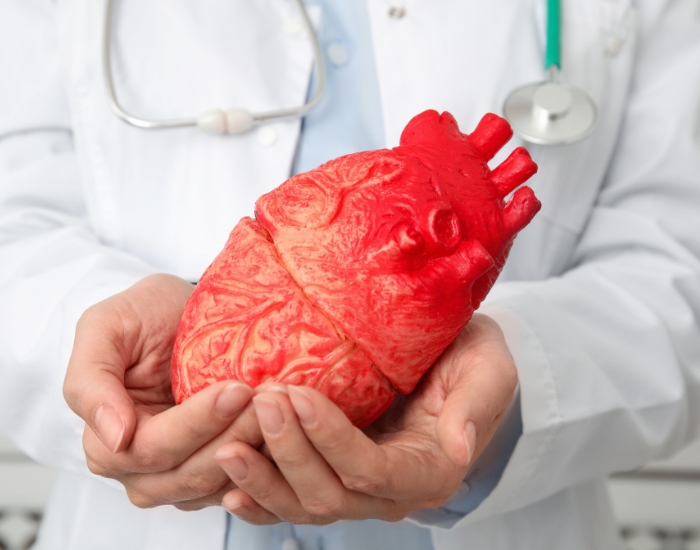
Early signs of heart failure include shortness of breath with activity or when lying flat, tiredness, swelling in the feet, ankles or belly, rapid weight gain from fluid, a persistent cough and needing to urinate at night. These often start gradually and are mistaken for aging or being out of shape. Heart failure is treatable, and finding it early helps medicines work best.

Medically reviewed by
Board-certified cardiologist · Katy & Sugar Land, TX
Fellowship-trained in cardiovascular disease, interventional cardiology, echocardiography and advanced heart failure and transplant cardiology. Former Assistant Professor of Cardiology at McGovern Medical School.
What is heart failure?
Heart failure does not mean the heart has stopped. It means the heart muscle cannot pump or fill as well as the body needs. According to the NHLBI, it can affect the left side, the right side or both. When the heart falls behind, blood and fluid back up into the lungs, legs and abdomen, and the body’s organs receive less oxygen. Common causes include coronary artery disease and prior heart attacks, high blood pressure, diabetes, valve disease, cardiomyopathy, rhythm problems such as atrial fibrillation, and alcohol or drug-related heart damage.
Early signs of heart failure
- Shortness of breath with activity you used to do easily, such as stairs or carrying groceries.
- Breathlessness when lying flat, needing extra pillows, or waking at night short of breath.
- Fatigue and weakness that limit daily activities.
- Swelling (edema) in the feet, ankles, legs or abdomen; socks or shoes leave marks. See leg and ankle swelling.
- Rapid weight gain: 2 to 3 pounds in a day or about 5 pounds in a week, usually from fluid.
- Persistent cough or wheezing, sometimes with white or pink-tinged mucus.
- Needing to urinate at night.
- Loss of appetite, nausea or feeling full quickly, from fluid around the gut and liver.
- Fast or irregular heartbeat.
- Trouble concentrating, especially in older adults.
- Severe shortness of breath, or breathlessness at rest that does not improve
- Coughing up pink, frothy mucus
- Chest pain or pressure
- Fainting, or a fast irregular heartbeat with breathlessness or dizziness
- Confusion or bluish lips
Why early heart failure is often missed
Early symptoms creep up slowly. People cut back activity without realizing, blame breathlessness on weight or age, and treat swollen ankles as a normal part of hot Texas summers. A useful question to ask yourself: What could I do comfortably six months ago that I cannot do now? A real decline deserves a check.
| Symptom | Often blamed on | Clue it may be the heart |
|---|---|---|
| Breathlessness on exertion | Being out of shape, weight | Getting steadily worse, or worse lying flat |
| Swollen ankles | Heat, standing, salty food | Swelling on both sides that leaves a pit when pressed, plus weight gain |
| Fatigue | Age, poor sleep, stress | With breathlessness and swelling |
| Night cough | Allergies, a cold | Worse lying down, better sitting up |
Types and stages of heart failure
Doctors classify heart failure by the ejection fraction (EF), the percentage of blood the left ventricle pumps out with each beat, measured by an echocardiogram: reduced EF (40 percent or less), mildly reduced EF (41 to 49 percent) and preserved EF (50 percent or more). Stages run from A (at risk) and B (structural changes without symptoms) to C (symptoms) and D (advanced). The earlier stages are where prevention and early treatment have the biggest impact. Learn more in cardiac failure vs. heart failure and about low ejection fraction.
Who is at risk?
- High blood pressure, especially if uncontrolled for years.
- Coronary artery disease or a prior heart attack.
- Diabetes and obesity.
- Atrial fibrillation or other rhythm problems.
- Valve disease or a heart murmur.
- Sleep apnea and chronic kidney disease.
- Heavy alcohol use, certain chemotherapy and family history of cardiomyopathy.
How heart failure is diagnosed
A cardiologist will review symptoms, examine for fluid, and order a BNP or NT-proBNP blood test, an EKG, a chest X-ray and an echocardiogram. Testing for coronary disease, rhythm monitoring or cardiac MRI may follow to find the cause. Treatment usually begins right away with guideline-based medicines. See heart failure medicines and treatment options.
Heart failure care in Katy and Sugar Land
Dr. Adnan Khalid completed fellowship training in advanced heart failure and transplant cardiology. At our Katy and Sugar Land offices, we evaluate early symptoms with in-office EKG and echocardiogram testing, start treatment and follow patients closely. Learn about our heart failure treatment services.
Katy office: 410 W Grand Pkwy S, Suite 4D, Katy, TX 77494
Sugar Land office: 7102 Tarrington Ave, Suite 505, Sugar Land, TX 77479
Phone: (713) 258-6111
We also see patients from Fulshear, Richmond, Rosenberg, Stafford, Missouri City and west Houston.
Breathless, swollen or tired more than usual?
Early heart failure responds best to early treatment. Request a cardiology visit in Katy or Sugar Land.
Having symptoms right now? Call 911. Do not wait for an appointment.
Frequently asked questions
What are the early signs of heart failure?
Shortness of breath with activity or lying flat, fatigue, swelling in the feet, ankles or belly, rapid weight gain, persistent cough and needing to urinate at night.
What is the first sign of heart failure?
Often shortness of breath during activities that used to be easy, or needing extra pillows to breathe comfortably at night.
Can heart failure be reversed if caught early?
Some causes, such as uncontrolled blood pressure, certain rhythm problems, valve disease or alcohol-related damage, can improve significantly with treatment. Even when not reversible, early treatment slows progression and improves quality of life.
How is heart failure diagnosed?
With a physical exam, BNP blood test, EKG, chest X-ray and an echocardiogram to measure ejection fraction.
How fast does heart failure progress?
It varies widely. With modern medicines and follow-up, many people live active lives for years. Untreated, symptoms tend to worsen.
Does swelling in the ankles mean heart failure?
Not always. Ankle swelling can come from heat, standing, vein problems, medicines or kidney disease. Swelling with breathlessness or weight gain needs a heart evaluation.
What should I do if I notice early signs of heart failure?
Make a doctor or cardiology appointment soon, start a daily weight log and limit salt. Call 911 for severe symptoms.
Trusted health resources
- Heart Failure: Symptoms, National Heart, Lung, and Blood Institute (NIH)
- Heart Failure, National Heart, Lung, and Blood Institute (NIH)
- Heart Failure, MedlinePlus, U.S. National Library of Medicine
- Heart failure, MedlinePlus Medical Encyclopedia
Medical disclaimer: This article is for general education and is not a diagnosis or a substitute for care from your own doctor. If you think you may be having a heart attack, stroke or another emergency, call 911 right away.