

Chest Tightness and Shortness of Breath: Causes and When to Worry
Chest tightness with shortness of breath may be asthma or anxiety, or a heart attack, angina or lung clot. Learn causes, red flags and when to call 911.
Cardiologist Serving Katy, Sugar Land, Greater Houston
Advanced Cardiology – Care for Arrhythmias and Heart Rhythm Disorders
An irregular heartbeat, also called an arrhythmia, can be unsettling. Some arrhythmias are harmless, while others need treatment to lower the risk of complications. Whether you notice occasional skipped beats or have been told your rhythm is irregular, a cardiology evaluation can help explain what is happening.
At Advanced Cardiology, Adnan Khalid, MD, evaluates and manages heart rhythm problems at our Katy and Sugar Land offices. Patients from Houston and nearby communities visit either office.

Dr. Khalid reviews your symptoms, history and test results himself
Visits in Katy and Sugar Land
Catheter and device procedures at an affiliated hospital
Office follow-up on medicines and risk factors
An irregular heartbeat happens when the electrical signals that control your heartbeat do not work properly, causing your heart to beat too fast, too slow or unevenly.
Some irregular heartbeats are harmless. Others can raise the risk of serious problems, such as:
Stroke
Heart failure
Blood clots
Sudden cardiac arrest
Arrhythmias Dr. Khalid evaluates and manages include:
Some arrhythmias cause obvious symptoms, while others cause none and are found on a routine exam or EKG. Schedule an evaluation if you notice:
A racing heartbeat or pounding in your chest
Fluttering or skipped beats (heart palpitations)
Shortness of breath with activity or at rest
Dizziness or lightheadedness
Unusual tiredness or weakness
Chest discomfort
When to call 911: Call 911 right away if an irregular or racing heartbeat comes with chest pain or pressure that lasts more than a few minutes or comes and goes; shortness of breath; discomfort in the arms, back, neck, jaw or stomach; a cold sweat, nausea or lightheadedness; fainting; or stroke signs such as face drooping, arm weakness or trouble speaking. Call even if the symptoms go away. Our office line and online forms are not for emergencies.
Arrhythmias can occur for many reasons, and understanding the cause helps guide treatment.
Common risk factors include:
High blood pressure
Coronary artery disease or a previous heart attack
Heart failure or heart valve disease
Diabetes
Thyroid disorders
Heavy caffeine or alcohol use
Certain medications
Stress or anxiety
Family history of heart rhythm problems
Board-certified expertise in diagnosing and treating irregular heartbeats
Office EKGs, with rhythm monitoring and heart imaging performed or arranged by our office
Care coordinated with an affiliated hospital when a procedure is needed
Two locations, in Sugar Land and Katy
Compassionate care with a patient-first focus

Adnan Khalid, MD, Cardiologist
Adnan Khalid, MD, specializes in treating coronary artery disease, peripheral artery disease, heart failure, hypertension, arrhythmias, and hyperlipidemia. He has over 10 years of experience in the field of cardiovascular medicine.
Dr. Khalid graduated from his medical school among the top 10 out of 250 medical students in his class. He is fellowship trained in cardiovascular diseases, interventional cardiology, advanced heart failure, and transplant cardiology. He is focused on providing personalized and compassionate care. Dr. Khalid believes in spending time with his patients and listening to their needs and is committed to offering excellent care.
Dr. Khalid is an avid reader. He is eager to learn new things; He likes to work out and spend time with his family. When off from work, he likes to travel and spend time in nature along with family and friends. He is married with three children. Dr. Adnan Khalid is now seeing patients at our Katy and Sugar Land clinics—accepting new patients from Houston and surrounding areas.
American Board of Internal Medicine
Interventional Cardiology
Evaluation starts with your symptoms and history, then uses tests chosen for your situation. Not every patient needs every test.
Dr. Khalid will ask what you feel, how often it happens, how long episodes last and what seems to trigger them. He will review your medications, supplements, caffeine and alcohol use, and family history, and he will check your pulse, blood pressure and heart sounds.
Electrocardiogram (EKG/ECG): a quick office test that records the heart’s electrical activity at rest. It can identify an arrhythmia that is present during the recording, but it may look normal if your rhythm problem comes and goes.
Holter monitor: a wearable device that records every heartbeat, usually for 24 to 48 hours.
Event monitor or mobile cardiac telemetry: longer-term monitoring over weeks for episodes that happen less often.
Echocardiogram: an ultrasound that shows the heart’s chambers, valves and pumping strength. It looks for structural causes but does not record rhythm over time.
Stress test: shows how your heart and rhythm respond to exercise.
Monitoring and imaging are performed or arranged by our office. Dr. Khalid will explain what each test can and cannot show.
Treatment depends on the type of arrhythmia, your symptoms and your overall health. Options may include:
Lifestyle changes and treatment of risk factors such as high blood pressure or thyroid problems
Medications to control heart rate or rhythm, or to lower the risk of stroke and blood clots
Electrical cardioversion to reset the heart rhythm (performed in a hospital)
Implantable devices such as pacemakers or defibrillators (implanted in a hospital)
Catheter ablation for selected rhythm problems; Dr. Khalid will discuss whether it is an option and how it would be arranged
Procedures that require a hospital are scheduled at an affiliated hospital, and our office will explain where. If you take a blood thinner or rhythm medication, follow the specific instructions from your care team and do not stop it on your own.
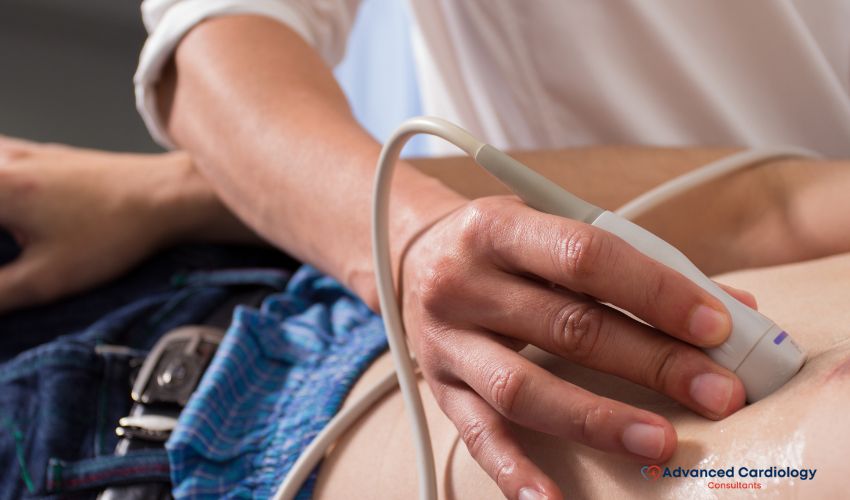
If you are looking for an irregular heartbeat doctor near Houston, Advanced Cardiology is accepting new patients at our Katy and Sugar Land offices.
We accept most major insurance plans, and coverage is verified individually. Our staff can help you with scheduling and paperwork. Please call ahead to ask about current availability and to confirm office hours for each location.
📞 Call (713) 258-6111 or request an appointment online.
Not every skipped beat needs testing, but an evaluation is worth considering if:
You notice a fast, slow or irregular pulse that keeps coming back
Episodes last more than a few minutes or happen during exercise
Your heartbeat changes come with dizziness, shortness of breath or unusual tiredness
A smartwatch, blood pressure cuff or another doctor has flagged an irregular rhythm
You have heart disease, high blood pressure, diabetes or a family history of rhythm problems
Bring a list of your medications, any prior EKGs or monitor reports, and notes on when your symptoms happen. Smartwatch readings can be useful to share, but they do not replace medical-grade testing.
Our patients trust us for exceptional care and a welcoming environment.
Here’s what some of them have shared:
“I had a great experience at Advanced Cardiology Katy Clinic. The doctor and staff were extremely friendly, approachable, and genuinely nice. I really appreciated how they took the time to listen to me and made me feel comfortable throughout my visit. Highly recommend!”
“Dr. Adnan Khalid is a wonderful doctor with a great personality. He is very professional, treats his patients with care, and always remains calm and understanding. He treats every patient like a family member, showing kindness and compassion at every step.”
“My experience was great. The staff were friendly and welcoming. Dr. Khalid was equally welcoming and friendly. He was thorough, knowledgeable, and attentive. Clean and organized office areas and patient rooms. I will definitely make this office my primary location.”
Once your tests are complete, Dr. Khalid will review the results with you and explain what they mean. Depending on the findings, your plan may include:
Reassurance and trigger management if the rhythm is harmless
Medication to control rate or rhythm, or to lower stroke risk
Further testing if the cause is still unclear
Discussion of a hospital-based procedure, such as cardioversion or a device, when appropriate
Many arrhythmias need ongoing follow-up, because symptoms and treatment needs can change over time. Contact our office if your symptoms change, and call 911 for emergency warning signs.
Not exactly. Palpitations are a sensation, the feeling of your heartbeat. An irregular heartbeat is a rhythm problem that can be measured on an EKG or monitor. Some people feel palpitations with a normal rhythm, and some people have an arrhythmia without feeling anything. For a local evaluation focused on palpitations, see our palpitations doctor page for Sugar Land and Katy.
Some do. Premature beats triggered by caffeine, stress or poor sleep often settle when the trigger is reduced. Other arrhythmias, such as AFib, may come and go but still need evaluation because of their link to stroke and heart failure.
Many people are managed with lifestyle changes or medication alone. A procedure is considered only when it fits your type of arrhythmia, symptoms and overall health, and Dr. Khalid will explain the benefits, limits and risks first.
Sources: NHLBI: Arrhythmias · MedlinePlus: Arrhythmia · MedlinePlus: Atrial Fibrillation · American Heart Association: Warning Signs of a Heart Attack
Please print out your paperwork and bring it to your appointment at Advanced Cardiology. If your insurance requires authorization, please be sure to have that information sent to our office or bring it with you to your appointment, along with any medical records you may have. Please also make sure to bring your insurance cards, photo ID, and medication list.
Thank you, and we look forward to meeting you! Contact us today with any questions.
Most insurance plans accepted
(713) 258-6111
Katy & Sugar Land Cardiologist
# Cooperative & professional staff. Dr. Khalid is highly competent & experienced. Very kind & friendly too.
# He’s A Very Caring & Concerned Doctor. He Asks Important Questions, He Allows Me To Ask Questions & Fully Answers To My Satisfaction. He Diagnosis & Does Whatever It Takes To Fix My Health Issues. He’s A Wonderful Doctor…& Most Of All, I Trust Him & His Staff.
Read More…..
Chest tightness with shortness of breath may be asthma or anxiety, or a heart attack, angina or lung clot. Learn causes, red flags and when to call 911.

Chest pain after eating is often acid reflux, but it can also be angina. Learn the causes, warning signs, how doctors tell them apart, and when to call 911.

Practical heart health tips for Katy and Fort Bend residents: know your numbers, exercise safely in the heat, eat for your heart and prepare for storm season.

Heart failure can cause chest pain from angina, fluid buildup, rhythm or valve problems. Learn the causes, warning signs, tests and treatment options.

Advanced (stage D) heart failure: warning signs, IV support, heart pumps, LVAD, transplant evaluation and palliative care, explained by a cardiologist.

Living with heart failure: daily weights, salt and fluid tips, warning-sign zones, safe exercise and medicine tips from a heart failure-trained cardiologist.
Katy & Sugar Land Cardiologist
Advanced Cardiology welcomes new patients at its offices in Katy and Sugar Land. Call our office or send an appointment request, and our staff will follow up.
Most major insurance plans accepted; coverage is verified individually.
For possible heart attack or stroke symptoms, call 911.