Cardiologist Serving Katy, Sugar Land, Greater Houston
Cardiologist Serving Katy, Sugar Land, Greater Houston
Hypertension Treatment
High blood pressure rarely causes symptoms, yet year after year it strains the heart, arteries, brain and kidneys. Getting it under control is one of the most effective things you can do to lower your risk of heart attack, stroke, heart failure and kidney disease. At Advanced Cardiology, Adnan Khalid, MD, a board-certified cardiologist, treats adults with newly diagnosed, uncontrolled and hard-to-control hypertension at our Katy and Sugar Land offices.
Your plan starts with accurate readings, looks for the reasons behind them, and follows the 2025 AHA/ACC high blood pressure guideline, adjusted to your health, your medicines and your goals.
Board-Certified Cardiologist • Katy & Sugar Land • New Patients Welcome

Dr. Khalid reviews your readings, history and test results himself
Visits in Katy and Sugar Land
Care that follows the 2025 AHA/ACC blood pressure guideline
Regular check-ins to adjust treatment and reach your goal
Understanding Your Numbers
Hypertension (high blood pressure) is diagnosed when blood pressure stays at 130/80 mm Hg or higher on repeated, properly measured readings. Treatment combines lifestyle changes with medication when needed, and for most adults the goal is a blood pressure below 130/80. Whether you start medication right away depends on how high your readings are and on your overall cardiovascular risk.
A reading has two numbers. The top number (systolic) is the pressure when your heart beats; the bottom number (diastolic) is the pressure while it rests between beats. The 2025 AHA/ACC guideline kept the adult categories below:
| Category | Systolic (top) | Diastolic (bottom) | |
|---|---|---|---|
| Normal | Less than 120 | and | Less than 80 |
| Elevated | 120 to 129 | and | Less than 80 |
| Stage 1 hypertension | 130 to 139 | or | 80 to 89 |
| Stage 2 hypertension | 140 or higher | or | 90 or higher |
| Severe hypertension | Higher than 180 | and/or | Higher than 120 |
One high reading does not make a diagnosis. Pressure rises with stress, pain, caffeine, a full bladder or simply being in a medical office, so the diagnosis is confirmed with several readings and, ideally, home or 24-hour ambulatory monitoring. For a broader introduction, see our hypertension (high blood pressure) guide.
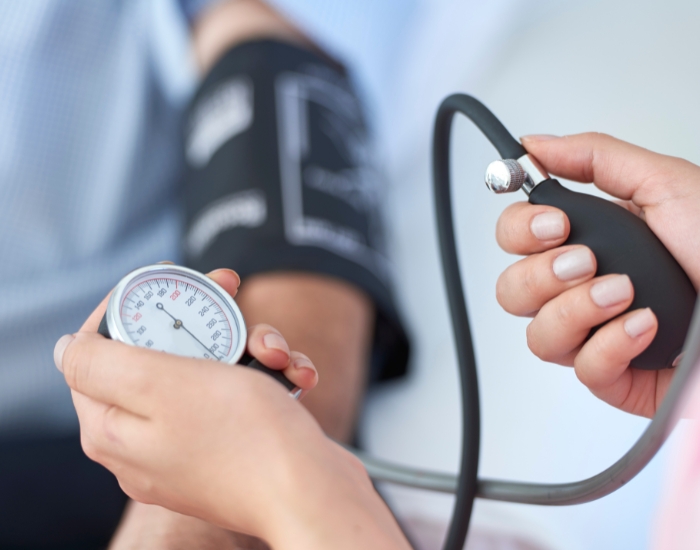
Is It Time for a Specialist?
Many people with hypertension do well with their primary care clinician. A cardiologist adds the most value when blood pressure is hard to control, or when it is tied up with the heart itself. Consider an appointment when:
You do not have to wait for symptoms. High blood pressure is often called a silent condition because headaches, dizziness or a flushed face are not reliable signs; the only way to know is to measure.
Your Evaluation
Good treatment depends on knowing your true blood pressure, what is driving it and whether it has already affected your heart or kidneys. Not every patient needs every test; Dr. Khalid recommends only what will change your plan.
Properly sized cuff, a quiet rest period and repeated readings, so your treatment is based on numbers you can trust.
Home logs or 24-hour ambulatory monitoring help confirm the diagnosis and reveal white-coat or masked hypertension.
Kidney function, electrolytes, blood sugar, cholesterol and a urine albumin test, now recommended for everyone with hypertension.
Checks whether years of high pressure have thickened or stiffened the heart muscle, or triggered rhythm problems.
Testing for primary aldosteronism, sleep apnea, kidney artery narrowing and medicines that raise blood pressure.
The PREVENT calculator estimates your 10-year risk of heart attack, stroke and heart failure to guide treatment decisions.
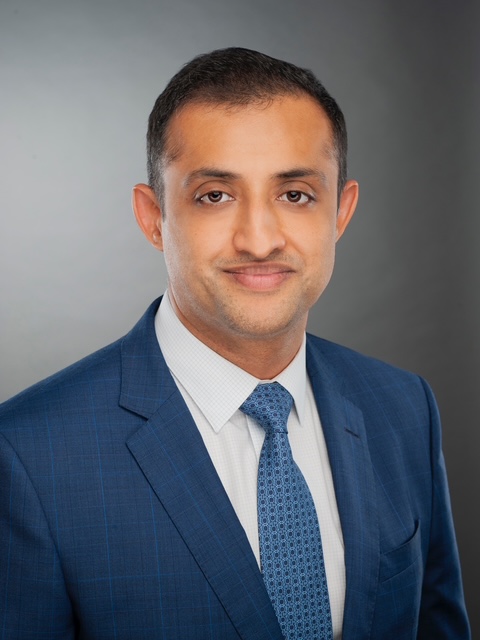
Meet Your Cardiologist
Adnan Khalid, MD is a board-certified cardiologist who completed his internal medicine residency and cardiology fellowship at the University of Missouri–Kansas City School of Medicine. His listed specialties include cardiovascular disease, interventional cardiology, and advanced heart failure and transplant cardiology, so your blood pressure is treated as part of your whole cardiovascular picture rather than as a single number.
That matters because uncontrolled hypertension is a leading driver of the conditions he treats every day: coronary artery disease, heart failure, an enlarged heart and atrial fibrillation. Dr. Khalid reviews your readings and test results himself, explains why each medicine is chosen, and adjusts the plan at follow-up until you reach a goal that is safe for you. He speaks English, Arabic, Hindi and Urdu.
Your Treatment Plan
Treatment follows a clear sequence, and each step is explained before it starts:
Patients with heart failure, coronary disease, diabetes or kidney disease often benefit from medicines chosen to protect those organs as well as lower pressure.

Treatment Options
Most people reach their goal with a combination of daily habits and well-chosen medication. When blood pressure is stubborn, the plan goes further.
DASH-style eating, sodium below 2,300 mg a day (lower is better), regular activity, weight loss, better sleep and limiting alcohol.
Thiazide-type diuretics, ACE inhibitors, ARBs and calcium channel blockers, chosen around your other conditions.
For stage 2, starting two medicines in one pill brings pressure down faster and makes it easier to stay on treatment.
Simplifying regimens, adjusting timing and switching drugs when side effects such as cough, swelling or fatigue get in the way.
A structured workup for blood pressure that stays high on three medicines, including testing for primary aldosteronism.
Treatment that also addresses cholesterol, blood sugar, heart muscle thickening and rhythm problems linked to high pressure.
Hard-to-Control Blood Pressure
Resistant hypertension is blood pressure that stays above goal despite three medicines of different classes at good doses, usually including a diuretic, or that needs four or more medicines to control. It affects a meaningful share of people treated for high blood pressure and carries a higher risk of heart and kidney complications, so it deserves a careful look rather than simply adding another pill.
Before calling blood pressure resistant, Dr. Khalid checks for the common reasons readings look worse than they are or medicines are not working:
Treatment then targets the cause. Adding a mineralocorticoid receptor antagonist such as spironolactone is often effective. For selected patients whose blood pressure remains uncontrolled, renal denervation, a catheter-based procedure performed at experienced centers, may be discussed and referred as appropriate.

Home Blood Pressure
Home readings are one of the most useful tools in hypertension treatment, as long as they are taken correctly:
When it is an emergency: if a repeat reading is above 180/120 and you have chest pain, shortness of breath, back pain, weakness or numbness, vision changes, confusion or difficulty speaking, call 911. A very high reading without symptoms still needs prompt attention, so contact your clinician the same day.
Katy Cardiology Care
Patients from Katy, Cinco Ranch, Fulshear, Brookshire and West Houston see Dr. Khalid at our Katy office on W Grand Pkwy S for high blood pressure that is new, rising or not responding to treatment. Many are referred after an abnormal EKG, an emergency room visit for a high reading, or blood pressure that keeps climbing despite several medicines.
EKGs are performed in the office; echocardiography and laboratory testing are performed or arranged by our office. For more detail on this location, see hypertension treatment at our Katy office and cardiology care in Katy.
Advanced Cardiology – Katy
410 W Grand Pkwy S Ste 4D
Katy, TX 77494
Phone: (713) 258-6111
Advanced Cardiology – Sugar Land
7102 Tarrington Ave Suite 505
Sugar Land, TX 77479
Phone: (713) 258-6111
Sugar Land Cardiology Care
At our Sugar Land office on Tarrington Ave, Dr. Khalid treats adults from Sugar Land, Missouri City, Stafford, Richmond and Rosenberg. Hypertension often travels with diabetes and high cholesterol, and heart disease tends to appear at younger ages in people of South Asian ancestry, so these risks are assessed together and treated as one plan.
EKGs are performed in the office; echocardiography and laboratory testing are performed or arranged by our office. For more on resistant hypertension and home monitoring at this location, see our high blood pressure specialist page for Sugar Land and cardiology care in Sugar Land.
Serving Greater Houston
Patients come to our Katy and Sugar Land offices from across Greater Houston, including Fulshear, Richmond, Rosenberg, Stafford, Missouri City, Cypress and West Houston, for blood pressure care. Both offices offer the same physician and the same approach; choose the one that is easier to reach, and our staff can help if you are unsure.
Patient-Centered Cardiology
Care led by Adnan Khalid, MD, whose listed specialties include cardiovascular disease, interventional cardiology and advanced heart failure.
Secondary causes such as primary aldosteronism and sleep apnea are checked, not just treated around.
EKG and echocardiography show whether blood pressure has affected the heart, and shape which medicines you take.
You know your target, why each medicine was chosen and what to do with your home readings.
Offices in Katy and Sugar Land serving Fort Bend County and West Houston.
New patients are welcome. Most major insurance plans are accepted, subject to eligibility and coverage verification.
Common Questions
Call our office and our staff will help with appointments, referrals and insurance.
Under the 2025 AHA/ACC guideline, hypertension starts at 130/80 mm Hg. Readings of 130 to 139 systolic or 80 to 89 diastolic are stage 1, and 140/90 or higher is stage 2. Readings of 120 to 129 systolic with a diastolic below 80 are called elevated. The diagnosis should be based on several properly taken readings, not a single one.
See a cardiologist when your blood pressure stays above goal despite treatment, when you need three or more medicines, when it rose suddenly or started at a young age, or when you also have heart disease, diabetes, kidney disease or an abnormal EKG or echocardiogram. Your primary care clinician can manage many uncomplicated cases.
For most adults with hypertension, the goal is below 130/80 mm Hg, and a lower systolic target can be reasonable for some patients when it is well tolerated. Your target may be individualized based on your age, other conditions and how you feel on treatment.
Sometimes. Stage 1 hypertension in a person at lower cardiovascular risk may be treated first with three to six months of lifestyle changes such as less sodium, DASH-style eating, more activity, weight loss and less alcohol. If your risk is higher or you have stage 2 hypertension, medication is usually recommended along with these changes.
For stage 2 hypertension, the 2025 guideline recommends starting with two first-line medicines from different classes, ideally combined in a single pill. Two lower doses together usually control blood pressure faster and with fewer side effects than pushing one medicine to a high dose, and one pill is easier to take every day.
Resistant hypertension is blood pressure that remains above goal despite three medicines of different classes, usually including a diuretic, or that needs four or more medicines to control. Evaluation checks for measurement errors, missed doses, interfering medicines, sleep apnea and hormonal causes such as primary aldosteronism before treatment is intensified.
Most high blood pressure is a long-term condition that can be controlled rather than cured. When a specific cause is found and treated, such as primary aldosteronism or sleep apnea, blood pressure can improve substantially and some patients need fewer medicines. Lifestyle changes can also lower the dose or number of medicines needed.
A reading above 180/120 mm Hg with chest pain, shortness of breath, back pain, weakness or numbness, vision changes, confusion or trouble speaking is an emergency; call 911. A reading above 180/120 without symptoms should be rechecked after resting and reported to your clinician the same day.
Many patients schedule directly, but some insurance plans require a referral from your primary care physician. Call (713) 258-6111 and our staff can help you check what your plan requires and choose the Katy or Sugar Land office.
Bring a list of all medicines and supplements with doses, your home blood pressure log and cuff, recent lab or test results, and records from any emergency room visits. Knowing which medicines you have tried before and any side effects helps Dr. Khalid choose the right treatment faster.
Keep Reading
Related services: Hypertension Overview • EKG Testing • Echocardiography • Heart Disease Risk Assessment • Preventive Cardiology • Cholesterol Treatment • Diabetes & Heart Disease • Heart Failure • Heart Enlargement • Atrial Fibrillation
Sources: ACC: 2025 ACC/AHA high blood pressure guideline summary • American Heart Association: High blood pressure • NHLBI: High blood pressure • CDC: High blood pressure
Medically reviewed by: Adnan Khalid, MD, board-certified cardiologist
Cardiology Appointments
Whether your diagnosis is new or your readings have been high for years, a clear plan can bring them down and lower your long-term risk. Adnan Khalid, MD provides hypertension treatment at Advanced Cardiology’s Katy and Sugar Land offices, and new patients are welcome.
Katy: 410 W Grand Pkwy S Ste 4D, Katy, TX 77494
Sugar Land: 7102 Tarrington Ave Suite 505, Sugar Land, TX 77479
Office visits are for people without emergency symptoms. Call 911 for a very high reading with chest pain, shortness of breath, weakness, vision changes or trouble speaking, and for any stroke signs, even if they go away.
Katy & Sugar Land Hypertension Care
Advanced Cardiology welcomes new patients at its offices in Katy and Sugar Land. Call our office or send an appointment request, and our staff will follow up.
Most major insurance plans accepted; coverage is verified individually.
For possible heart attack or stroke symptoms, call 911.
