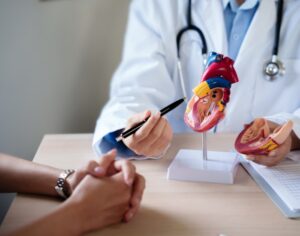
Living well with heart failure comes down to a few daily habits: weigh yourself every morning, take medicines exactly as prescribed, limit salt, follow any fluid limit, stay active with a plan, and act early on warning signs such as rapid weight gain or more breathlessness. With good care, many people with heart failure work, travel and enjoy daily life.

Medically reviewed by
Board-certified cardiologist · Katy & Sugar Land, TX
Fellowship-trained in cardiovascular disease, interventional cardiology, echocardiography and advanced heart failure and transplant cardiology. Former Assistant Professor of Cardiology at McGovern Medical School.
Your daily heart failure routine
- Weigh yourself every morning after using the bathroom and before eating, on the same scale, and write it down.
- Take your medicines at the same times every day; use a pill organizer or phone reminder.
- Check for swelling in your feet, ankles, legs and belly.
- Notice your breathing: are you more breathless than yesterday, or needing more pillows?
- Watch salt and fluids as your care team advised.
- Move: a walk or prescribed exercise most days.
The NHLBI highlights daily weight checks, medicines, healthy eating and activity as key parts of living with heart failure.
Know your zones: when to call
Many heart failure programs use a traffic-light system:
| Zone | What you notice | What to do |
|---|---|---|
| Green | Weight stable, no new swelling, breathing at your usual level | Keep up your routine |
| Yellow | Gain of 2 to 3 lb in a day or about 5 lb in a week; more swelling; more breathless with activity; need more pillows; new dry cough; dizziness | Call your cardiology office the same day |
| Red | Breathless at rest; chest pain; fainting; pink frothy mucus; confusion | Call 911 |
- Breathlessness at rest or that wakes you and does not improve sitting up
- Chest pain or pressure
- Fainting, or a fast irregular heartbeat with dizziness
- Pink, frothy mucus or new confusion
Salt and fluids
- Many people with heart failure are advised to keep sodium to about 2,000 mg a day or less; ask your care team for your target.
- Most sodium comes from restaurant, packaged and processed foods: deli meats, canned soups, frozen meals, sauces, chips and fast food. Check labels.
- Season with herbs, citrus, garlic and salt-free blends.
- If you have a fluid limit, count soups, ice and popsicles as fluid.
- In hot Texas weather, ask how to balance fluids and diuretics; do not change doses on your own.
A heart-healthy diet rich in vegetables, fruit, whole grains and lean protein supports overall health.
Staying active safely
Regular activity improves energy, strength and quality of life in heart failure. Start low and build slowly, such as 5 to 10 minutes of walking, increasing gradually. Cardiac rehabilitation provides supervised, tailored exercise and education and is recommended for many patients with heart failure. Stop and rest if you feel chest pain, dizziness or unusual breathlessness.
Medicine tips
- Do not stop heart failure medicines because you feel better; they are working.
- Bring all bottles or an updated list to every visit.
- Avoid NSAIDs such as ibuprofen and naproxen, and decongestants, unless your doctor approves.
- Ask before taking supplements or herbal products.
- Report dizziness, very low blood pressure readings or cough after medicine changes.
Learn more about heart failure medicines and treatment options.
Sleep, mood, travel and work
Sleep: snoring or gasping may mean sleep apnea, which strains the heart and is treatable. Mood: depression and anxiety are common and treatable; tell your care team. Travel: carry a medicine list, keep medicines in your carry-on, and watch salty restaurant meals. Vaccines: flu, COVID-19 and pneumonia vaccines help prevent infections that trigger worsening. Alcohol and smoking: limit alcohol and stop smoking. Advance planning: it is helpful to discuss your goals and preferences for care with your family and doctors.
Heart failure care in Sugar Land and Katy
Advanced Cardiology supports patients living with heart failure at our Sugar Land and Katy offices. Dr. Adnan Khalid, who completed fellowship training in advanced heart failure and transplant cardiology, adjusts medicines, monitors with in-office EKG and echocardiograms, and coordinates rehab and hospital-based care when needed. See our heart failure treatment page.
Katy office: 410 W Grand Pkwy S, Suite 4D, Katy, TX 77494
Sugar Land office: 7102 Tarrington Ave, Suite 505, Sugar Land, TX 77479
Phone: (713) 258-6111
We also see patients from Fulshear, Richmond, Rosenberg, Stafford, Missouri City and west Houston.
Need a heart failure plan you can actually follow?
We will set your weight, salt and medicine plan together. Request a visit in Sugar Land or Katy.
Having symptoms right now? Call 911. Do not wait for an appointment.
Frequently asked questions
How can I live well with heart failure?
Weigh yourself daily, take medicines as prescribed, limit salt, follow any fluid limit, stay active and call your care team early when warning signs appear.
How much salt can I have with heart failure?
Many patients are advised to limit sodium to about 2,000 mg a day or less. Ask your cardiologist for your personal target.
How much weight gain is a concern in heart failure?
A gain of 2 to 3 pounds in a day or about 5 pounds in a week often means fluid buildup. Call your care team the same day.
Can I exercise with heart failure?
Yes, for most people. Start slowly and build gradually; cardiac rehabilitation offers supervised exercise tailored to you.
How long can you live with heart failure?
It varies widely by type, cause, severity and treatment. Many people live for years with good quality of life on modern therapy.
What foods should I avoid with heart failure?
Limit high-sodium foods such as deli meats, canned soups, frozen meals, chips, fast food and many sauces. Follow any fluid guidance from your care team.
Trusted health resources
- Living With Heart Failure, National Heart, Lung, and Blood Institute (NIH)
- Heart Failure, MedlinePlus, U.S. National Library of Medicine
- Heart Failure: Treatment, National Heart, Lung, and Blood Institute (NIH)
- Sleep Apnea, National Heart, Lung, and Blood Institute (NIH)
Medical disclaimer: This article is for general education and is not a diagnosis or a substitute for care from your own doctor. If you think you may be having a heart attack, stroke or another emergency, call 911 right away.