Cardiologist Serving Katy, Sugar Land, Greater Houston
Cardiologist Serving Katy, Sugar Land, Greater Houston
Preventive Heart Screening
If your father had a heart attack at 50, or your sister needed a stent at 48, you already know that heart disease runs in your family. What you may not know is how much that changes your own risk, whether it is driven by a specific inherited condition, and what screening could find early. A family history of early heart disease raises your own risk, and it is not part of the PREVENT equations that the 2026 ACC/AHA guideline uses to estimate 10-year risk, so it has to be weighed separately. At Advanced Cardiology, Adnan Khalid, MD provides focused screening for adults with a family history of heart attack, sudden cardiac death, cardiomyopathy, or very high cholesterol.
Screening visits take place at our Katy and Sugar Land offices; the number of visits depends on which tests are needed.
Board-Certified Cardiologist • Katy & Sugar Land • New Patients Welcome

Dr. Khalid reviews your symptoms, history and test results himself
Visits in Katy and Sugar Land
Catheter and device procedures at an affiliated hospital
Office follow-up on medicines and risk factors
Understanding Inherited Risk
Heart disease clusters in families for two reasons. Most often, relatives share the same risk factors: a tendency toward high cholesterol or blood pressure, diabetes, similar diets, and similar habits. Less often, a single inherited gene causes a specific condition, such as familial hypercholesterolemia, hypertrophic cardiomyopathy, or an inherited rhythm disorder. Both patterns matter, but they are screened for differently.
The family history that carries the most weight is a first-degree relative (a parent, brother, sister, or child) with a heart attack, stent, bypass, or cardiac death before age 55 in a man or 65 in a woman. The younger the relative and the more relatives affected, the higher your risk. A grandparent who had a heart attack at 82 says little about you; a brother who had one at 45 says a great deal.
Standard risk calculators, including the PREVENT equations for adults 30 to 79, do not include family history, which is why a person with a strong family pattern can score as low risk and still have plaque. Screening helps close that gap: it measures your own risk factors, looks for inherited conditions when the pattern suggests one, and, when appropriate, uses tests such as a coronary calcium score to look for early plaque.

Who Should Be Screened
A heart disease risk assessment can be considered from age 30, and earlier evaluation is reasonable when the family pattern is strong. Consider an evaluation when:
Adult relatives of a patient with familial hypercholesterolemia or an inherited cardiomyopathy are often advised to be screened even when they feel well, because these conditions can be silent for years. For relatives who are children, their own pediatrician or pediatric specialist can advise on testing; this practice provides care for adults.
If you have symptoms now, such as chest discomfort that lasts more than a few minutes or comes and goes, shortness of breath, fainting, or stroke signs (face drooping, arm weakness, speech difficulty), call 911 rather than waiting for a screening visit.
Inherited Conditions
Some of these reflect shared risk factors; others are caused by a single inherited gene. The screening approach differs for each.
The most common familial pattern. Screening focuses on cholesterol, blood pressure, and blood sugar, and on finding plaque early with calcium scoring.
A genetic condition causing very high LDL from birth, relatively common and often undiagnosed. Identifiable with a lipid panel and family pattern.
An inherited cholesterol particle that raises heart attack and aortic valve risk. It is not lowered by diet or statins and should be checked at least once in adulthood with a blood test.
Hypertrophic and dilated cardiomyopathy are often inherited and can cause sudden death in young people. Screened with an echocardiogram and EKG.
Long QT, Brugada, and related syndromes cause dangerous rhythms in structurally normal hearts. A resting EKG is the first screen; genetic testing follows when indicated.
Aortic aneurysm, aortic dissection, and bicuspid aortic valve cluster in families and are screened with echocardiography of the aortic root.

Meet Your Cardiologist
Adnan Khalid, MD is a board-certified cardiologist who completed his cardiology fellowship at the University of Missouri–Kansas City School of Medicine; his listed specialties include cardiovascular disease, interventional cardiology, and advanced heart failure and transplant cardiology. Family history screening draws on each: the coronary disease that most families share, the inherited cardiomyopathies that heart failure specialists manage, and the judgment to recognize when a family pattern may point to a specific gene rather than shared habits.
Dr. Khalid takes the family history in detail, relative by relative, because the specifics determine what to screen for. He then measures your own risk factors, adds the tests your family history warrants, such as lipoprotein(a), calcium scoring, or an echocardiogram, and explains clearly what the results show and what to do next. When an inherited condition is confirmed, he explains which relatives may wish to ask their own doctors about screening and coordinates genetic counseling where appropriate.
The Screening
The screening matches the tests to the pattern in your family, so a family with early heart attacks is evaluated differently from a family with sudden death in young athletes.
Dr. Khalid asks about each first- and second-degree relative: what condition they had, at what age, and what happened. Sudden unexplained death, drowning, or a car accident in a young relative can be a clue to an inherited rhythm disorder. Bring whatever details you can gather from family members beforehand.
Blood pressure, weight, waist circumference, a full lipid panel (often with ApoB), lipoprotein(a) if it has never been measured, A1c, and a resting EKG performed in the office establish your baseline. Very high LDL with a matching family pattern raises the question of familial hypercholesterolemia.
For a family history of early coronary disease, a coronary calcium score can show whether calcified plaque is already present. The 2026 ACC/AHA guideline supports selective calcium scoring for men over 40 and women over 45 at borderline or intermediate risk; whether it makes sense for you is an individual decision. For a family history of cardiomyopathy, aortic disease, or sudden death, an echocardiogram examines heart muscle thickness, pumping function, and the aortic root.
When the pattern suggests a single-gene condition, genetic counseling and testing are coordinated. A positive result allows relatives to be tested precisely; a negative result in a family with a known mutation may spare that person years of unnecessary surveillance.
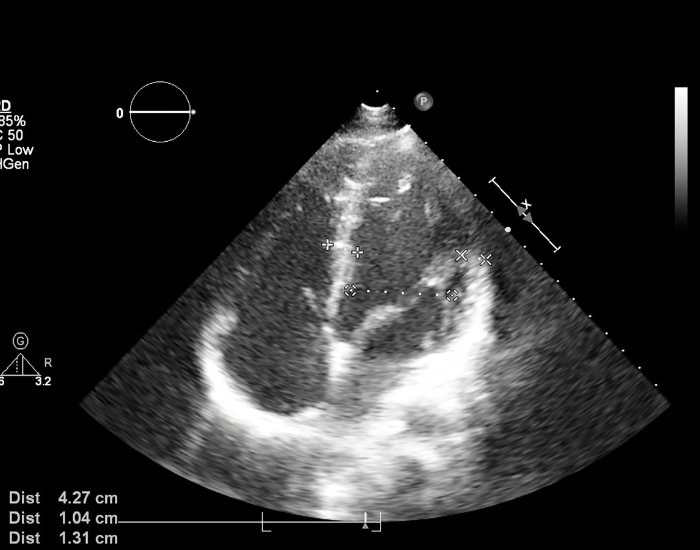
Testing
Which tests apply depends on what runs in your family. Most patients need only some of these, not all of them.
Lipid panel with ApoB and lipoprotein(a), A1c, and kidney function. Lipoprotein(a) is inherited and should be measured at least once in adulthood.
Performed in the office. Can show patterns suggestive of long QT, Brugada, Wolff-Parkinson-White, or cardiomyopathy, but a normal EKG does not rule out every inherited condition.
Can show whether calcified plaque is present. The 2026 guideline supports selective use in men over 40 and women over 45 at borderline or intermediate risk. Arranged by our office.
For a family history of cardiomyopathy, sudden death, aortic disease, or valve problems. Measures wall thickness, function, valves, and aortic root. Performed or arranged by our office.
When a relative has a known gene mutation, or the family pattern strongly suggests a single-gene condition, testing is coordinated with genetic counseling.
A rhythm monitor for a family history of arrhythmia with symptoms, or cardiac MRI when echocardiography raises a question about the heart muscle. Coordinated at an outside facility.
After Screening
Screening usually ends in one of three places, and each has a clear next step.
No disease found, risk factors normal. This is a common outcome, and it is reassuring but not the end. Family history does not go away, so a repeat assessment is planned, often every few years, or sooner if risk factors change. Whether and when a calcium score of zero should be repeated depends on your overall risk, and Dr. Khalid will advise you.
Risk factors present, no disease yet. The family history lowers the threshold for treatment. High LDL may be treated more intensively than it would be otherwise, blood pressure is brought to target, and a preventive cardiology plan is put in place with defined goals and follow-up. See cholesterol treatment.
An inherited condition or early disease found. Familial hypercholesterolemia is generally treated with high-intensity lipid-lowering therapy from the point of diagnosis. Cardiomyopathies and rhythm disorders are managed according to the specific condition, sometimes with activity guidance, medication, or a device, and relatives are advised to ask their own doctors about screening. Plaque found on a calcium score generally strengthens the case for statin therapy and a lower LDL goal; the 2026 ACC/AHA guideline uses LDL cholesterol goals of below 100, 70, or 55 mg/dL depending on overall risk.
Your results can be summarized so you can share relevant information with family members, whose own doctors can advise on their screening. Do not start or stop cholesterol or other heart medicines on your own; follow the specific instructions from your care team.
Your Visit
The most valuable preparation is a family conversation. Before the visit, ask relatives what heart conditions family members had, at what age, and what happened; write it down by relative. If a family member has had genetic testing, bring the report. Bring your own recent lab results, home blood pressure readings, and a medication list.
The visit includes the family history, a review of your own history and risk factors, an examination, an EKG, and any blood work that is missing. Dr. Khalid will explain which pattern your family fits, which tests that warrants, and whether a calcium score or echocardiogram makes sense now. The number of visits depends on which tests are needed.
By the end of screening, you should understand whether your inherited risk has produced measurable disease, what your goals are, and when to be rechecked.
Katy Cardiology Care
Patients from Katy, Cinco Ranch, Fulshear, and West Houston visit our Katy office for screening after a parent’s or sibling’s heart attack, often in their thirties and forties and often with no symptoms at all. Others are adult children of a patient recently diagnosed with familial hypercholesterolemia or a cardiomyopathy, who have been told to be checked.
EKGs are performed in the office; echocardiography and laboratory testing are performed or arranged by our office, calcium scoring is arranged when appropriate, and genetic counseling referrals are made when the family pattern warrants. For other services at this location, see cardiology care in Katy.
Advanced Cardiology – Katy
410 W Grand Pkwy S Ste 4D
Katy, TX 77494
Phone: (713) 258-6111
Advanced Cardiology – Sugar Land
7102 Tarrington Ave Suite 505
Sugar Land, TX 77479
Phone: (713) 258-6111
Sugar Land Cardiology Care
At our Sugar Land office, Dr. Khalid screens adults from Sugar Land, Richmond, Rosenberg, Missouri City, and Stafford whose families carry early heart disease. Coronary disease tends to appear at younger ages in people of South Asian ancestry, so ancestry is considered alongside family history when deciding how early to evaluate.
EKGs are performed in the office; echocardiography and laboratory testing are performed or arranged by our office, calcium scoring is arranged when appropriate, and genetic counseling is arranged when an inherited condition is suspected. Learn more about cardiology care in Sugar Land.
Serving Greater Houston
Patients come to the Katy and Sugar Land offices from across Greater Houston, including Cypress, Richmond, Rosenberg, Fulshear, and West Houston, for family history heart screening. Both offices offer the same physician and the same approach; choose the one that is easier to reach, and the scheduling team can help if you are unsure.
Patient-Centered Cardiology
Care led by Adnan Khalid, MD, whose listed specialties include cardiovascular disease, interventional cardiology, and advanced heart failure.
The family history is taken relative by relative, because the details decide what to screen for.
Calcium scoring, echocardiography, and lipoprotein(a) testing can help identify inherited risk before symptoms.
You learn whether your inherited risk has produced disease, and which relatives should be screened.
Offices in Katy and Sugar Land serving surrounding Greater Houston communities.
New patients are welcome. Most major insurance plans are accepted, subject to eligibility and coverage verification.
Common Questions
Call our office and our staff will help with appointments, referrals and insurance.
Partly. Most family clustering reflects shared risk factors such as high cholesterol, high blood pressure, and diabetes, which are strongly influenced by genes. A smaller number of families carry a single gene that causes a specific condition, such as familial hypercholesterolemia or hypertrophic cardiomyopathy. Screening tells you which pattern applies to your family.
Earlier than the general population. If a parent or sibling had a heart attack before 55 or 65, a first assessment in your thirties is reasonable; the PREVENT risk equations apply to adults 30 to 79. The 2026 ACC/AHA guideline supports selective calcium scoring for men over 40 and women over 45 at borderline or intermediate risk. If a parent has familial hypercholesterolemia, the family’s children should ask their own pediatrician about cholesterol testing; this practice provides care for adults.
A heart attack, stent, bypass, or cardiac death in a parent, brother, sister, or child before age 55 in a man or 65 in a woman. The younger the relative and the more relatives affected, the greater the significance. Heart disease in a grandparent at an advanced age carries much less weight.
A blood test that measures an inherited cholesterol particle; a sizable minority of people have high levels. High lipoprotein(a) raises the risk of heart attack and aortic valve disease and is not lowered by diet or statins. It should be measured at least once in adulthood, and a high level can change how intensively other risk factors are treated.
Not usually as a first step. Most family patterns are evaluated with a lipid panel, EKG, calcium score, or echocardiogram. Genetic testing is used when a relative has a known mutation, or when the pattern strongly suggests a single-gene condition such as an inherited cardiomyopathy or rhythm disorder, and it is coordinated with genetic counseling.
A calcium score shows whether plaque has already formed in your coronary arteries, which adds measured information to an inherited probability. A score of zero is reassuring but does not rule out all plaque; plaque in someone with a strong family history generally strengthens the case for treatment. The 2026 guideline supports selective use in men over 40 and women over 45 at borderline or intermediate risk.
Sudden death in a young relative, particularly during exercise or sleep, can indicate an inherited cardiomyopathy or rhythm disorder. Adult first-degree relatives are generally advised to have an EKG and echocardiogram, and sometimes rhythm monitoring or genetic testing; relatives who are children should ask their own pediatrician or pediatric cardiologist. This screening should not be delayed, since the conditions are treatable once identified.
Substantially, yes. Family history raises risk but does not make an event inevitable. Controlling cholesterol, blood pressure, blood sugar, and tobacco reduces the risk even in people with a strong family pattern, and starting earlier makes the reduction larger. Inherited conditions, once identified, each have specific treatments.
Keep Reading
Related services: Heart Disease Risk Assessment • Preventive Cardiology • Coronary Calcium Scan • Cholesterol Treatment • Heart Murmur & Valve Evaluation • Echocardiography
Sources: ACC: 2026 ACC/AHA dyslipidemia guideline summary • USPSTF: Screening with electrocardiography • NHLBI: Blood cholesterol • NHLBI: Cardiomyopathy
Your cardiologist: Adnan Khalid, MD
Cardiology Appointments
If heart disease runs in your family, find out what it means for you before it becomes an event. Adnan Khalid, MD provides family history heart screening at Advanced Cardiology’s Katy and Sugar Land offices, and new patients are welcome.
Katy: 410 W Grand Pkwy S Ste 4D, Katy, TX 77494
Sugar Land: 7102 Tarrington Ave Suite 505, Sugar Land, TX 77479
Screening is for people without emergency symptoms. Call 911 for chest discomfort that lasts more than a few minutes or comes and goes, shortness of breath, fainting, or stroke signs, even if they go away.
Katy & Sugar Land Cardiologist
Advanced Cardiology welcomes new patients at its offices in Katy and Sugar Land. Call our office or send an appointment request, and our staff will follow up.
Most major insurance plans accepted; coverage is verified individually.
For possible heart attack or stroke symptoms, call 911.
