Cardiologist Serving Katy, Sugar Land, Greater Houston
Cardiologist Serving Katy, Sugar Land, Greater Houston
Cardiac Clearance Before Surgery
Surgeons and anesthesiologists may request a cardiac evaluation when a patient’s heart history, age, or risk factors could affect how they tolerate an operation. The purpose is not to find a reason to cancel surgery. It is to assess cardiac risk, optimize any heart condition that can be improved beforehand, and communicate a clear plan to the surgical and anesthesia team. At Advanced Cardiology, Adnan Khalid, MD provides preoperative cardiac evaluations at the Katy and Sugar Land offices.
The term “clearance” is common, but no evaluation can guarantee that surgery will be free of complications. What it provides is a careful estimate of risk and recommendations to help lower it. If your surgery date is set, mention it when you call so our office can discuss current availability.
Board-Certified Cardiologist • Katy & Sugar Land • New Patients Welcome

Dr. Khalid reviews your symptoms, history and test results himself
Visits in Katy and Sugar Land
Catheter and device procedures at an affiliated hospital
Office follow-up on medicines and risk factors
Understanding Clearance
Anesthesia and surgery place real demands on the heart: fluid shifts, blood pressure changes, blood loss, pain, and the stress response all raise the heart’s workload for hours to days. For most people that is uneventful. For patients with coronary disease, heart failure, valve disease, a rhythm problem, or several risk factors, the surgical team wants to know in advance how the heart is likely to respond and whether anything should be done first.
A preoperative cardiac evaluation, often called clearance or risk stratification, helps answer that. The 2024 AHA/ACC perioperative guideline describes a stepwise approach: it estimates the risk of a cardiac complication around the time of surgery, based on the type of operation and the patient’s condition, and considers whether any testing or treatment would be likely to lower that risk. Validated tools such as the Revised Cardiac Risk Index (RCRI) or the NSQIP surgical risk calculator are often used, together with your functional capacity. In most cases the answer is that surgery can proceed with a few specific instructions. Occasionally the evaluation finds a problem, such as a significant valve narrowing or uncontrolled heart failure, that should be addressed before an elective operation.
The evaluation is also the time to decide what happens to cardiac medications: which to continue through surgery, which to hold, and, for patients on blood thinners or antiplatelet drugs after a stent, how and whether to pause them. Those decisions are made individually with your surgical team, and you should follow the specific instructions your care team gives you.

Who Needs It
Your surgeon or anesthesiologist decides whether to request an evaluation, and the request is usually driven by one or more of the following:
Patients on antiplatelet therapy after a recent stent need particularly careful planning, because stopping those medications too early can raise the risk of a clot forming in the stent. Do not stop them unless your cardiologist and surgeon have agreed on a plan.
What Is Assessed
Surgical cardiac risk depends on both the patient and the procedure. The evaluation weighs each of these.
Cataract or skin surgery carries minimal cardiac risk; vascular, major abdominal, and long orthopedic operations carry more. The type of operation sets the baseline.
How much activity you can do without symptoms, such as climbing two flights of stairs or walking briskly, is an important part of the risk estimate and often means extra testing is unnecessary.
Unstable chest pain, decompensated heart failure, a significant arrhythmia, or severe valve disease should be treated before elective surgery.
Coronary disease, heart failure, insulin-treated diabetes, kidney disease, and prior stroke are factors in validated tools such as the Revised Cardiac Risk Index (RCRI).
Blood thinners, antiplatelet drugs, beta blockers, and diabetes medicines, including SGLT2 inhibitors, each need an individual plan from your care team around the operation.
Pacemakers and defibrillators may need a settings check or temporary reprogramming for surgery, and the surgical team needs the device details.

Meet Your Cardiologist
Adnan Khalid, MD is a board-certified cardiologist with fellowship training in cardiovascular disease, interventional cardiology, and advanced heart failure and transplant cardiology. Preoperative evaluation draws on all three: judging whether a coronary finding matters for surgery, managing antiplatelet therapy after a stent, and stabilizing heart failure before an operation are common questions in those fields.
Dr. Khalid follows current guidelines, which favor a careful history, examination, and validated risk tools over routine testing. Many patients need no further testing after the first visit and leave with recommendations for the surgical team. When testing is needed, our office arranges it, and when a condition should be treated first, he communicates with the surgeon and anesthesia team so everyone understands the plan.
The Evaluation
The evaluation follows the stepwise approach recommended in the 2024 AHA/ACC perioperative guideline, and for many patients it stops early.
Dr. Khalid reviews your cardiac history, prior procedures, and current symptoms, with particular attention to chest discomfort, breathlessness, fainting, and how much activity you can do. He confirms the planned operation, its urgency, and what your surgeon has asked.
The exam includes blood pressure, heart rhythm, murmurs, lung sounds, and signs of fluid retention. An EKG may be done and compared with any prior tracing when it would help the assessment.
Your clinical risk factors and the type of surgery are combined into a risk estimate, often using a validated tool such as the Revised Cardiac Risk Index (RCRI) or the NSQIP calculator, along with your functional capacity. Routine testing is not recommended for patients at low risk or for low-risk procedures, and patients who can do moderate activity without symptoms usually need no further testing.
Stress testing is reserved for highly selected patients, generally those at elevated risk with poor or unknown functional capacity, when the result would change the surgical plan. An echocardiogram may be used for a murmur or suspected heart failure. Testing that would not change management can delay surgery without making it safer.
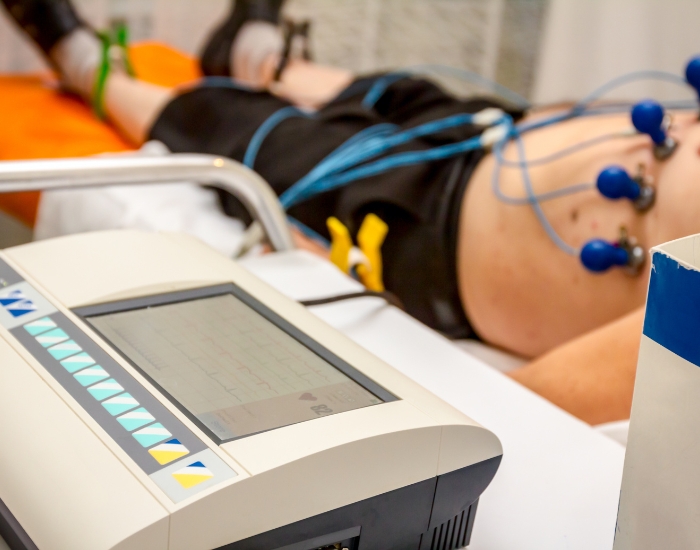
Testing
Many patients need little or no additional testing. The other tests are reserved for specific questions.
Often obtained for patients with known heart disease or risk factors before higher-risk surgery, to provide a baseline for comparison after the operation.
For a murmur that has never been imaged, known valve disease, suspected heart failure, or breathlessness of unclear cause. Performed or arranged by our office.
Only for highly selected patients, such as those at elevated risk with poor or unknown exercise capacity, when the result would change the plan. Arranged by our office.
Tests such as BNP, kidney function, blood count, and glucose may help gauge heart strain and surgical risk, and are often already ordered by the surgical team.
Patients with a pacemaker or defibrillator may need a device check, performed or arranged by our office, so the surgical team knows its settings.
Rarely needed before non-cardiac surgery, and only when a stress test or symptoms suggest a blockage that would be treated regardless of the planned operation.
The Outcome
The result of the evaluation is a set of recommendations communicated to your surgical and anesthesia team. It describes the estimated cardiac risk for the planned operation and, more importantly, any steps that may help lower it. It is one part of a team-based decision; it is not a guarantee that surgery will be free of heart complications.
Medication plan. Which cardiac medications to continue, which may need to be held, and when to restart them, always as directed by your care team. Beta blockers and statins are often continued. The 2024 AHA/ACC guideline advises holding SGLT2 inhibitors (a group of diabetes and heart medicines) 3 to 4 days before planned surgery, as directed by your care team. Anticoagulants such as warfarin or newer blood thinners are managed individually; most patients have them paused without “bridging” injections, which are used only for selected patients at high risk of clots. Patients with a recent stent receive a specific antiplatelet plan agreed with the surgeon.
Conditions to optimize first. If blood pressure is uncontrolled, heart failure is not stable, or a rhythm needs better control, that may be addressed before an elective operation. How long that takes varies.
Conditions that change the plan. Occasionally the evaluation finds severe valve disease, unstable coronary disease, or a significant arrhythmia that should be treated before surgery. Dr. Khalid discusses this with the surgeon so the sequence and timing are clear.
Perioperative recommendations. Monitoring, device management, and what to watch for after surgery. Follow-up is arranged if a new condition was found.
Your Visit
Tell our office the surgery date when you call so the visit can be planned with enough time before the operation. Bring the surgeon’s request or clearance form, the name of the procedure and the surgeon, and any pre-surgical EKG or lab results already done.
Bring prior cardiac records if you have been seen elsewhere: echocardiogram and stress test reports, catheterization results, and stent or device details. Bring a complete medication list with doses, including blood thinners, aspirin, diabetes medications, and supplements. Do not stop any medication before surgery unless your care team tells you to. Be ready to describe how much activity you can do without symptoms.
The visit includes a history and examination, and an EKG when appropriate. If no further testing is needed, recommendations are sent to your surgical team after the visit. If testing is needed, our office arranges it and the recommendations follow once results are reviewed.
Katy Cardiology Care
Patients from Katy, Cinco Ranch, Fulshear, and West Houston visit our Grand Parkway office for preoperative cardiac evaluation before orthopedic, general, urologic, gynecologic, and other operations. Common reasons include a prior stent, a pacemaker, atrial fibrillation treated with a blood thinner, or heart failure.
EKGs are performed in the office; echocardiography and device checks are performed or arranged by our office. Mention your surgery date when you call so the visit can be planned in time. For other services at this location, see cardiology care in Katy.
Advanced Cardiology – Katy
410 W Grand Pkwy S Ste 4D
Katy, TX 77494
Phone: (713) 258-6111
Advanced Cardiology – Sugar Land
7102 Tarrington Ave Suite 505
Sugar Land, TX 77479
Phone: (713) 258-6111
Sugar Land Cardiology Care
At the Tarrington Avenue office, Dr. Khalid provides preoperative evaluations for patients from Sugar Land, Richmond, Rosenberg, Missouri City, and Stafford who are preparing for surgery. Many have diabetes, kidney disease, or a prior cardiac event, and some take blood thinners that need an individual plan from their care team.
EKGs are performed in the office, echocardiography and device checks are performed or arranged by our office, and recommendations are communicated to the surgical team. Learn more about cardiology care in Sugar Land.
Serving Greater Houston
Patients come to the Katy and Sugar Land offices from across Greater Houston, including Cypress, Richmond, Rosenberg, Fulshear, and West Houston, for cardiac clearance before surgery. Both offices offer the same physician and the same approach; choose the one that is easier to reach, and the scheduling team can help if you are unsure.
Patient-Centered Cardiology
Care led by Adnan Khalid, MD, with fellowship training in cardiovascular disease, interventional cardiology, and advanced heart failure.
Tell us your surgery date when you call so our office can discuss current availability and plan the evaluation.
Testing is ordered only when it would change the surgical plan, in line with current guidelines.
Recommendations give surgeons and anesthesiologists specific medication and monitoring guidance, not just a signature.
Offices in Katy and Sugar Land serving surrounding Greater Houston communities.
New patients are welcome. Most major insurance plans are accepted, subject to eligibility and coverage verification.
Common Questions
Call our office and our staff will help with appointments, referrals and insurance.
It is a cardiologist’s evaluation of your heart-related risk before a planned operation. It estimates the risk of a cardiac complication, identifies anything that should be optimized first, and gives the surgical and anesthesia team recommendations on medications and monitoring. “Clearance” does not guarantee that surgery will be safe; it helps you and your team make an informed decision.
Patients with a history of heart attack, stent, bypass, heart failure, valve disease, arrhythmia, or a pacemaker or defibrillator; those with unexplained chest pain, breathlessness, or an abnormal EKG; and older patients with several risk factors facing major surgery. Your surgeon or anesthesiologist decides whether to request it.
It depends on your history and whether testing is needed. Many patients need only a visit with a history and examination. If an echocardiogram or other test is recommended, the recommendations follow once results are reviewed. Contact our office as soon as your surgery date is set so there is time to plan.
Usually not. The 2024 AHA/ACC guideline reserves stress testing for highly selected patients, generally those at elevated risk with poor or unknown functional capacity, when the result would change the plan. Routine testing is not recommended for low-risk patients or low-risk surgeries, and it is rarely needed if you can climb two flights of stairs without symptoms.
Only as directed by your care team. Anticoagulants are managed individually based on why you take them and the bleeding risk of the operation; most patients have them paused without bridging injections, which are reserved for selected patients at high risk of clots. Antiplatelet drugs after a recent stent require a careful plan agreed between your cardiologist and surgeon. Never stop these medications on your own.
Sometimes. If the evaluation finds an active cardiac condition such as unstable angina, decompensated heart failure, severe valve disease, or an uncontrolled arrhythmia, treating it first can make surgery safer. Your cardiologist and surgeon coordinate the timing. Many patients proceed on their original schedule.
Follow the specific instructions from your care team. Beta blockers and statins are often continued. The 2024 AHA/ACC guideline advises holding SGLT2 inhibitors 3 to 4 days before planned surgery, as directed by your care team. Blood pressure medicines, diuretics, other diabetes medicines, and blood thinners each have instructions that depend on you and the operation.
Yes. Bring the surgeon’s request or clearance form, the name and date of the procedure, prior cardiac test reports, stent or device details, and a complete medication list with doses. Having these on hand helps avoid repeat testing and delays.
Keep Reading
Related services: Abnormal EKG • Heart Murmur Evaluation • Echocardiography • Pacemaker & ICD Checks • Atrial Fibrillation • Heart Disease Risk Assessment
Sources: ACC: 2024 AHA/ACC perioperative guideline • NHLBI: Heart tests • AHA: Heart attack warning signs
Your cardiologist: Adnan Khalid, MD
Cardiology Appointments
If your surgeon has asked for cardiac clearance, contact our office early so there is time to plan. Adnan Khalid, MD provides preoperative cardiac evaluations at Advanced Cardiology’s Katy and Sugar Land offices.
Katy: 410 W Grand Pkwy S Ste 4D, Katy, TX 77494
Sugar Land: 7102 Tarrington Ave Suite 505, Sugar Land, TX 77479
If you have chest discomfort that lasts more than a few minutes or comes and goes, shortness of breath, discomfort in the arms, back, neck, jaw or stomach, a cold sweat, nausea, lightheadedness, or fainting, call 911, then let your surgeon know. For sudden face drooping, arm weakness or speech difficulty, call 911 even if symptoms go away. Office messages and appointment requests are not for emergencies.
Katy & Sugar Land Cardiologist
Advanced Cardiology welcomes new patients at its offices in Katy and Sugar Land. Call our office or send an appointment request, and our staff will follow up.
Most major insurance plans accepted; coverage is verified individually.
For possible heart attack or stroke symptoms, call 911.
