
Cardiologist Serving Katy, Sugar Land, Greater Houston
Heart Rhythm Care
Supraventricular tachycardia (SVT) is a fast heart rhythm that starts suddenly, often at rest, races at 150 to 250 beats per minute, and stops just as abruptly. Episodes can last seconds or hours, and between them the heart is usually completely normal, which is why SVT is so often missed on a routine EKG. It is rarely life-threatening, but it is frightening, disruptive, and, in many cases, curable with ablation. At Advanced Cardiology, Adnan Khalid, MD evaluates suspected SVT, confirms the diagnosis with rhythm monitoring, and guides patients through the choice between medication and catheter ablation.
Patients are seen at our Katy and Sugar Land offices, and rhythm monitoring is performed or arranged by our office when it is needed.
Board-Certified Cardiologist • Katy & Sugar Land • New Patients Welcome
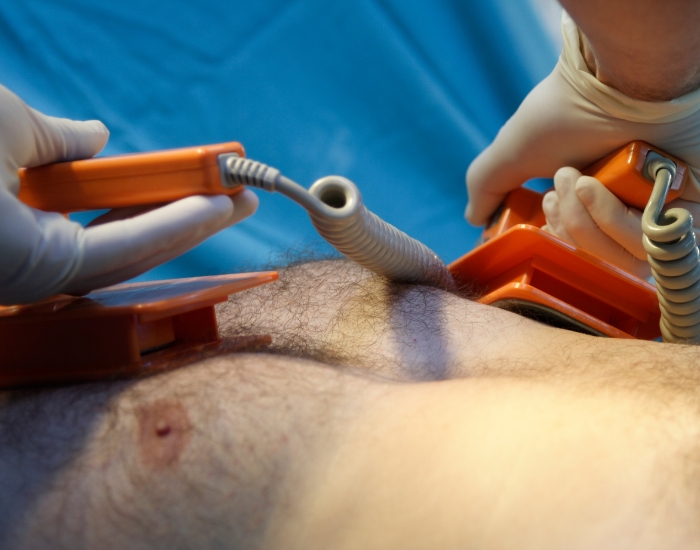
Dr. Khalid reviews your symptoms, history and test results himself
Visits in Katy and Sugar Land
Catheter and device procedures at an affiliated hospital
Office follow-up on medicines and risk factors
Important Safety Information
Many SVT episodes stop on their own or with simple maneuvers. Call 911 if a racing heartbeat does not stop (for example, within 20 to 30 minutes), or if it comes with chest pain, pressure, or discomfort that lasts more than a few minutes or comes and goes, fainting or near-fainting, shortness of breath, confusion, discomfort in the arms, back, neck, jaw, or stomach, a cold sweat, nausea, or lightheadedness. Call 911 for possible stroke signs such as face drooping, arm weakness, or speech difficulty, even if they go away.
Do not wait for symptoms to become severe; if you are unsure, call 911. Emergency teams can usually stop SVT with medication. Office messages and appointment requests are not for emergencies. This page is for patients with recurring episodes that resolve, or who have been told they may have SVT and want it evaluated.
Understanding Your Condition
“Supraventricular” means the rhythm starts above the ventricles, in the upper chambers or the AV node. In SVT, an electrical signal gets caught in a short circuit, usually a small extra pathway or a second route through the AV node that a person is born with. Once the circuit is triggered, often by a single premature beat, the signal loops continuously and drives the heart at a rapid, regular rate until something breaks the loop.
The most common types are AVNRT, where the circuit is inside the AV node, and AVRT, where an accessory pathway between the atria and ventricles completes the loop. A third type, atrial tachycardia, arises from a small focus in the atrium. All three share the same signature: sudden onset, a regular racing pulse, and sudden termination.
SVT usually first appears in the teens through the forties and is more common in women. It is distinct from atrial fibrillation, which is irregular, and from sinus tachycardia, which builds and fades gradually. Because episodes come and go, the diagnosis depends on capturing one on a recording, and much of the evaluation is organized around doing exactly that.
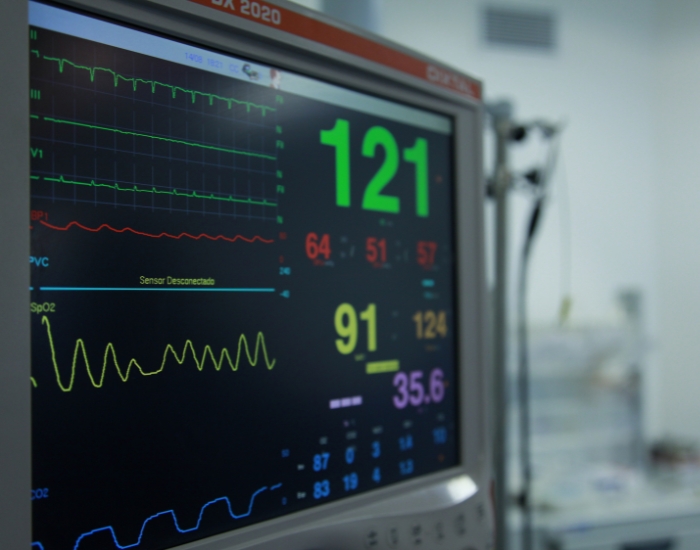
When to Seek Evaluation
Any pattern of sudden-onset racing heartbeat is worth evaluating, because SVT is both diagnosable and treatable. A cardiology visit is appropriate when:
Patients who have learned to stop their episodes with breath-holding or bearing down still benefit from evaluation, because a long-term solution is often available and episodes may become more frequent over time.
Symptoms & Findings
The way an episode behaves is often more diagnostic than any single symptom.
The rate jumps from normal to 150 or more within a single beat, and returns to normal the same way. Patients often describe a switch being flipped.
A fast, steady pounding in the chest or throat. The regularity distinguishes SVT from the chaotic feel of atrial fibrillation.
A visible or felt pulsation in the neck during episodes is a classic clue to AVNRT, the most common form of SVT.
Reduced filling time at very fast rates can lower blood pressure, causing lightheadedness or, less often, fainting.
Chest tightness or breathlessness during an episode is common and usually reflects the rate rather than a blocked artery, but it is always evaluated. Chest discomfort lasting more than a few minutes needs a 911 call.
Some patients need to urinate soon after an episode ends, a response to hormones released by the stretched atria. It is a helpful diagnostic clue.

Meet Your Cardiologist
Adnan Khalid, MD is a board-certified cardiologist who completed his cardiology fellowship at the University of Missouri–Kansas City School of Medicine; his listed specialties include cardiovascular disease, interventional cardiology, and advanced heart failure and transplant cardiology. For SVT, his role is to confirm the diagnosis, make sure nothing more serious is being mistaken for it, exclude structural heart disease, and help you choose between living with occasional episodes, daily medication, and catheter ablation, which can cure many forms of SVT.
That choice is a personal one, and Dr. Khalid takes time to explain the trade-offs. Patients who choose ablation are referred to an electrophysiologist for the procedure, which is performed in a hospital lab, and return to Dr. Khalid for follow-up. Patients who prefer medication, or who have infrequent episodes, are given a clear plan for stopping an episode at home and for recognizing when to seek emergency care.
Possible Causes
SVT has an underlying cause, the electrical circuit, and separate triggers that set the circuit off.
Most people with SVT are born with the extra pathway or dual AV nodal pathway that allows the rhythm to loop. It is not caused by lifestyle and usually does not mean the heart is diseased. The circuit may be silent for decades until the right trigger arrives. In Wolff-Parkinson-White syndrome, the accessory pathway is visible on a resting EKG and can occasionally conduct dangerously fast rhythms, which changes the urgency of treatment.
Caffeine, alcohol, nicotine, energy drinks, decongestants, and stimulants are frequent triggers, as are dehydration, lack of sleep, sudden exertion, bending over, and emotional stress. A premature beat is usually the spark that starts the loop.
Episodes are often more frequent around menstruation and during pregnancy. Thyroid overactivity, anemia, fever, and lung disease can lower the threshold for episodes.
Atrial fibrillation with a fast rate, atrial flutter, sinus tachycardia from anxiety or dehydration, and inappropriate sinus tachycardia can all be mistaken for SVT. Some are managed very differently, which is why capturing the rhythm on a recording matters more than the description alone.
Your Evaluation
The diagnosis of SVT rests on one thing: an EKG or monitor recording taken during an episode. Everything in the evaluation is organized to obtain that recording and to make sure the heart underneath is healthy.
Dr. Khalid asks how episodes begin and end, how fast the pulse gets, how long they last, what seems to trigger them, and what stops them. A history of abrupt onset and termination with a regular rate is highly suggestive on its own. Bring any emergency room EKGs and smartwatch EKG recordings from episodes.
Thyroid disease, prior heart problems, pregnancy plans, and family history are reviewed, along with caffeine, alcohol, stimulant, and supplement use.
The exam is usually normal between episodes. A 12-lead EKG is performed to look for a pre-excitation pattern, which identifies an accessory pathway, and to exclude other rhythm or conduction abnormalities.
Unless a recording already exists, a monitor is arranged and matched to how often episodes occur. An echocardiogram, performed or arranged by our office, checks the heart’s structure. With those two results, the diagnosis is often settled and the treatment conversation can begin.
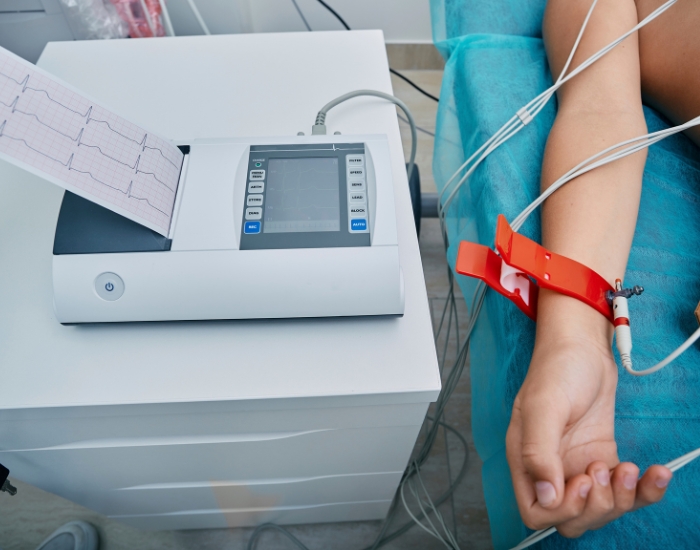
Cardiac Testing
The goal of testing is a recording of the rhythm during an episode and confirmation that the heart is structurally normal.
Usually normal between episodes, but it can show a Wolff-Parkinson-White pattern and other findings that change management. A normal EKG does not rule out SVT.
Worn for up to 30 days, an event monitor records when you feel an episode or when it detects a fast rate, which suits SVT's unpredictable timing.
For patients with daily or near-daily episodes, a shorter continuous recording is often enough to capture one.
Checks structure and function. SVT in a structurally normal heart is rarely dangerous; the same rhythm in a weakened heart is managed more closely.
Thyroid function, a blood count, and electrolytes identify factors that lower the threshold for episodes.
Performed by an electrophysiologist in a hospital lab, an EP study maps the circuit precisely and is often combined with ablation in the same session.
Management
SVT is one of the few arrhythmias where a cure is routinely available, so treatment is a genuine choice rather than a single path.
Stopping an episode. Vagal maneuvers such as bearing down, the modified Valsalva (bearing down, then lying flat with legs raised), or plunging the face into cold water interrupt the circuit in many episodes. Dr. Khalid can explain which maneuvers are appropriate for you. Episodes that do not respond are stopped in the emergency department with a rapid intravenous medication.
Preventing episodes with medication. A daily beta blocker or calcium-channel blocker reduces frequency for many patients; some with infrequent episodes take a single dose only when an episode starts. Medication controls SVT but does not cure it.
Catheter ablation. An electrophysiologist threads catheters to the heart through a vein, locates the circuit, and eliminates it. The procedure is performed in a hospital. Success rates for common forms of SVT are high and complications are uncommon, though every procedure has risks that are discussed beforehand. Ablation may be recommended for frequent or disabling episodes, for Wolff-Parkinson-White, and for anyone who prefers a cure to lifelong medication. Dr. Khalid coordinates the referral and provides follow-up. Do not start or stop rhythm medicines on your own; follow the specific instructions from your care team.
Your Visit
Bring any EKG taken during an episode, whether from an emergency room, urgent care, or a smartwatch; a single good recording can confirm the diagnosis. Note how often episodes occur, how long they last, and what stops them, and bring a full medication and supplement list.
The visit includes the history, an examination, and a resting 12-lead EKG. If no recording of an episode exists, a monitor and an echocardiogram are performed or arranged by our office. Dr. Khalid can teach you vagal maneuvers to use at home and explain the medication and ablation options so you can begin thinking about which you prefer.
Once the rhythm is documented, a follow-up visit finalizes the plan. If you choose ablation, the referral is made and the hospital team will explain scheduling.
Katy Cardiology Care
Patients from Katy, Cinco Ranch, Fulshear, and West Houston visit Dr. Khalid at our Katy office for sudden racing heartbeats, often after an emergency room visit confirmed SVT or a smartwatch captured a rate above 150. Some are young adults balancing work and family who want to know whether they can be rid of the episodes for good.
EKGs are performed in the office, and event monitoring, Holter monitoring, and echocardiography are performed or arranged by our office. Patients who choose ablation are referred to an electrophysiologist for the hospital-based procedure and return here for follow-up. For other services at this location, see cardiology care in Katy.
Advanced Cardiology – Katy
410 W Grand Pkwy S Ste 4D
Katy, TX 77494
Phone: (713) 258-6111
Advanced Cardiology – Sugar Land
7102 Tarrington Ave Suite 505
Sugar Land, TX 77479
Phone: (713) 258-6111
Sugar Land Cardiology Care
At our Sugar Land office, Dr. Khalid sees patients from Sugar Land, Richmond, Rosenberg, Missouri City, and Stafford with suspected or confirmed SVT, including those who have managed episodes on their own for years and are now finding them more frequent. If you are planning pregnancy, or your EKG has shown a Wolff-Parkinson-White pattern, mention it when you call, because it can affect how soon you should be seen.
EKGs are performed in the office; echocardiography and event or Holter monitoring are performed or arranged by our office, with electrophysiology referral coordinated when ablation is chosen. Learn more about cardiology care in Sugar Land.
Serving Greater Houston
Patients come to the Katy and Sugar Land offices from across Greater Houston, including Cypress, Richmond, Rosenberg, Fulshear, and West Houston, for SVT evaluation and treatment planning. Both offices offer the same physician and the same approach; choose the one that is easier to reach, and the scheduling team can help if you are unsure.
Patient-Centered Cardiology
Care led by Adnan Khalid, MD, whose listed specialties include cardiovascular disease, interventional cardiology, and advanced heart failure.
The diagnosis is confirmed on a recording, and look-alike rhythms are excluded before treatment is chosen.
Medication and ablation are presented as real alternatives, with the trade-offs explained so the choice is yours.
You learn how to stop an episode at home and exactly when to seek emergency care.
Offices in Katy and Sugar Land serving surrounding Greater Houston communities.
New patients are welcome. Most major insurance plans are accepted, subject to eligibility and coverage verification.
Common Questions
Call our office and our staff will help with appointments, referrals and insurance.
In a structurally normal heart, SVT is rarely dangerous. It is uncomfortable and can cause lightheadedness, but it rarely damages the heart. The exception is Wolff-Parkinson-White syndrome, where an accessory pathway can occasionally conduct very fast rhythms; that pattern is identified on a resting EKG and usually treated with ablation.
A sudden regular racing heartbeat of 150 to 250 beats per minute that starts and stops abruptly, often with a pounding in the neck, lightheadedness, and an urge to urinate afterward. Between episodes the heart feels completely normal. Gradual speeding up and slowing down suggests sinus tachycardia instead; an irregular racing pulse suggests atrial fibrillation.
Try a vagal maneuver: bear down hard as if having a bowel movement for 15 seconds, then lie flat with your legs raised; or hold your breath and strain; or plunge your face into cold water. These interrupt the circuit in many episodes. Use these only if your doctor has said they are safe for you. If the episode does not stop, or you feel faint, short of breath, or have chest discomfort, call 911.
Common triggers include caffeine, alcohol, energy drinks, decongestants, stimulants, dehydration, poor sleep, sudden exertion, bending over, and stress. Episodes may cluster around menstruation or during pregnancy. The underlying circuit is present from birth, so triggers set off episodes but do not cause the condition.
Yes. Catheter ablation eliminates the circuit and is successful for most patients with common forms of SVT. It is performed in a hospital, and many patients go home without an overnight stay. It may be recommended for frequent or disabling episodes, for Wolff-Parkinson-White, and for patients who prefer a cure over daily medication.
Not necessarily. Patients with infrequent episodes that stop with vagal maneuvers may need no daily treatment. A beta blocker or calcium-channel blocker reduces episodes for those who want prevention without a procedure, and some use a single dose only when an episode starts. Medication controls SVT; ablation can cure it.
Episodes often become more frequent during pregnancy. Vagal maneuvers remain the first step, and some medications may be used if prevention is needed, chosen together with your obstetric and cardiology care team. Ablation is generally deferred until after delivery. Patients with a history of SVT who are planning pregnancy should discuss a plan with their cardiologist beforehand.
Keep Reading
Related services: Rapid Heart Rate & Tachycardia • Atrial Fibrillation & Flutter • Palpitations • Event Monitor • PVCs & Premature Beats • Abnormal EKG
Sources: NHLBI: Arrhythmias • MedlinePlus: Arrhythmia • American Heart Association: Heart attack warning signs
Your cardiologist: Adnan Khalid, MD
Cardiology Appointments
If your heart races suddenly and stops just as suddenly, SVT is a likely explanation, and it is one of the most treatable rhythm problems there is. Adnan Khalid, MD welcomes new patients at Advanced Cardiology’s Katy and Sugar Land offices.
Katy: 410 W Grand Pkwy S Ste 4D, Katy, TX 77494
Sugar Land: 7102 Tarrington Ave Suite 505, Sugar Land, TX 77479
A racing heartbeat that will not stop, or that comes with chest discomfort, fainting, or shortness of breath, can be an emergency. Call 911.
Katy & Sugar Land Cardiologist
Advanced Cardiology welcomes new patients at its offices in Katy and Sugar Land. Call our office or send an appointment request, and our staff will follow up.
Most major insurance plans accepted; coverage is verified individually.
For possible heart attack or stroke symptoms, call 911.
Need Consultation or Appointment?
(If emergency, call 911)