
Cardiologist Serving Katy, Sugar Land, Greater Houston
Heart Rhythm Care
A skipped beat, a thump in the chest, a flutter followed by a pause: premature ventricular contractions (PVCs) are extra heartbeats that start in the lower chambers of the heart before the next normal beat is due. Nearly everyone has them occasionally, and in a healthy heart they are usually harmless. When they are frequent, when they cause symptoms, or when they occur in a heart with an underlying problem, they deserve a closer look. At Advanced Cardiology, Adnan Khalid, MD evaluates PVCs and other premature beats to determine how many there are, whether the heart is structurally normal, and whether treatment is needed.
Patients are seen at our Katy and Sugar Land offices, and rhythm monitoring is performed or arranged by our office when it is needed.
Board-Certified Cardiologist • Katy & Sugar Land • New Patients Welcome
Dr. Khalid reviews your symptoms, history and test results himself
Visits in Katy and Sugar Land
Catheter and device procedures at an affiliated hospital
Office follow-up on medicines and risk factors
Important Safety Information
Isolated skipped beats are not usually an emergency. Call 911 if premature beats turn into a sustained racing heartbeat, or if they occur with fainting or near-fainting, chest pain, pressure, or discomfort that lasts more than a few minutes or comes and goes, shortness of breath, discomfort in the arms, back, neck, jaw, or stomach, a cold sweat, nausea, or lightheadedness. Call 911 for possible stroke signs such as face drooping, arm weakness, or speech difficulty, even if they go away. These combinations can signal a more dangerous rhythm or a heart attack, especially if you have had a heart attack, heart failure, or a known weak heart.
Do not wait for symptoms to become severe; if you are unsure, call 911. Office messages and appointment requests are not for emergencies. This page is for patients with recurring skipped or extra beats who are otherwise stable.
Understanding Your Symptoms
The heart’s rhythm normally starts in the sinus node at the top of the heart. A premature ventricular contraction is a beat that fires early from a spot in the ventricles instead. Because it comes before the heart has fully refilled, the early beat is weak, and the pause that follows lets the next normal beat arrive with extra force. What you feel is usually that forceful beat, not the PVC itself, which is why patients describe a thump, a flip, or a sense that the heart stopped for a moment.
Premature beats can also start in the upper chambers (premature atrial contractions, or PACs). They feel similar and are evaluated the same way. Both are common: on a 24-hour monitor, most healthy adults have at least a few.
What separates a nuisance from a problem is the number of PVCs, whether the heart is structurally normal, and whether they all come from one site or several. A few hundred PVCs a day in a normal heart is generally considered low risk. Tens of thousands a day, or PVCs in a heart already weakened by disease, can reduce pumping function over time and are often treated.
When to Seek Evaluation
Occasional skipped beats in a healthy person, especially after caffeine, poor sleep, or stress, do not require a cardiologist. Evaluation is worthwhile when:
Even benign PVCs can be worth evaluating when they are causing anxiety. Learning from a monitor and an echocardiogram that the count is modest and the heart is normal is often very reassuring.
Symptoms & Findings
Patients describe premature beats in many ways, and monitor reports use their own vocabulary. These are the terms that come up most.
The classic sensation: a pause, then a strong beat. Most noticeable at rest, in bed, or when sitting quietly.
A brief flutter or a sensation of the heart flipping over, sometimes followed by a cough or the urge to clear the throat.
Frequent PVCs reduce effective output, and some patients feel lightheaded, winded, or tired during a run of them.
Monitor reports state PVCs as a percentage of all beats. Under 1% is generally considered low; above roughly 10% to 15% is the range where heart function can be affected.
Patterns where every second or third beat is a PVC. They feel dramatic but are treated according to total burden and symptoms, not the pattern itself.
Three or more PVCs in a row is a short run of ventricular tachycardia. Brief runs in a normal heart are often benign; in a weakened heart they warrant closer evaluation.

Meet Your Cardiologist
Adnan Khalid, MD is a board-certified cardiologist who completed his cardiology fellowship at the University of Missouri–Kansas City School of Medicine; his listed specialties include cardiovascular disease, interventional cardiology, and advanced heart failure and transplant cardiology. PVCs sit squarely in that territory: the central question is always whether the heart underneath is normal, and frequent PVCs are both a possible cause and a possible consequence of a weakened heart.
Dr. Khalid’s approach is to quantify the PVCs with a monitor, image the heart with an echocardiogram, and look for reversible triggers before any rhythm medication is considered. Many patients are reassured and managed with lifestyle changes alone. Those with a high burden, symptoms that do not respond, or reduced heart function are treated with medication or referred for catheter ablation, a hospital-based procedure he coordinates with an electrophysiologist while continuing to manage overall cardiac care.
Possible Causes
In most people, no specific cause is found, and the PVCs are a normal variation. When a cause is identified, it usually falls into one of these groups.
Caffeine, alcohol, nicotine, energy drinks, decongestants, and stimulant medications all increase PVCs in susceptible people, as do sleep deprivation, stress, dehydration, and low potassium or magnesium. Many patients notice a clear link between a trigger and a bad day of skipped beats.
A prior heart attack, cardiomyopathy, heart failure, valve disease, and hypertrophic cardiomyopathy create areas of scar or stretched muscle that generate extra beats. PVCs in this setting matter more, because they can signal a higher risk of serious arrhythmia.
An overactive thyroid, anemia, sleep apnea, uncontrolled high blood pressure, and lung disease can all increase premature beats. Sleep apnea in particular is a common and often unrecognized driver of nighttime PVCs.
When PVCs make up more than about 10% to 15% of all beats over a day, the inefficient beats can gradually weaken the heart muscle. This weakness often improves when the PVCs are suppressed, which is the main reason a high burden is treated even in patients with few symptoms.
Your Evaluation
The evaluation answers three questions: how many PVCs are there, is the heart structurally normal, and is anything driving them. Each has a specific test.
Dr. Khalid asks what the beats feel like, when they occur, whether they cluster at rest or with exercise, what triggers you have noticed, and whether you have had lightheadedness, breathlessness, or chest discomfort. Smartwatch EKG strips showing the beats are helpful.
Prior heart disease, family history of cardiomyopathy or sudden death, thyroid disease, and sleep apnea are reviewed, along with caffeine, alcohol, stimulant, and supplement use and every prescribed medication.
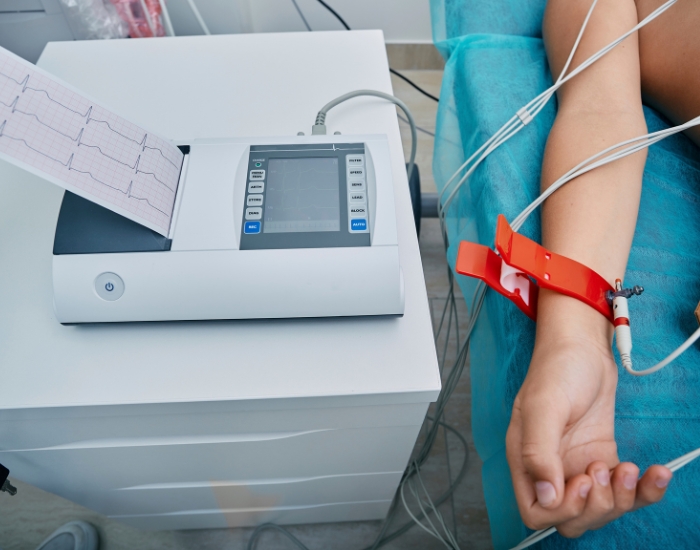
The exam checks heart rate, rhythm, and blood pressure and listens for murmurs or signs of heart failure. A 12-lead EKG may catch a PVC and reveal its likely site of origin, which guides treatment if ablation is ever considered.
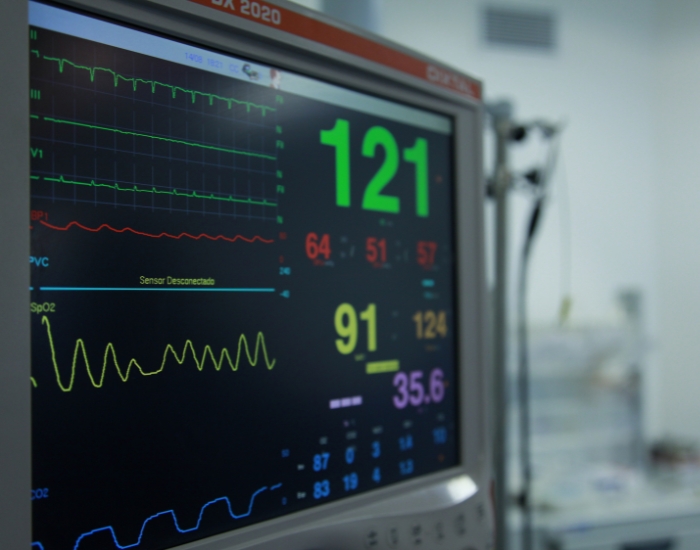
A wearable monitor quantifies the daily burden and documents any runs, and an echocardiogram confirms whether pumping function and structure are normal. Together these two tests help determine whether the PVCs are likely benign or need treatment.
Cardiac Testing
Two tests answer most PVC questions. The others are added based on what those show. EKGs are performed in our office; other tests are performed or arranged by our office.
Counts every PVC over 24 hours to two weeks and reports the burden as a percentage, documents runs, and shows whether beats cluster at certain times.
Checks whether pumping function (ejection fraction) and structure are normal and can identify the cardiomyopathy or valve disease behind the PVCs.
A captured PVC on a 12-lead tracing can suggest where in the ventricle it originates, and the tracing may show signs of some inherited electrical conditions.
Shows whether PVCs increase or, more reassuringly, disappear with exercise, and can help evaluate for coronary disease when symptoms occur with exertion.
Potassium, magnesium, thyroid function, and a blood count identify reversible contributors.
Cardiac MRI to look for scar, a sleep study for apnea, or an electrophysiology study before ablation may be coordinated at an outside facility.
Management
For most patients with PVCs, the treatment is reassurance plus trigger management: less caffeine and alcohol, better sleep, hydration, stress reduction, and correction of low potassium or magnesium. Knowing that the heart is structurally normal and the burden is low often resolves the anxiety that makes the beats more noticeable.
When PVCs are frequent and symptomatic despite those measures, a beta blocker or calcium-channel blocker can reduce their frequency. Stronger antiarrhythmic drugs are reserved for selected cases.
When the burden is high enough to threaten heart function, or symptoms remain disabling, catheter ablation is often effective for PVCs from a single site. It is performed by an electrophysiologist in a hospital lab; Dr. Khalid coordinates the referral and continues cardiac care afterward. If PVC-induced cardiomyopathy is present, heart function is rechecked a few months later and often improves. Do not start or stop rhythm medicines on your own; follow the specific instructions from your care team. Sleep apnea, thyroid disease, and high blood pressure are treated in their own right, which frequently reduces the PVCs as well.
Your Visit
Keep a brief log before the visit: when the skipped beats occur, what you were doing, and anything that seems to make them better or worse. Export smartwatch EKG recordings if you have them. Bring your medication and supplement list and any prior EKGs or monitor reports.
The visit includes the history, an examination, and a 12-lead EKG. If needed, a wearable monitor and an echocardiogram are performed or arranged by our office. Dr. Khalid will explain what premature beats are, why yours are happening, and what the monitor and echo results would mean.
At the follow-up visit the burden and heart function are reviewed together, and you leave with a plan: reassurance and trigger changes for most, medication or a referral for ablation for those who need it.
Katy Cardiology Care
Patients from Katy, Cinco Ranch, Fulshear, and West Houston visit Dr. Khalid at our Katy office for skipped beats, thumps, and flutters, often after a smartwatch flagged them or a primary care EKG caught a PVC. Some are otherwise healthy adults whose main need is a clear answer; others have a known heart condition where the PVCs change the picture.
EKGs are performed in the office, Holter and extended monitoring and echocardiography are performed or arranged by our office so the two key questions, how many and is the heart normal, can be answered. For other services here, see cardiology care in Katy.
Advanced Cardiology – Katy
410 W Grand Pkwy S Ste 4D
Katy, TX 77494
Phone: (713) 258-6111
Advanced Cardiology – Sugar Land
7102 Tarrington Ave Suite 505
Sugar Land, TX 77479
Phone: (713) 258-6111
Sugar Land Cardiology Care
At our Sugar Land office, Dr. Khalid sees patients from Sugar Land, Richmond, Rosenberg, Missouri City, and Stafford with frequent premature beats, including those referred after a Holter monitor elsewhere reported a high PVC burden. In patients with high blood pressure, sleep apnea, or a prior heart attack, PVCs carry more weight, so these conditions are reviewed carefully.
EKGs are performed in the office; echocardiography and Holter or extended monitoring are performed or arranged by our office, with sleep studies, cardiac MRI, and electrophysiology referral coordinated when needed. Bring any monitor reports you already have; the burden number on that report often sets the direction of the visit. Learn more about cardiology care in Sugar Land.
Serving Greater Houston
Patients come to the Katy and Sugar Land offices from across Greater Houston, including Cypress, Richmond, Rosenberg, Fulshear, and West Houston, for evaluation of premature heartbeats. Both offices offer the same physician and the same approach; choose the one that is easier to reach, and the scheduling team can help if you are unsure.
Patient-Centered Cardiology
Care led by Adnan Khalid, MD, whose listed specialties include cardiovascular disease, interventional cardiology, and advanced heart failure.
The PVC burden is measured and the heart is imaged before any decision about medication is made.
Benign PVCs get reassurance and trigger management, not a prescription by default.
You learn what your beats are, what your burden means, and exactly what would change the plan.
Offices in Katy and Sugar Land serving surrounding Greater Houston communities.
New patients are welcome. Most major insurance plans are accepted, subject to eligibility and coverage verification.
Common Questions
Call our office and our staff will help with appointments, referrals and insurance.
In a structurally normal heart, occasional PVCs are generally considered benign. They become a concern when they are very frequent, when they occur in a heart weakened by disease, or when they come with fainting or sustained racing. An echocardiogram and a monitor help determine which situation applies to you.
Often no specific cause is found. Common contributors include caffeine, alcohol, nicotine, stimulants, poor sleep, stress, dehydration, and low potassium or magnesium. Sleep apnea, thyroid overactivity, high blood pressure, and prior heart damage can also increase them.
There is no exact cutoff, but PVCs making up more than about 10% to 15% of all beats on a 24-hour monitor can weaken the heart over time and are often treated even without symptoms. A burden under 1% is generally considered low. Symptoms and heart function matter as much as the number.
Yes, for some people. Stress and anxiety raise adrenaline, which increases PVCs, and anxiety also makes normal PVCs more noticeable. But anxiety is a conclusion reached after a monitor and echocardiogram show that the beats are benign, not a reason to skip the evaluation.
PVCs at rest that disappear with exercise are the reassuring pattern. PVCs that increase with exercise, or appear during recovery, are more likely to be associated with underlying heart disease and are evaluated more carefully, often with an exercise stress test.
See a cardiologist if the beats occur daily, cause lightheadedness, breathlessness, or chest discomfort, happen with exercise, or if you have a history of heart disease or a family history of cardiomyopathy or sudden death. A monitor that has already recorded a high PVC burden should be reviewed by a cardiologist.
Most do not. Reassurance, trigger management, and correcting sleep or electrolyte problems are enough for the majority. A beta blocker or calcium-channel blocker is used for bothersome symptoms. Catheter ablation, a hospital-based procedure, is often effective for a high burden from a single site and is coordinated with an electrophysiologist when needed.
Yes, when they are very frequent. A high PVC burden sustained over months can reduce the heart’s pumping function, a condition called PVC-induced cardiomyopathy. It is one of the few potentially reversible cardiomyopathies: heart function often improves once the PVCs are suppressed with medication or ablation.
Keep Reading
Related services: Palpitations & Irregular Heartbeat • Holter Monitor • Echocardiography • Rapid Heart Rate • Abnormal EKG • Dizziness & Fainting
Sources: NHLBI: Arrhythmias • MedlinePlus: Arrhythmia • MedlinePlus: Holter heart monitor • American Heart Association: Heart attack warning signs
Your cardiologist: Adnan Khalid, MD
Cardiology Appointments
If skipped or extra heartbeats are frequent, worrying, or affecting your daily life, a cardiology evaluation can tell you how many there are, whether your heart is normal, and whether anything needs to be done. Adnan Khalid, MD welcomes new patients at Advanced Cardiology’s Katy and Sugar Land offices.
Katy: 410 W Grand Pkwy S Ste 4D, Katy, TX 77494
Sugar Land: 7102 Tarrington Ave Suite 505, Sugar Land, TX 77479
Skipped beats that turn into a sustained racing heartbeat, or that occur with fainting, chest discomfort, or shortness of breath, need emergency care. Call 911.
Katy & Sugar Land Cardiologist
Advanced Cardiology welcomes new patients at its offices in Katy and Sugar Land. Call our office or send an appointment request, and our staff will follow up.
Most major insurance plans accepted; coverage is verified individually.
For possible heart attack or stroke symptoms, call 911.
Need Consultation / Appointment