
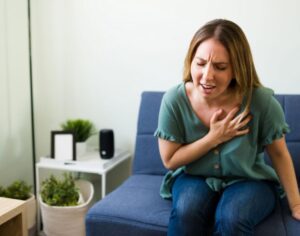
When Is Shortness of Breath an Emergency?
Shortness of breath is an emergency when sudden or severe, or with chest pain, fainting or blue lips. Learn heart and lung causes and when to call 911.
Cardiologist Serving Katy, Sugar Land, Greater Houston
A rhythm strip is a short EKG recording that shows your heart’s rhythm beat by beat. If you have palpitations, dizziness or unexplained fatigue, rhythm strip testing at Advanced Cardiology in Katy can help Dr. Khalid look for an abnormal heart rhythm and decide on the next step in your care.

Dr. Khalid reviews your symptoms, history and test results himself
Visits in Katy and Sugar Land
Catheter and device procedures at an affiliated hospital
Office follow-up on medicines and risk factors
A rhythm strip is a short electrocardiogram (EKG or ECG) recording that tracks your heart’s electrical activity from one or a few leads over a continuous stretch of time. Because it follows the same lead from beat to beat, the rhythm is easier to read than in the brief sample each lead provides on a standard 12-lead EKG. Your cardiologist uses it to see how regular and how fast your heartbeat is, and whether the electrical signal travels normally from the upper to the lower chambers.
A rhythm strip is non-invasive and usually takes only a few minutes. Small adhesive electrodes are placed on your chest (and sometimes your arms or legs), and the machine records the signal. Nothing is sent into your body, and the test does not use radiation.
At Advanced Cardiology, rhythm strips are performed or arranged by our office and reviewed by Adnan Khalid, MD. The findings are considered together with your symptoms, medical history, medications and any other test results to decide whether you need a medication change, further monitoring or no additional testing.
A rhythm strip captures only the time it is recording. If an irregular rhythm comes and goes, it may not appear during the test, so a normal strip does not rule out an intermittent arrhythmia. A rhythm strip also does not show blockages in the coronary arteries, the strength of the heart muscle or how the heart valves work. Those questions are answered with other tests, such as an echocardiogram or a stress test, when your cardiologist feels they are needed.

Adnan Khalid, MD, Cardiologist
Adnan Khalid, MD, specializes in treating coronary artery disease, peripheral artery disease, heart failure, hypertension, arrhythmias, and hyperlipidemia. He has over 10 years of experience in the field of cardiovascular medicine.
Dr. Khalid graduated from his medical school among the top 10 out of 250 medical students in his class. He is fellowship trained in cardiovascular diseases, interventional cardiology, advanced heart failure, and transplant cardiology. He is focused on providing personalized and compassionate care. Dr. Khalid believes in spending time with his patients and listening to their needs and is committed to offering excellent care.
Dr. Khalid is an avid reader. He is eager to learn new things, and he likes to work out and spend time with his family. When off from work, he likes to travel and spend time in nature along with family and friends. He is married with three children. Dr. Adnan Khalid is now seeing patients at our Katy and Sugar Land clinics—accepting new patients from Houston and surrounding areas.
American Board of Internal Medicine
Interventional Cardiology
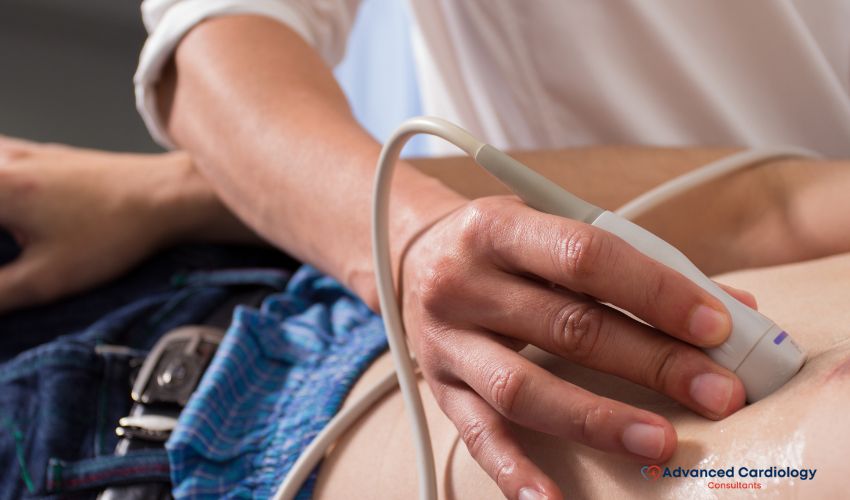
If you have unexplained heart symptoms, a rhythm strip can offer a quick look at your heart’s electrical pattern. It is often one of the first and simplest steps in checking for an arrhythmia (an abnormal heart rhythm).
A heartbeat that feels irregular, racing, pounding or unusually slow
Episodes of dizziness, lightheadedness or near-fainting
Unexplained fatigue or reduced exercise tolerance
A known heart rhythm condition or a recent change in heart-rhythm medicines
When to call 911 instead: A rhythm strip is not an emergency test, and an office appointment is not the right choice if you may be having a heart attack or stroke. Call 911 for chest discomfort that lasts more than a few minutes or goes away and comes back; shortness of breath; discomfort in the arms, back, neck, jaw or stomach; or a cold sweat, nausea or lightheadedness. Also call 911 for sudden face drooping, arm weakness or speech difficulty, even if the symptoms go away.
Patients from Sugar Land, Richmond and nearby communities visit our Katy and Sugar Land offices for heart rhythm evaluation.
A rhythm strip is often an early step in checking for an irregular heart rhythm. If you have symptoms or a history of heart problems, your cardiologist may order this quick, non-invasive test to help guide the next steps in diagnosis and treatment.
Common reasons you may need a rhythm strip test:
Palpitations or fluttering sensations
Why it matters: Palpitations can be caused by premature beats, atrial fibrillation (AFib) or supraventricular tachycardia (SVT), but also by non-cardiac factors such as caffeine, stress or thyroid problems.
How a rhythm strip helps: If the symptom happens during the recording, the strip can show which rhythm is responsible. Learn more about heart palpitations and irregular heartbeat care.
Dizziness or lightheadedness
Why it matters: These symptoms can sometimes be related to a slow heart rate (bradycardia) or pauses in the heartbeat, although many other causes are possible.
How a rhythm strip helps: It can show a slow rhythm or a conduction problem. If a significant slow rhythm is confirmed, treatment options—which may include a pacemaker for some patients—are discussed with you. See also our page on dizziness and fainting evaluation.
Monitoring a known arrhythmia
Why it matters: If you already have a diagnosed rhythm condition, such as atrial fibrillation or atrial flutter, your heart rate and rhythm can change over time or with treatment.
How a rhythm strip helps: It offers a snapshot at a follow-up visit to help check heart rate control and decide whether medicines or further testing should be adjusted.
Before surgery
Why it matters: Current guidelines recommend a stepwise heart risk assessment before surgery based on your symptoms, medical conditions, functional capacity and the type of surgery—not routine testing for everyone.
How a rhythm strip helps: When your care team decides a heart rhythm check is useful, a rhythm strip or EKG can be part of that assessment. Read more about preoperative cardiac evaluation.

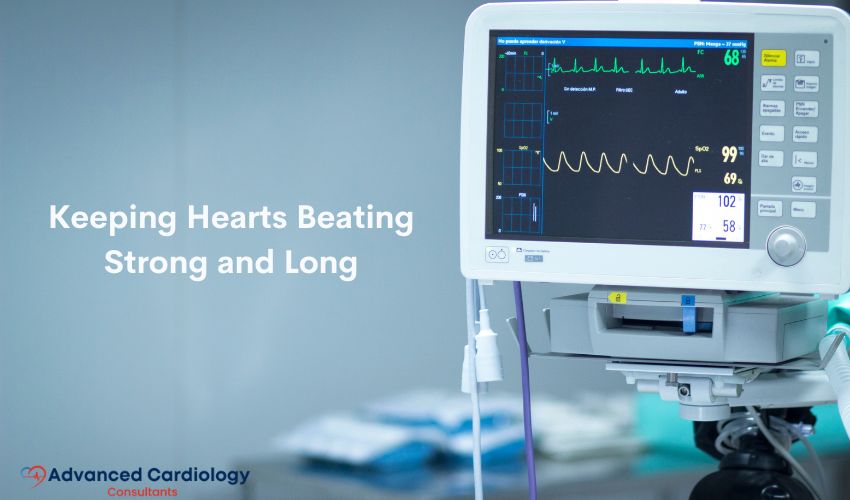
A rhythm strip records a short, continuous view of your heart’s electrical activity—often from several seconds to a few minutes. During that time, it can help identify:
AFib: An irregular, often rapid rhythm from the upper chambers that is linked to a higher risk of stroke.
Bradycardia or tachycardia: Heart rates that are slower or faster than expected.
Premature beats (PACs/PVCs): Extra beats from the upper or lower chambers that can feel like skipped or “flip-flop” beats.
Heart block: Delays or interruptions in the electrical signal as it travels through the heart.
If the strip shows a concern—or if it is normal but your symptoms continue—your cardiologist may recommend a full 12-lead EKG or a longer heart monitor.
The right test depends on how often your symptoms happen. A rhythm strip works best for rhythms that are present at the time of your visit.
Advanced Cardiology accepts most major insurance plans, and coverage is verified individually. Because benefits and authorization rules vary by plan, please contact our office or your insurance provider to confirm coverage before your visit.

A rhythm strip is one of the simplest heart tests. Here is what usually happens:
Preparation: No special preparation is usually needed. Wear a top that is easy to open or remove, and avoid lotions or oils on your chest on the day of the test so the electrodes stick well. Bring a list of your medications, and keep taking them unless your care team gives you specific instructions.
During the test: You lie still and breathe normally while electrodes are attached to your skin. Moving or talking can create interference, so you may be asked to stay quiet for a short time.
After the test: The electrodes are removed, and you can return to your normal activities.
A rhythm strip has very little risk. Some people notice mild skin irritation where the electrodes were placed or brief discomfort when they are removed.
Dr. Khalid reviews the rhythm strip and explains what it means for you, either during your visit or at a follow-up. Timing depends on your visit and whether other tests are being done. If you have questions about your results, call our office at (713) 258-6111.
Depending on the findings, next steps may include no further testing, a medication change, a longer heart monitor, an echocardiogram, blood tests (for example, thyroid or electrolyte levels) or a follow-up visit. If your symptoms happen only once in a while, a wearable or implantable monitor is more likely to capture them than a short office recording.
A rhythm strip is a type of EKG recording. A standard 12-lead EKG views the heart from 12 angles for about 10 seconds, while a rhythm strip follows one or a few leads continuously, which makes the rhythm easier to follow.
Many rhythm problems come and go. A normal strip means no abnormal rhythm was seen during the recording, not that one never happens. Let your cardiologist know if symptoms continue so you can discuss longer monitoring.
Sources: MedlinePlus: Electrocardiogram; MedlinePlus: Arrhythmia; NHLBI: Heart Tests; American Heart Association: Warning Signs of a Heart Attack.
Please print out your paperwork and bring it to your appointment at Advanced Cardiology. If your insurance requires authorization, please be sure to have that information sent to our office or bring it with you to your appointment, along with any medical records you may have. Please also make sure to bring your insurance cards, photo ID, and medication list.
Thank you, and we look forward to meeting you! Contact us with any questions.
Most insurance plans accepted
(713) 258-6111
Katy & Sugar Land Cardiologist
# Cooperative & professional staff. Dr. Khalid is highly competent & experienced. Very kind & friendly too.
# He’s A Very Caring & Concerned Doctor. He Asks Important Questions, He Allows Me To Ask Questions & Fully Answers To My Satisfaction. He Diagnosis & Does Whatever It Takes To Fix My Health Issues. He’s A Wonderful Doctor…& Most Of All, I Trust Him & His Staff.
Read More…..
Shortness of breath is an emergency when sudden or severe, or with chest pain, fainting or blue lips. Learn heart and lung causes and when to call 911.

Feeling dizzy and weak suddenly can be low blood pressure, dehydration or low blood sugar, or a heart rhythm problem or stroke. Learn when to call 911.

Dehydration can cause chest discomfort, dizziness and a racing heart, and can unmask heart disease. Learn the warning signs, who is at risk and when to get help.
Heart attack symptoms in women can include breathlessness, nausea, fatigue and back or jaw pain, even without chest pain. Learn the signs and when to call 911.

Signs of a silent heart attack can feel like indigestion, fatigue or mild breathlessness. Learn who is at risk, how it is found on tests and what to do next.
Acid reflux can feel like chest pain or even a heart attack. Learn how reflux differs from heart pain, red flags that need 911, and how doctors tell them apart.
Katy & Sugar Land Cardiologist
Advanced Cardiology welcomes new patients at its offices in Katy and Sugar Land. Call our office or send an appointment request, and our staff will follow up.
Most major insurance plans accepted; coverage is verified individually.
For possible heart attack or stroke symptoms, call 911.