
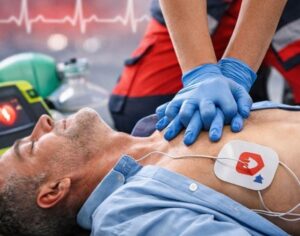
How to Perform CPR on an Adult: Step-by-Step Guide
How to perform CPR on an adult: call 911, push hard and fast 2 inches deep at 100 to 120 per minute, and use an AED. Step-by-step hands-only CPR guide.
Cardiologist Serving Katy, Sugar Land, Greater Houston
Evaluation of leg circulation, risk-factor treatment and discussion of procedure options for peripheral arterial disease.
Peripheral arterial disease (PAD) happens when plaque narrows the arteries that carry blood to the legs (and sometimes the arms). Reduced blood flow can cause leg pain with walking, slow-healing sores and, in advanced cases, threaten the limb. PAD is also a warning sign that arteries elsewhere, including those to the heart and brain, may be affected.
If you have leg pain while walking, numbness, cold feet or wounds that heal slowly, Adnan Khalid, MD, a board-certified cardiologist, can evaluate your circulation at our Katy and Sugar Land offices, arrange the right tests and discuss treatment options with you.

Dr. Khalid reviews your symptoms, history and test results himself
Visits in Katy and Sugar Land
Catheter and device procedures at an affiliated hospital
Office follow-up on medicines and risk factors
PAD is caused by the same process that narrows the coronary arteries: atherosclerosis. People with PAD have a higher risk of heart attack and stroke, so care has two goals:
Many people with PAD have no symptoms or mistake leg pain for arthritis or aging, which is why testing matters for people at risk.
Adnan Khalid, MD, is a fellowship-trained cardiologist who cares for patients with peripheral artery disease, coronary artery disease, heart failure, hypertension, arrhythmias and high cholesterol. His listed specialties include cardiovascular disease, interventional cardiology, and advanced heart failure and transplant cardiology.
He earned his medical degree at Nishtar Medical College and completed his internal medicine residency and cardiology fellowship at the University of Missouri–Kansas City School of Medicine. He speaks English, Arabic, Hindi and Urdu. Known for his patient-centered approach, Dr. Khalid takes the time to explain each diagnosis and treatment option so patients can make informed decisions about their care.
Outside the clinic, he enjoys reading, traveling, fitness, and quality time with his family.
“I believe in treating every patient like family, ensuring they feel supported, informed, and empowered throughout their cardiovascular journey.” – Dr. Khalid
Advanced Cardiology evaluates and manages a broad range of heart and blood vessel conditions at our Katy and Sugar Land offices, following current evidence-based guidelines.
The strongest risk factors for PAD are:
PAD often occurs together with coronary artery disease, previous heart attack, stroke or TIA. Leg symptoms caused by veins, nerves or the spine can look similar, so an evaluation helps separate PAD from vein problems and other causes.
Get emergency care (call 911) if a leg or foot suddenly becomes cold, pale or blue, very painful, numb or weak. This can mean a sudden blockage. Also call 911 for chest discomfort lasting more than a few minutes or stroke signs such as face drooping, arm weakness or speech difficulty. Office messages are not for emergencies.
Diagnosis starts with your symptoms, risk factors and an examination of the pulses, skin and feet. Tests may include:
Because PAD signals wider artery disease, cholesterol, blood sugar and kidney tests and a review of heart symptoms are usually part of the evaluation.
Treatment aims to improve walking, protect the limbs and lower heart attack and stroke risk. Options may include:
Every procedure has benefits, limits and risks, and recovery varies. Follow-up includes monitoring symptoms, ABI results and risk factors over time.
Daily habits make a real difference. Walk most days, even if you need to stop and rest; check your feet every day for cuts, blisters or color changes; keep your skin moisturized; and wear comfortable, protective shoes. People with diabetes should be especially careful with foot care. Keep blood pressure, cholesterol and blood sugar at the goals your care team sets, and bring your readings to follow-up visits. If you smoke, ask about support to quit. PAD care is long term, and regular follow-up helps catch changes early. Learn more about our preventive cardiology approach.
Talk with your clinician about checking your leg circulation if you have leg pain with walking, a foot or leg sore that is slow to heal, or weak pulses in the feet. Testing may also be considered for people without symptoms who have a higher risk, such as those with diabetes, a long smoking history, chronic kidney disease or known artery disease elsewhere. Finding PAD early gives you more time to protect both your legs and your heart.
Your appointment begins with a review of your medical history, medicines and leg symptoms, including how far you can walk before pain starts. Dr. Khalid will examine your pulses, legs and feet, and decide whether an ABI or ultrasound should be arranged. Wear clothing that allows your legs and feet to be examined, and bring your medication list and any previous vascular test results.
He will then explain your results and discuss a plan to improve symptoms and protect your long-term heart and vascular health, including whether any procedure or referral is worth considering.
Ask our office whether a video visit is appropriate for some follow-ups; rules depend on where you are located during the visit, and pulse checks and circulation tests require an in-person visit.
Patient Comments
# Cooperative & professional staff. Dr. Khalid is highly competent & experienced. Very kind & friendly too.
# He’s A Very Caring & Concerned Doctor. He Asks Important Questions, He Allows Me To Ask Questions & Fully Answers To My Satisfaction. He Diagnosis & Does Whatever It Takes To Fix My Health Issues. He’s A Wonderful Doctor…& Most Of All, I Trust Him & His Staff.
Please complete your registration forms before your visit, or print them and bring them to your appointment at our Katy or Sugar Land office. If your insurance requires authorization, please have that information sent to our office or bring it with you, along with any medical records you may have. Please also bring your insurance cards, photo ID and medication list.
Thank you, and we look forward to meeting you! Contact us with any questions.
Note: Office messages and appointment requests are not for emergencies. Call 911 for chest discomfort lasting more than a few minutes or that comes and goes, sudden shortness of breath, or stroke signs such as face drooping, arm weakness or speech difficulty – even if the symptoms go away.
Most major insurance plans accepted; coverage is verified individually
(713) 258-6111
Q1: What causes peripheral arterial disease (PAD)?
PAD is mainly caused by atherosclerosis, the buildup of plaque that narrows the arteries and reduces blood flow to the limbs. Smoking, diabetes, high blood pressure, high cholesterol, kidney disease and older age raise the risk.
Q2: Is leg pain with walking always PAD?
No. Arthritis, spine problems, nerve conditions and vein disease can cause similar pain. An examination and a simple ABI test help tell the difference.
Q3: How is PAD treated?
Treatment usually starts with stopping tobacco, a walking program, medicines to lower cholesterol and blood pressure and to reduce clotting risk, and careful foot care. Procedures such as angioplasty or bypass are hospital-based and are considered when symptoms remain limiting or a limb is at risk.
Q4: Does Advanced Cardiology accept insurance?
Yes. Most major insurance plans are accepted, and coverage is verified individually.
Q5: Where are your offices located and how can I schedule an appointment?
We have two locations:
Call (713) 258-6111 or use our online appointment request form. Please call to confirm office hours for each location.
Sources: NHLBI – Peripheral Artery Disease · MedlinePlus – Peripheral Arterial Disease · AHA – Warning Signs of a Heart Attack
How to perform CPR on an adult: call 911, push hard and fast 2 inches deep at 100 to 120 per minute, and use an AED. Step-by-step hands-only CPR guide.
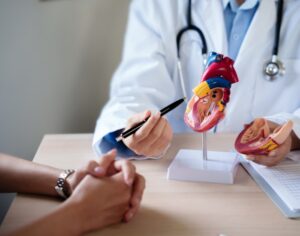
Cardiac failure and heart failure mean the same thing. Learn the types (HFrEF, HFpEF, left vs right), how it differs from cardiac arrest and how it is treated.

Reasons for shortness of breath include heart failure, coronary disease, asthma, COPD, anemia and anxiety. Learn the clues, when to worry and when to call 911.
When should you see a cardiologist? Learn the symptoms, risk factors and test results that call for a heart specialist, and what to expect at a first visit.
What doctor should you see for chest pain? Learn when to call 911, when to see a cardiologist and which tests to expect in Katy and Sugar Land, TX.
Short of breath walking upstairs? Learn what is normal, when it may signal heart disease or heart failure, the tests a cardiologist uses and when to call 911.
Katy & Sugar Land Cardiologist
Advanced Cardiology welcomes new patients at its offices in Katy and Sugar Land. Call our office or send an appointment request, and our staff will follow up.
Most major insurance plans accepted; coverage is verified individually.
For possible heart attack or stroke symptoms, call 911.