

How to Perform CPR on an Adult: Step-by-Step Guide
How to perform CPR on an adult: call 911, push hard and fast 2 inches deep at 100 to 120 per minute, and use an AED. Step-by-step hands-only CPR guide.
Cardiologist Serving Katy, Sugar Land, Greater Houston
Advanced Heart Imaging for Early Detection of Coronary Artery Disease
At Advanced Cardiology, we understand that heart disease can develop silently, even when you feel healthy. A coronary calcium scan measures calcium buildup in the coronary arteries, which can help assess the risk of coronary artery disease before symptoms develop. Patients from Katy, Sugar Land and nearby communities visit our two offices for personalized cardiovascular evaluation.
A coronary calcium scan, also called a coronary artery calcium (CAC) scan or calcium score test, is a specialized CT scan that detects calcified plaque in the arteries supplying blood to the heart. It is a screening tool for selected adults without symptoms, not a test for evaluating chest pain. The results can help your cardiologist understand your cardiovascular risk and decide whether additional prevention or treatment is appropriate. Dr. Adnan Khalid evaluates whether the scan is right for you, and the scan itself is performed at an imaging facility. Our goal is to identify heart disease risk early and help you take informed steps toward protecting your long-term heart health.
Dr. Khalid reviews your symptoms, history and test results himself
Visits in Katy and Sugar Land
Catheter and device procedures at an affiliated hospital
Office follow-up on medicines and risk factors
Coronary artery disease can progress for years without noticeable symptoms. By the time chest pain or other symptoms develop, significant artery narrowing may already be present.
A coronary calcium scan can help identify evidence of coronary atherosclerosis before symptoms appear. This may be particularly useful when the overall level of cardiovascular risk is uncertain and additional information could help guide preventive decisions.
Depending on your individual situation, the results may help your cardiologist determine whether lifestyle changes, closer monitoring, cholesterol management, or other preventive strategies should be considered.
The purpose of calcium scoring is not simply to produce a number. The result should be interpreted alongside your complete medical history and other cardiovascular risk factors.
Dr. Khalid is a cardiologist who treats coronary artery disease, peripheral artery disease, heart failure, hypertension, arrhythmias, hyperlipidemia and vein conditions. He has over a decade of experience and fellowship training in cardiovascular disease and interventional cardiology, and he focuses on helping patients improve their heart and vascular health.
Known for his patient-centered approach, Dr. Khalid listens carefully, educates patients about their conditions and develops personalized treatment plans. Outside of medicine, he enjoys reading, traveling, fitness and spending time with his wife and three children.
“I treat every patient like family, ensuring they feel supported, informed, and empowered in their vascular and heart care journey.” – Dr. Khalid
Advanced Cardiology evaluates and manages a broad range of heart and blood vessel conditions at our Katy and Sugar Land offices, following current evidence-based guidelines.
A coronary calcium scan may be considered for certain adults who do not have symptoms of heart disease but whose risk of developing coronary artery disease is uncertain. The 2026 ACC/AHA cholesterol (dyslipidemia) guideline supports selective calcium scoring for men older than 40 and women older than 45 whose estimated 10-year risk is borderline or intermediate, when the result could change treatment decisions. Risk is estimated with tools such as the PREVENT equations.
Your cardiologist may consider factors such as:
Calcium scoring is not appropriate for everyone. It is not used to evaluate chest pain or other symptoms; if you have symptoms, your cardiologist will recommend tests designed for that purpose. Learn more about heart disease risk assessment and screening when heart disease runs in your family.
The coronary calcium score is commonly reported as an Agatston score, which estimates the amount of calcified plaque detected in the coronary arteries. A score of zero means that no detectable calcified plaque was seen; higher scores indicate more calcification.
The score should never be interpreted by itself. Your cardiologist will consider it together with your age, blood pressure, cholesterol, diabetes status, family history, smoking history, symptoms and other factors.
Under the 2026 guideline summary, any detectable coronary calcium supports more intensive LDL cholesterol lowering, which may include lifestyle changes and medicine. Learn more about cholesterol management.
A higher score does not automatically mean a severe blockage that needs a procedure. Likewise, a zero score does not rule out soft, non-calcified plaque, does not guarantee that you have no cardiovascular risk and does not replace the evaluation of symptoms such as chest pain.
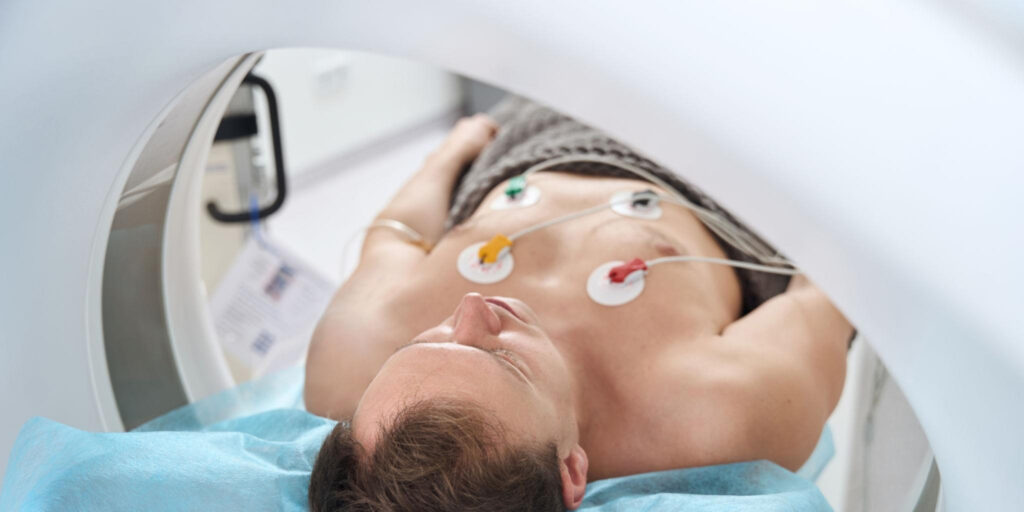
A coronary calcium scan is performed with a CT scanner at an imaging facility. During the test, you lie on an imaging table while the scanner takes detailed images of your heart and coronary arteries.
Small electrodes may be placed on your chest to coordinate the images with your heartbeat. The scan itself is quick and does not require surgery or an incision.
A standard coronary calcium scan usually does not require contrast dye, and most people return to normal activities right away.
You will receive specific instructions before the test, and the imaging facility will explain what to expect based on its equipment and protocol.
The primary purpose of the scan is to detect calcified plaque in the coronary arteries.
Plaque develops when cholesterol, inflammatory cells, calcium, and other substances accumulate within artery walls. Over time, some plaque can become calcified.
Detecting coronary calcium can provide evidence of coronary atherosclerosis and help your physician better understand your cardiovascular risk.
It is important to understand that a calcium scan is designed to detect calcified plaque. It does not provide the same information as every other type of cardiac imaging test, and it is not a direct measurement of the percentage of blockage in a coronary artery.
At Advanced Cardiology, cardiovascular care goes beyond a single test or number. Dr. Adnan Khalid provides comprehensive heart care focused on identifying risk factors, evaluating cardiovascular conditions, and developing individualized treatment strategies.
With experience in cardiovascular diseases and interventional cardiology, Dr. Khalid takes a patient-centered approach to diagnosis and treatment. Each evaluation begins with understanding your medical history, concerns, symptoms, and cardiovascular risk factors.
Patients from Katy, Sugar Land and nearby communities are seen at our two offices, with any imaging arranged at an appropriate facility. Learn more about our approach to preventive cardiology.
Advanced Cardiology provides comprehensive cardiovascular evaluation for patients with risk factors such as:
Your appointment begins with a review of your medical history, current medications, cardiovascular risk factors, and any symptoms you may be experiencing.
Dr. Khalid will determine whether coronary calcium scoring or another cardiovascular test may be appropriate for your situation. If a coronary calcium scan is recommended, the team will explain the purpose of the test and what the results may mean.
After your evaluation, your results can be discussed in the context of your overall heart health. If additional testing, lifestyle changes, medication management, or ongoing monitoring is appropriate, your care team will explain the available options.
Our goal is to make cardiovascular care understandable, personalized, and focused on prevention.
A coronary calcium scan is a noninvasive CT imaging test that detects calcium deposits in the coronary arteries. The results can help assess the presence of calcified plaque and provide additional information about cardiovascular risk.
Most people feel little or no discomfort. A coronary calcium scan is a noninvasive imaging test that does not involve an incision, and the scan itself is generally quick.
A score of zero means that no detectable calcified plaque was identified during the scan. However, it does not mean that a person has absolutely no risk of heart disease or that non-calcified plaque is absent. Your cardiologist should interpret the result within the context of your overall health.
Not necessarily. A calcium score reflects the amount of calcified plaque detected, but it does not directly measure the percentage of narrowing in a particular artery. Additional testing may be recommended depending on your symptoms and cardiovascular risk.
The test may be considered for adults without symptoms whose cardiovascular risk is borderline or intermediate—generally men older than 40 and women older than 45—when the result could help guide decisions about prevention. It is not recommended as a test for chest pain. Your cardiologist can determine whether calcium scoring is appropriate for you.
Yes. A coronary calcium scan uses a low-dose CT scan to create images of the heart and coronary arteries. Your physician can discuss the potential benefits and risks of the test based on your individual circumstances.
No. Calcium scoring is designed primarily to detect calcified plaque in the coronary arteries. Other heart conditions, and symptoms such as chest discomfort, require different tests, such as an exercise stress test or other imaging.
Understanding your cardiovascular risk can be an important step toward protecting your heart health. A coronary calcium scan may provide valuable information about calcified plaque and help your cardiologist make more informed recommendations about prevention and treatment.
If you have cardiovascular risk factors or are unsure whether coronary calcium scoring is appropriate for you, schedule an evaluation with Advanced Cardiology in Katy, TX. Dr. Adnan Khalid and his team can assess your individual risk and recommend appropriate diagnostic and preventive strategies.
Sources: ACC: 2026 ACC/AHA Dyslipidemia Guideline Summary; NHLBI: Coronary Heart Disease; MedlinePlus: Cholesterol; American Heart Association: Warning Signs of a Heart Attack.
Coronary Calcium Scan Evaluation for Katy and Sugar Land Patients
# Cooperative & professional staff. Dr. Khalid is highly competent & experienced. Very kind & friendly too.
# He’s A Very Caring & Concerned Doctor. He Asks Important Questions, He Allows Me To Ask Questions & Fully Answers To My Satisfaction. He Diagnosis & Does Whatever It Takes To Fix My Health Issues. He’s A Wonderful Doctor…& Most Of All, I Trust Him & His Staff.
Please print out your paperwork and bring it to your appointment at Advanced Cardiology, Sugar Land. If your insurance requires authorization, please be sure to have that information sent to our office or bring it with you to your appointment, along with any medical records you may have. Please also make sure to bring your insurance cards, photo ID, and medication list.
Thank you, and we look forward to meeting you! Contact us with any questions.
Please note: Office messages and appointment requests are not for emergencies. Call 911 for chest discomfort that lasts more than a few minutes or goes away and comes back; shortness of breath; discomfort in the arms, back, neck, jaw or stomach; a cold sweat, nausea or lightheadedness; or sudden face drooping, arm weakness or speech difficulty, even if symptoms go away.
Most insurance plans accepted
(713) 258-6111
Q1: Do I need a referral for a coronary calcium scan?
Requirements depend on your insurance plan and the imaging facility. Dr. Khalid can review whether the scan is appropriate and help coordinate it if it is.
Q2: Is a calcium scan covered by insurance?
Coverage for calcium scoring varies, and some plans do not cover it. Please check with your insurance provider and the imaging facility before scheduling.
Q3: Does Advanced Cardiology accept insurance?
Yes, we accept most major insurance plans, and coverage is verified individually. Our team can help you with required paperwork before your appointment.
Q4: Where are your offices located and how can I schedule an appointment?
We have two locations:
Sugar Land: 7102 Tarrington Ave, Suite 505, Sugar Land, TX 77479
Katy: 410 W Grand Pkwy S, Suite 4D, Katy, TX 77494
You can schedule an appointment by calling (713) 258-6111 or by using our online appointment request form. Please call to confirm office hours for each location.
How to perform CPR on an adult: call 911, push hard and fast 2 inches deep at 100 to 120 per minute, and use an AED. Step-by-step hands-only CPR guide.

Cardiac failure and heart failure mean the same thing. Learn the types (HFrEF, HFpEF, left vs right), how it differs from cardiac arrest and how it is treated.

Reasons for shortness of breath include heart failure, coronary disease, asthma, COPD, anemia and anxiety. Learn the clues, when to worry and when to call 911.
When should you see a cardiologist? Learn the symptoms, risk factors and test results that call for a heart specialist, and what to expect at a first visit.
What doctor should you see for chest pain? Learn when to call 911, when to see a cardiologist and which tests to expect in Katy and Sugar Land, TX.
Short of breath walking upstairs? Learn what is normal, when it may signal heart disease or heart failure, the tests a cardiologist uses and when to call 911.
Katy & Sugar Land Cardiologist
Advanced Cardiology welcomes new patients at its offices in Katy and Sugar Land. Call our office or send an appointment request, and our staff will follow up.
Most major insurance plans accepted; coverage is verified individually.
For possible heart attack or stroke symptoms, call 911.