Cardiologist Serving Katy, Sugar Land, Greater Houston
Cardiologist Serving Katy, Sugar Land, Greater Houston
– Accepting New Patients
– Most Insurance Plans Accepted
– Member of the Chamber of Commerce

Dr. Khalid reviews your symptoms, history and test results himself
Visits in Katy and Sugar Land
Catheter and device procedures at an affiliated hospital
Office follow-up on medicines and risk factors
Heart testing helps answer a specific question: what is causing a symptom, how well the heart is working, or how high your risk of future heart problems may be. No single test shows everything. Dr. Khalid chooses tests based on your symptoms, medical history, physical examination and earlier results, and explains what each test can and cannot show before you decide.
The sections below describe the most common steps for adult patients. For more detail, see our pages on EKG testing, echocardiography and Doppler studies, and cardiac catheterization and angiography.
Your visit begins with a conversation about your symptoms, medical history, medicines and family history, followed by a physical examination. Dr. Khalid checks your blood pressure and pulse, looks for swelling in the legs and ankles, and listens to your heart and lungs with a stethoscope.
Listening to the heart can reveal clues such as a heart murmur, an irregular rhythm or signs of fluid in the lungs. Many heart murmurs are first noticed this way. An examination alone usually cannot confirm a diagnosis, so the findings help decide whether further testing is useful and which test is most likely to answer the question.
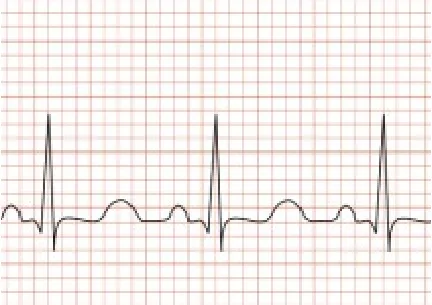
An electrocardiogram (ECG or EKG) records the electrical activity of the heart. Small adhesive patches (electrodes) are placed on the chest, arms and legs and connected to the EKG machine. The recording usually takes only a few minutes while you lie still. The test is not painful, although removing the patches can feel like taking off a bandage.
An EKG shows heart rate and rhythm and may show signs of a previous heart attack, strain on the heart muscle or problems with the heart’s electrical conduction. It is a snapshot of a few seconds, so it can be normal even when symptoms come and go, and it cannot show the coronary arteries directly. Our office performs EKGs at both locations. If symptoms happen only now and then, a longer recording such as a Holter or event monitor may be suggested. Dr. Khalid reviews the tracing and discusses the results with you.
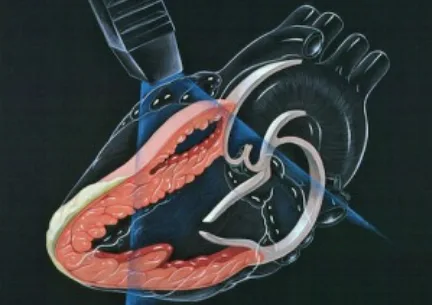
An echocardiogram uses ultrasound (sound waves) to create moving pictures of the heart. A sonographer applies gel to the chest and moves a handheld probe called a transducer over the skin. The test does not use radiation and usually takes under an hour; you may feel slight pressure from the probe.
An echo shows the size and shape of the heart chambers, how strongly the heart muscle pumps (often reported as the ejection fraction), how the valves open and close, and, with Doppler, how blood flows through the heart. It can also detect fluid around the heart. A standard echo does not show the coronary arteries themselves, so it cannot rule out artery blockages on its own. Echocardiograms are performed or arranged by our office.
When clearer pictures of the valves or the back of the heart are needed, a transesophageal echocardiogram (TEE) may be recommended. TEE uses a thin probe passed down the esophagus under sedation and is done in a hospital setting.
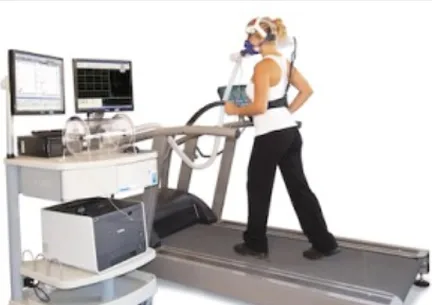
An exercise stress test measures how your heart responds when it is working harder. You walk on a treadmill (or pedal a stationary bike) while your heart rhythm, heart rate, blood pressure and symptoms are monitored. The speed and incline increase in stages, and the test is stopped if you develop concerning symptoms or reach your target level.
Exercise testing may be used to:
A standard exercise EKG test does not use a radiotracer or imaging. Some patients need a stress test combined with imaging, such as a stress echocardiogram (ultrasound pictures before and after exercise) or a nuclear stress test, which uses a small amount of radioactive tracer. If you cannot exercise, medicine can be used to stress the heart instead.
Stress tests can miss some blockages and can sometimes suggest a problem that further testing does not confirm, so results are interpreted together with your symptoms and risk factors. Stress testing is performed or arranged by our office, and your care team will give you specific preparation instructions, including whether to adjust any medicines.
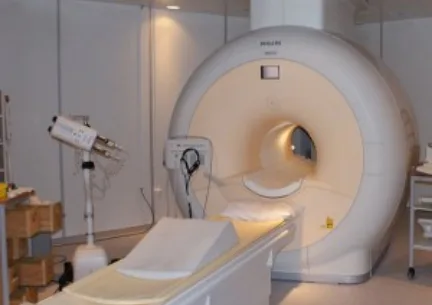
Cardiac MRI uses a strong magnet, radio waves and a computer to create detailed still and moving pictures of the heart and major blood vessels. It does not use ionizing radiation. It can show the structure of the heart muscle and valves, how well the heart pumps, and areas of inflammation or scarring, which helps evaluate conditions such as cardiomyopathy. A contrast agent is often given through a small IV line. The scan usually takes 45 minutes to an hour, and you are asked to lie still and hold your breath at times. MRI is not suitable for everyone: implanted devices, metal fragments and kidney problems need to be discussed first, and some people feel claustrophobic in the scanner.
Cardiac CT uses X-rays to create cross-sectional images. A coronary calcium scan measures calcified plaque in the coronary arteries without contrast dye and can help refine heart disease risk in selected adults. Coronary CT angiography uses an iodine-based contrast dye to show the coronary arteries and any narrowing. CT involves a dose of radiation, and contrast dye can cause allergic reactions or affect kidney function in some people. Cardiac CT and MRI are performed or arranged by our office at an imaging facility, and Dr. Khalid reviews the results with you.
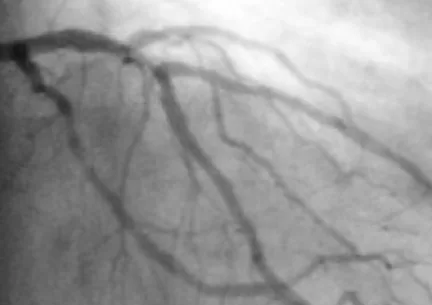
Cardiac catheterization is a hospital procedure used to diagnose and treat certain heart conditions in adults. A thin, flexible tube called a catheter is inserted into a blood vessel, usually in the wrist or groin, and guided to the heart. You are usually awake but given medicine to help you relax, and the insertion site is numbed.
Through the catheter, doctors can measure pressures inside the heart chambers and inject contrast dye while taking X-ray pictures of the coronary arteries. This study is called a coronary angiogram, and it shows where arteries are narrowed or blocked. If a significant blockage is found, it can sometimes be treated during the same procedure with angioplasty and a stent. Other blockages are better treated with medicines or bypass surgery. That decision depends on the location and pattern of disease, heart function, symptoms, other health conditions and your preferences, not only on the number of narrowed arteries.
Like any invasive procedure, catheterization carries risks, such as bleeding or bruising at the insertion site, reactions to contrast dye, effects on kidney function and, rarely, blood vessel damage, heart rhythm problems, heart attack or stroke. Many patients go home the same day, while others stay overnight; recovery varies. Catheterization is performed at an affiliated hospital, and our office will explain where to go and how to prepare, including specific instructions from your care team about blood thinners or diabetes medicines.
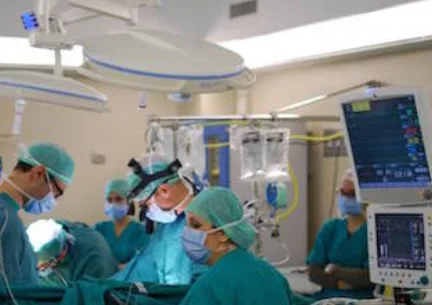
Some heart conditions are best treated with surgery. In adults, common heart operations include coronary artery bypass grafting (CABG), which uses a blood vessel from elsewhere in the body to route blood around blocked coronary arteries, and surgery to repair or replace a heart valve. Some procedures can be done through smaller incisions or with catheter-based techniques, while others require opening the breastbone and using a heart-lung machine during the operation.
Heart surgery is performed by cardiac surgeons in a hospital, not in our office. Dr. Khalid’s role is to evaluate whether surgery may be an option, discuss the alternatives with you (such as medicines or catheter-based treatment), refer you to a cardiac surgery team when appropriate, and coordinate your cardiology care before and after the operation.
The length of the hospital stay and recovery after heart surgery vary from person to person. After discharge, many patients benefit from cardiac rehabilitation, a supervised program of exercise, education and risk-factor support, along with regular cardiology follow-up.
Dr. Khalid reviews your results and explains what they mean for you, usually at a follow-up visit. Results are considered together with your symptoms, examination and risk factors. Possible next steps include no further testing, lifestyle changes, new or adjusted medicines, a longer heart rhythm recording, additional imaging, or referral for a hospital procedure. If you have had heart tests elsewhere, bring copies of the results to your visit so they are not repeated unnecessarily.
How should I prepare for a test? Preparation depends on the test. Our office will give you instructions, for example about eating beforehand or wearing comfortable clothes and walking shoes for a stress test. Do not stop or change any medicine unless your care team tells you to.
Will my insurance cover testing? Our office accepts most major insurance plans and verifies coverage individually. Some plans require prior authorization for certain tests, so please call us with your plan details.
What if I have symptoms before my appointment? Call 911 for chest discomfort that lasts more than a few minutes or goes away and comes back; shortness of breath; discomfort in the arms, back, neck, jaw or stomach; or a cold sweat, nausea or lightheadedness. Also call 911 for possible stroke signs such as face drooping, arm weakness or speech difficulty, even if they go away. Office messages and appointment requests are not for emergencies.
To schedule an evaluation, call (713) 258-6111 or request an appointment online.
Sources: NHLBI: Heart Tests; NHLBI: Cardiac Catheterization; MedlinePlus: Electrocardiogram; American Heart Association: Warning Signs of a Heart Attack.
Please print out your paperwork and bring it to your appointment at Advanced Cardiology. If your insurance requires authorization, please be sure to have that information sent to our office or bring it with you to your appointment, along with any medical records you may have. Please also make sure to bring your insurance cards, photo ID, and medication list.
Thank you, and we look forward to meeting you! Contact us today with any questions.
Most insurance plans accepted
(713) 258-6111
Katy & Sugar Land Cardiologist
Advanced Cardiology welcomes new patients at its offices in Katy and Sugar Land. Call our office or send an appointment request, and our staff will follow up.
Most major insurance plans accepted; coverage is verified individually.
For possible heart attack or stroke symptoms, call 911.
