
Why Does My Back Hurt With Chest Pain?
Back pain with chest pain may be a muscle strain or reflux, but also a heart attack or aortic dissection. Learn the causes, warning signs and when to call 911.
Cardiologist Serving Katy, Sugar Land, Greater Houston
An echocardiogram uses ultrasound to show the heart’s chambers, walls, and valves as they move, and Doppler measures how blood flows through them. At Advanced Cardiology, echocardiograms are performed or arranged by our office for patients seen at our Katy and Sugar Land locations, and the results are reviewed by Adnan Khalid, MD as part of your evaluation.

Dr. Khalid reviews your symptoms, history and test results himself
Visits in Katy and Sugar Land
Catheter and device procedures at an affiliated hospital
Office follow-up on medicines and risk factors
Echocardiography, commonly called an echo, is an ultrasound test that creates moving pictures of your heart’s structure and function. It uses sound waves rather than radiation. When combined with Doppler, it also shows the direction and speed of blood flow through the heart and its valves.
An echo is often ordered when someone has shortness of breath, chest discomfort, a heart murmur, leg swelling, unexplained fatigue, or a suspected valve problem. It can find some conditions before they cause major symptoms, and it helps explain symptoms that are already present.
Dr. Khalid reviews your echo and Doppler findings together with your symptoms, exam, and other test results to decide what they mean for you and whether any next step is needed.

Adnan Khalid, MD, Cardiologist
Adnan Khalid, MD, specializes in treating coronary artery disease, peripheral artery disease, heart failure, hypertension, arrhythmias, and hyperlipidemia. He has over 10 years of experience in the field of cardiovascular medicine.
Dr. Khalid graduated from his medical school among the top 10 out of 250 medical students in his class. He is fellowship trained in cardiovascular diseases, interventional cardiology, advanced heart failure, and transplant cardiology. He is focused on providing personalized and compassionate care. Dr. Khalid believes in spending time with his patients and listening to their needs and is committed to offering excellent care.
Dr. Khalid is an avid reader. He is eager to learn new things; He likes to work out and spend time with his family. When off from work, he likes to travel and spend time in nature along with family and friends. He is married with three children. Dr. Adnan Khalid is now seeing patients at our Katy and Sugar Land offices and welcomes new patients from across the greater Houston area.
American Board of Internal Medicine
Interventional Cardiology
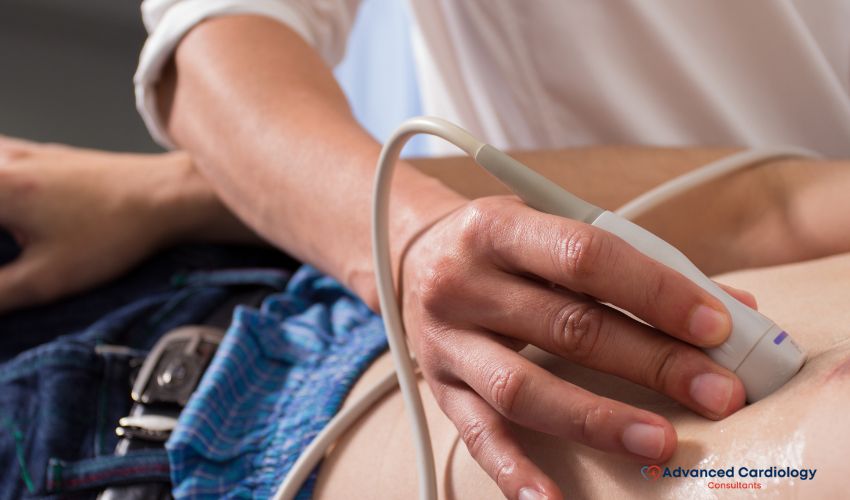
An echocardiogram gives a real-time look at how your heart is built and how it is working, including:
Shows whether the heart chambers are enlarged or thickened and whether the walls move normally. Areas that move poorly can point to a prior heart attack or weakened muscle.
Evaluates conditions such as aortic stenosis (a narrowed valve), mitral regurgitation (a leaking valve), or tricuspid valve disease. Doppler shows the direction and speed of blood flow across each valve.
Estimates the percentage of blood the left ventricle pumps out with each beat. It is one of the key measurements used to evaluate heart failure and cardiomyopathy. Learn more about a low ejection fraction.
Identifies fluid around the heart, which can be related to inflammation, infection, or other conditions and, in larger amounts, can affect how the heart fills.
Doppler can estimate pressure in the lung arteries. A high estimate may suggest pulmonary hypertension, which sometimes needs confirmation with other tests.
Dr. Khalid may recommend an echocardiogram if you have:
Finding a structural problem early can allow timely treatment and follow-up, but not every finding needs treatment.

Valve disorders (stenosis or regurgitation)
Weakened heart muscle, as seen in heart failure
Structural differences present from birth that are sometimes first found in adulthood, such as a hole between the upper chambers
Pericardial effusion (fluid around the heart)
Signs of high pressure in the lung arteries
Clots or masses inside the heart (a standard echo can miss small ones)
Cardiomyopathy and thickened heart walls
Depending on your results, Dr. Khalid may recommend further testing, such as stress echocardiography, a transesophageal echocardiogram (TEE), cardiac MRI, or cardiac catheterization.
A resting echo is very good at showing structure and pumping function, but it has limits:
A standard (transthoracic) echo is done from the outside of the chest at rest. A stress echo compares ultrasound images at rest and right after exercise or a heart-stimulating medicine, to look for areas of muscle that do not get enough blood under stress. A TEE places a small ultrasound probe in the esophagus under sedation for closer views of the valves and upper chambers; it is a hospital-based procedure. A nuclear stress test uses a small amount of radioactive tracer to map blood flow and is a different test from an echo. An EKG records electrical activity, not structure.
A standard echocardiogram is performed or arranged by our office for patients of our Katy and Sugar Land locations, and the office will tell you where your test will take place. A trained sonographer usually acquires the images, and Dr. Khalid reviews the findings. A TEE is scheduled at an affiliated hospital when it is needed.
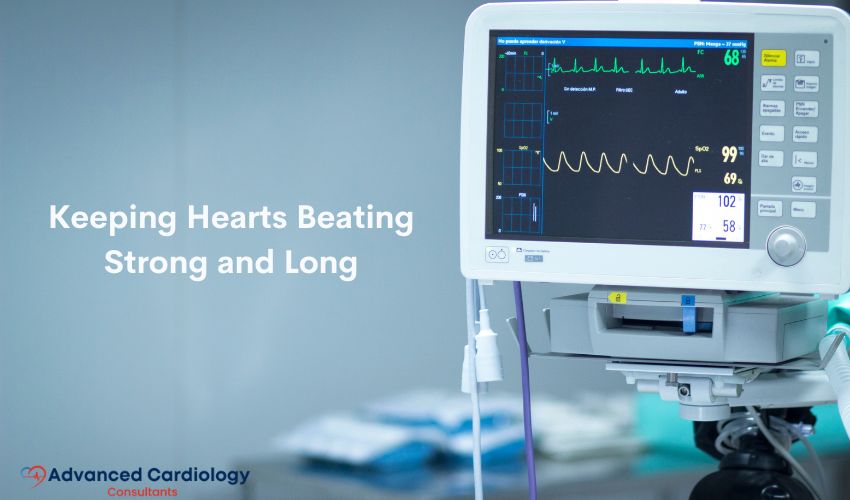
Most people need little preparation for a standard echo. Follow the instructions your care team gives you, and take your medications as prescribed unless you are told otherwise. Wear a top that is easy to remove, and bring a list of your medications and any prior heart test results. Preparation for a stress echo or TEE is different, and the office will explain those instructions separately.
You will change into a gown and lie on an exam table, usually on your left side. Small EKG stickers are placed on your chest to track your heart rhythm. The sonographer applies a cool gel and moves a handheld probe across your chest, sometimes pressing firmly to get clear images. You may hear the whooshing sound of blood flow during the Doppler portion and be asked to hold your breath briefly. The test usually takes 30 to 60 minutes.
A standard echo uses ultrasound and no radiation. Most people feel only the gel and some pressure from the probe, which can be uncomfortable over tender areas. If a contrast agent is used to improve the images, it is given through an IV, and the staff will ask about allergies first. Tell the staff if lying on your side is difficult.
Dr. Khalid reviews the images and measurements and explains the findings at a follow-up visit or by another method the office arranges. Timing depends on the test and your situation. If something needs prompt attention, the office will contact you.
A normal echo may be all that is needed. Other findings may lead to medication changes, repeat echoes to watch a valve or pumping function over time, a stress test, a TEE, cardiac MRI, or referral for a procedure. See our overview of heart tests and treatments.
Is an echo the same as an ultrasound? Yes. An echocardiogram is an ultrasound of the heart.
Can an echo tell if I had a heart attack? It can show areas of heart muscle that move poorly, which may suggest prior damage, but it does not show the arteries themselves.
Will I need a repeat echo? Sometimes. Valve disease and weakened heart muscle are often followed with repeat echoes at intervals Dr. Khalid recommends.
Sources: NHLBI: Heart Tests · MedlinePlus: Heart Failure · NHLBI: Heart Failure · AHA: Warning Signs of a Heart Attack
Call our office to ask about current availability for an echocardiogram at the Katy or Sugar Land location. Most major insurance plans are accepted, and coverage is verified individually; some plans require a referral or prior authorization.
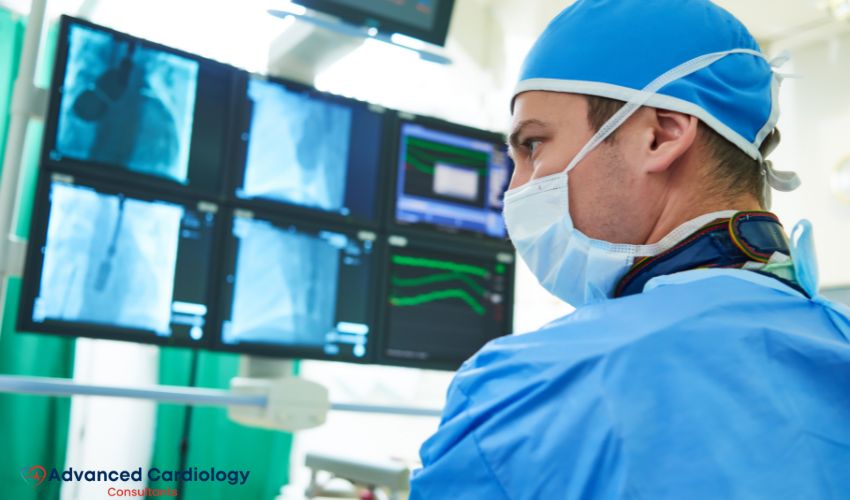
If you have symptoms that could be related to your heart, or your doctor has recommended an echocardiogram, Advanced Cardiology in Katy and Sugar Land can help you understand what is going on and what comes next.
Call 911 for chest discomfort that lasts more than a few minutes or comes and goes, sudden shortness of breath, fainting, or signs of a stroke such as face drooping, arm weakness, or speech difficulty, even if the symptoms go away. Appointment requests and office messages are not for emergencies.
Please print out your paperwork and bring it to your appointment at Advanced Cardiology. If your insurance requires authorization, please be sure to have that information sent to our office or bring it with you to your appointment, along with any medical records you may have. Please also make sure to bring your insurance cards, photo ID, and medication list.
Thank you, and we look forward to meeting you! Contact us today with any questions.
Most insurance plans accepted
(713) 258-6111
Katy & Sugar Land Cardiologist
# Cooperative & professional staff. Dr. Khalid is highly competent & experienced. Very kind & friendly too.
# He’s A Very Caring & Concerned Doctor. He Asks Important Questions, He Allows Me To Ask Questions & Fully Answers To My Satisfaction. He Diagnosis & Does Whatever It Takes To Fix My Health Issues. He’s A Wonderful Doctor…& Most Of All, I Trust Him & His Staff.
Read More…..
Back pain with chest pain may be a muscle strain or reflux, but also a heart attack or aortic dissection. Learn the causes, warning signs and when to call 911.

Jaw pain with chest pain can warn of a heart attack or angina, especially in women. Learn how it differs from dental or TMJ pain and when to call 911.

Feeling weak and shaky with chest pain can be low blood sugar, anxiety or dehydration, but also a heart attack or rhythm problem. Know when to call 911.

Should you go to the ER for chest pain? Learn which symptoms need 911, ER vs urgent care, what happens in the ER, and when to follow up with a cardiologist.

Severe abdominal pain can feel frightening, exhausting, and overwhelming, especially when symptoms suddenly worsen or spread throughout the abdomen. Many people initially dismiss stomach pain as indigestion, food poisoning, gas, or minor illness, only to later discover they are experiencing appendicitis or even a ruptured appendix. A burst appendix, also called a ruptured appendix, is […]

Severe headache and nausea is often migraine, but sudden pain, very high blood pressure, weakness or confusion need the ER. Learn red flags and where to go.
Katy & Sugar Land Cardiologist
Advanced Cardiology welcomes new patients at its offices in Katy and Sugar Land. Call our office or send an appointment request, and our staff will follow up.
Most major insurance plans accepted; coverage is verified individually.
For possible heart attack or stroke symptoms, call 911.