
Cardiology Consultant
Coronary Calcium Scan in Katy, TX
Advanced Heart Imaging for Early Detection of Coronary Artery Disease
At Advanced Cardiology, we understand that heart disease can develop silently, even when you feel healthy. A coronary calcium scan provides valuable information about the amount of calcium buildup in the coronary arteries, helping assess the risk of coronary artery disease before serious symptoms develop. Our team provides personalized cardiovascular evaluations for patients in Katy, Sugar Land, and throughout the Greater Houston area.
A coronary calcium scan, also called a coronary artery calcium (CAC) scan or calcium score test, is a specialized CT scan that detects calcified plaque in the arteries supplying blood to the heart. The results can help your cardiologist better understand your cardiovascular risk and determine whether additional prevention or treatment may be appropriate. Dr. Adnan Khalid and the team at Advanced Cardiology combine advanced diagnostic testing with individualized cardiovascular care. Our goal is to identify potential heart disease risk factors early and help patients take informed steps toward protecting their long-term heart health.
Why Is a Coronary Calcium Scan Important?
Coronary artery disease can progress for years without noticeable symptoms. By the time chest pain or other symptoms develop, significant artery narrowing may already be present.
A coronary calcium scan can help identify evidence of coronary atherosclerosis before symptoms appear. This may be particularly useful when the overall level of cardiovascular risk is uncertain and additional information could help guide preventive decisions.
Depending on your individual situation, the results may help your cardiologist determine whether lifestyle changes, closer monitoring, cholesterol management, or other preventive strategies should be considered.
The purpose of calcium scoring is not simply to produce a number. The result should be interpreted alongside your complete medical history and other cardiovascular risk factors.
Comfort Starts from the Ground Up.
Meet Dr. Adnan Khalid – Houston’s Trusted Cardiologist
Dr. Khalid is a highly skilled cardiologist specializing in coronary artery disease, peripheral artery disease, heart failure, hypertension, arrhythmias, hyperlipidemia, and vein conditions. With over a decade of experience and fellowship training in Cardiovascular Diseases and Interventional Cardiology, he has helped numerous patients improve circulation, relieve pain, and enhance quality of life.
Known for his patient-centered approach, Dr. Khalid listens carefully, educates patients about their conditions, and develops personalized treatment plans. Outside of medicine, he enjoys reading, traveling, fitness, and spending time with his wife and three children.
“I treat every patient like family, ensuring they feel supported, informed, and empowered in their vascular and heart care journey.” – Dr. Khalid
CONDITIONS WE TREAT
Advanced Cardiology Sugar Land covers the entire field of heart diseases. We treat patients according according to latest scientific findings using the most modern methods.
- Preoperative cardiac clearance Cardiology
- Chest Pain
- Hypertension
- Hyperlipidemia
CONDITIONS WE TREAT
- Heart enlargement
- Heart failure
- Atrial fibrillation and atrial flutter
- Varicose veins
- Peripheral arterial disease
- Post stroke cardiac care
Location in South West Houston
Who May Benefit From a Coronary Calcium Scan?
A coronary calcium scan may be considered for certain adults who do not have obvious symptoms of heart disease but have risk factors that may increase their likelihood of developing coronary artery disease.
Your cardiologist may consider factors such as:
- High cholesterol
- High blood pressure
- Diabetes or elevated blood sugar
- Smoking history
- Family history of premature heart disease
- Excess weight or obesity
- Lack of regular physical activity
- Increasing age
- Other cardiovascular risk factors
Calcium scoring is not appropriate for everyone. Your physician can determine whether the test is useful based on your age, symptoms, medical history, and overall cardiovascular risk.
Understanding Your Coronary Calcium Score
The coronary calcium score is commonly reported as an Agatston score. The result estimates the amount of calcified plaque detected in the coronary arteries.
In general, a score of zero means that no detectable calcified plaque was identified on the scan. Higher scores indicate increasing amounts of coronary artery calcification.
However, the score should never be interpreted by itself.
A calcium score is one part of a broader cardiovascular risk assessment. Your cardiologist will consider the result together with your age, blood pressure, cholesterol, diabetes status, family history, smoking history, symptoms, and other factors.
A higher score does not automatically mean that a person has a severe blockage requiring a procedure. Likewise, a zero calcium score does not guarantee that a person has no cardiovascular risk or that soft, non-calcified plaque is absent.
How Does a Coronary Calcium Scan Work?
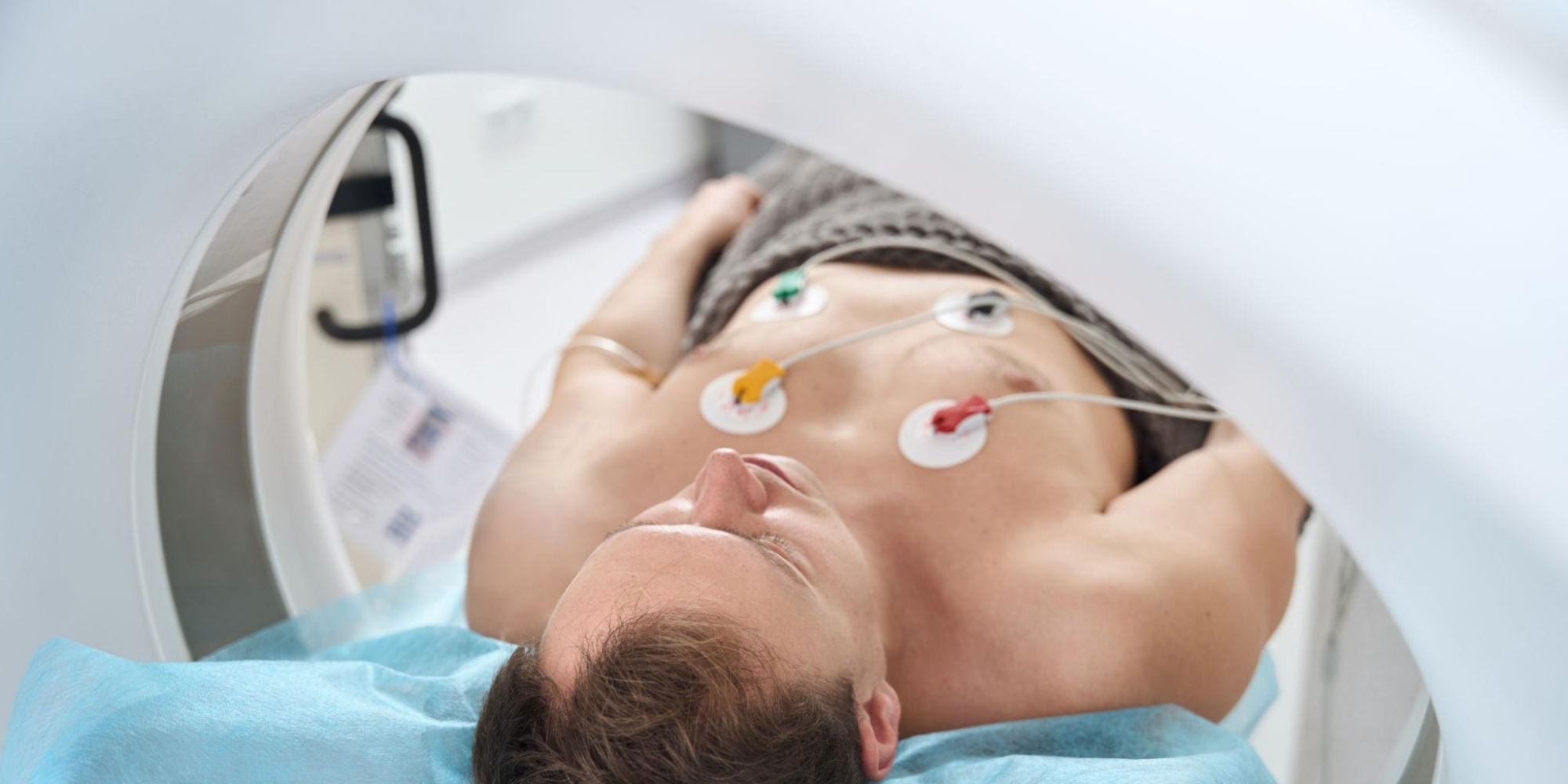
A coronary calcium scan is performed using a CT scanner. During the test, you will lie on an imaging table while the scanner takes detailed images of your heart and coronary arteries.
Small electrodes may be placed on your chest to coordinate the images with your heartbeat. The scan itself is quick and does not require surgery or an incision.
In many cases, no contrast dye is required for a standard coronary calcium scan. Because the procedure is noninvasive, there is typically little disruption to your normal routine.
Your cardiology team will provide specific instructions before the test and explain what to expect based on the imaging equipment and protocol being used.
What Does a Coronary Calcium Scan Detect?
The primary purpose of the scan is to detect calcified plaque in the coronary arteries.
Plaque develops when cholesterol, inflammatory cells, calcium, and other substances accumulate within artery walls. Over time, some plaque can become calcified.
Detecting coronary calcium can provide evidence of coronary atherosclerosis and help your physician better understand your cardiovascular risk.
It is important to understand that a calcium scan is designed to detect calcified plaque. It does not provide the same information as every other type of cardiac imaging test, and it is not a direct measurement of the percentage of blockage in a coronary artery.
Protect Your Heart Health
Why Choose Advanced Cardiology for Heart Risk Evaluation?
At Advanced Cardiology, cardiovascular care goes beyond a single test or number. Dr. Adnan Khalid provides comprehensive heart care focused on identifying risk factors, evaluating cardiovascular conditions, and developing individualized treatment strategies.
With experience in cardiovascular diseases and interventional cardiology, Dr. Khalid takes a patient-centered approach to diagnosis and treatment. Each evaluation begins with understanding your medical history, concerns, symptoms, and cardiovascular risk factors.
Our team serves patients in Katy, Sugar Land, and surrounding Greater Houston communities, making advanced cardiovascular evaluation accessible close to home.
Heart Disease Risk Factors We Evaluate
Advanced Cardiology provides comprehensive cardiovascular evaluation for patients with risk factors such as:
- High blood pressure
- High cholesterol
- Diabetes
- Family history of heart disease
- Smoking history
- Obesity
- Coronary artery disease
- Peripheral artery disease
- Heart failure
- Abnormal heart rhythm
- Chest discomfort
- Shortness of breath
- Other cardiovascular concerns
What to Expect During Your Visit
Your appointment begins with a review of your medical history, current medications, cardiovascular risk factors, and any symptoms you may be experiencing.
Dr. Khalid will determine whether coronary calcium scoring or another cardiovascular test may be appropriate for your situation. If a coronary calcium scan is recommended, the team will explain the purpose of the test and what the results may mean.
After your evaluation, your results can be discussed in the context of your overall heart health. If additional testing, lifestyle changes, medication management, or ongoing monitoring is appropriate, your care team will explain the available options.
Our goal is to make cardiovascular care understandable, personalized, and focused on prevention.
Frequently Asked Questions
What is a coronary calcium scan?
A coronary calcium scan is a noninvasive CT imaging test that detects calcium deposits in the coronary arteries. The results can help assess the presence of calcified plaque and provide additional information about cardiovascular risk.
Is a coronary calcium scan painful?
No. A coronary calcium scan is a noninvasive imaging test and does not involve an incision. The scan itself is generally quick.
What does a calcium score of zero mean?
A score of zero means that no detectable calcified plaque was identified during the scan. However, it does not mean that a person has absolutely no risk of heart disease or that non-calcified plaque is absent. Your cardiologist should interpret the result within the context of your overall health.
Does a high calcium score mean I have a blocked artery?
Not necessarily. A calcium score reflects the amount of calcified plaque detected, but it does not directly measure the percentage of narrowing in a particular artery. Additional testing may be recommended depending on your symptoms and cardiovascular risk.
Who should get a coronary calcium scan?
The test may be considered for certain adults whose cardiovascular risk is uncertain and who may benefit from additional information about coronary artery disease risk. Your cardiologist can determine whether calcium scoring is appropriate for you.
Does a coronary calcium scan use radiation?
Yes. A coronary calcium scan uses a low-dose CT scan to create images of the heart and coronary arteries. Your physician can discuss the potential benefits and risks of the test based on your individual circumstances.
Can a coronary calcium scan detect all heart disease?
No. Calcium scoring is designed primarily to detect calcified plaque in the coronary arteries. Other heart conditions require different diagnostic tests.
Advanced Cardiovascular Care in Katy, TX
Understanding your cardiovascular risk can be an important step toward protecting your heart health. A coronary calcium scan may provide valuable information about calcified plaque and help your cardiologist make more informed recommendations about prevention and treatment.
If you have cardiovascular risk factors or are unsure whether coronary calcium scoring is appropriate for you, schedule an evaluation with Advanced Cardiology in Katy, TX. Dr. Adnan Khalid and his team can assess your individual risk and recommend appropriate diagnostic and preventive strategies.
Advanced Solutions for a Healthier Heart"
Symptoms and Complications of Varicose Veins
About our Cardiologist in Sugar Land: Comments from our Patients
# Cooperative & professional staff. Dr. Khalid is highly competent & experienced. Very kind & friendly too.
# He's A Very Caring & Concerned Doctor. He Asks Important Questions, He Allows Me To Ask Questions & Fully Answers To My Satisfaction. He Diagnosis & Does Whatever It Takes To Fix My Health Issues. He's A Wonderful Doctor...& Most Of All, I Trust Him & His Staff.
New Patient Paperwork
Please print out your paperwork and bring it to your appointment at Advanced Cardiology, Sugar Land. If your insurance requires authorization, please be sure to have that information sent to our office or bring it with you to your appointment, along with any medical records you may have. Please also make sure to bring your insurance cards, photo ID, and medication list.
Thank you, and we look forward to meeting you! Contact us today with any questions.
PN. Symptoms like severe chest pain, extreme shortness of breath, or sudden numbness can indicate a heart attack or stroke, requiring immediate emergency room visit or a call to emergency medical services at 911
Call to Schedule Your Appointment Cardiology Consultant in Sugar Land!
Most insurance plans accepted
(713) 258-6111
Frequently Asked Questions
Q1: What causes varicose veins?
Varicose veins occur when the valves in the veins weaken, causing blood to pool and veins to enlarge. Factors like genetics, age, pregnancy, prolonged standing, and obesity can increase your risk.
Q2: What symptoms indicate varicose veins need treatment?
Seek evaluation if you experience: aching, heaviness, swelling, skin discoloration, itching, or visible bulging veins. Early treatment prevents complications and improves comfort.
Q3: Does Advanced Cardiology accept insurance?
Yes, we accept most major insurance plans. Our team will assist you in verifying your coverage and completing any required paperwork before your appointment, making the process smooth and convenient for you.
Q4: Where are your offices located and how can I schedule an appointment?
We have two convenient locations to serve you:
-
Sugar Land: 7102 Tarrington Ave, Suite 505, Sugar Land, TX 77479
-
Katy: 410 W Grand Pkwy S, Suite 4D, Katy, TX 77494
You can schedule an appointment by calling (713) 258-6111 or by using our online appointment request form for quick and easy booking.
Our Latest Blogs
All about a Cardiologist
Internal medicine includes cardiology. A cardiologist and a cardiac surgeon are not the same thing. A cardiac surgeon performs heart surgery by opening the chest. When dealing with a complex health condition such as heart disease, it is critical to find the right fit...
What is the best strategy to select a cardiologist?
Cardiologists are medical professionals with specialised training in treating a variety of cardiac diseases. Cardiologists are a medical speciality focused on both preventing and treating heart disease, from individuals with no symptoms to those with active disease....