Cardiologist Serving Katy, Sugar Land, Greater Houston
Cardiologist Serving Katy, Sugar Land, Greater Houston
Cardiovascular Risk Assessment
A heart disease risk assessment answers a question many people carry around without an answer: how likely am I to have a heart attack or stroke over the coming years, and what would change that? It is a structured evaluation, not a single test. It combines your history, an examination, blood work, a validated risk calculator, and, when the answer is uncertain, selected imaging that can show whether plaque is already present in your arteries. At Advanced Cardiology, Adnan Khalid, MD provides cardiovascular risk assessments for adults who want to know where they stand and what they can do about it.
Assessments take place at the Katy and Sugar Land offices. The number of visits depends on which results you already have and whether additional testing is recommended.
Board-Certified Cardiologist • Katy & Sugar Land • New Patients Welcome

Dr. Khalid reviews your symptoms, history and test results himself
Visits in Katy and Sugar Land
Catheter and device procedures at an affiliated hospital
Office follow-up on medicines and risk factors
Understanding Your Risk
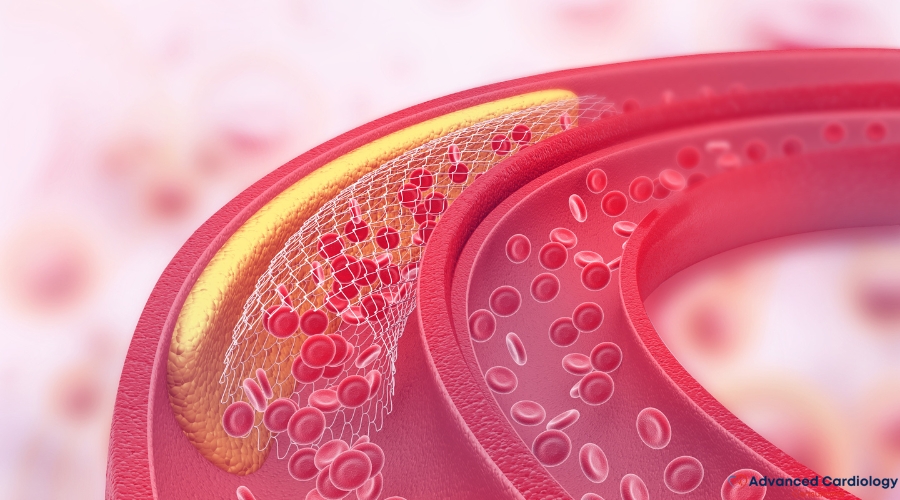
Heart attacks and strokes are rarely random. They are usually the late result of atherosclerosis, a buildup of plaque in the arteries that begins decades earlier and is driven by factors that can be measured. A risk assessment gathers those factors and turns them into an estimate: the chance of a cardiovascular event over the next 10 years and, for many adults, over the next 30 years.
The 2026 ACC/AHA guideline on managing cholesterol (dyslipidemia) recommends the PREVENT-ASCVD equations, rather than the older Pooled Cohort Equations, to estimate risk in adults aged 30 to 79. PREVENT uses information such as age, sex, blood pressure and blood pressure treatment, total and HDL cholesterol, diabetes, smoking, and kidney function, and it reports both 10-year and 30-year risk. A 30-year estimate is especially helpful for younger adults, whose 10-year risk may look low even when long-term risk is meaningful.
Calculators are useful but limited. They may not fully capture a father who had a heart attack at 48, elevated lipoprotein(a), an inflammatory disease, or plaque that is already present. A cardiologist’s job is to start from the calculated number and then consider the information it leaves out.
A calculated risk describes what happens, on average, to a large group of people with numbers like yours. It is an estimate, not a prediction of what will happen to you personally. Two people with the same score can have very different outcomes. That is why the number is weighed together with risk-enhancing factors, your own health goals, and your preferences about medication, in a shared decision-making conversation with your clinician.
The result is a risk category, from low to borderline, intermediate, or high, and that category helps guide how intensively risk factors are treated. The assessment is worth doing because the answer is often not what people expect: some who assume they are fine carry substantial risk, and some who are worried turn out to have relatively little.
Who Should Be Assessed
The 2026 ACC/AHA cholesterol guideline applies the PREVENT-ASCVD risk equations to adults aged 30 to 79, so risk estimation is relevant well before middle age, particularly when risk factors are present. A formal assessment with a cardiologist can be especially helpful when:
If you have been inactive and plan to start a vigorous new exercise program, ask your clinician whether an evaluation makes sense first.
What Is Measured
The assessment combines the standard risk factors with the “risk enhancers” that standard calculators miss.
Age, sex, blood pressure and its treatment, total and HDL cholesterol, diabetes, smoking, and kidney function, entered into the PREVENT-ASCVD equations for 10- and 30-year risk.
Early heart disease in close relatives, taken with ages and details, is one of the strongest predictors calculators leave out.
ApoB and lipoprotein(a) identify inherited or particle-based risk that a standard cholesterol panel does not show.
A1c, waist circumference, and triglycerides reveal insulin resistance and metabolic syndrome, which drive risk before diabetes is diagnosed.
Chronic kidney disease, inflammatory conditions, HIV, sleep apnea, and pregnancy complications each raise risk beyond the calculated number.
For selected patients, a coronary calcium score adds direct information by showing whether calcified plaque is already present, and how much.

Meet Your Cardiologist
Adnan Khalid, MD is a board-certified cardiologist with fellowship training in cardiovascular disease, interventional cardiology, and advanced heart failure and transplant cardiology. He approaches risk assessment thoroughly and without alarm, with a clear line from the number to the plan.
Dr. Khalid uses the PREVENT-ASCVD calculator as a starting point, then considers family history, advanced lipid results, and, when appropriate, imaging findings that may move a patient between categories. When the calculated risk falls in the uncertain middle, coronary calcium scoring may be discussed as one way to clarify the decision. The visit ends with a review of your risk category, what is driving it, and what could lower it, which becomes the basis for a preventive cardiology plan.
The Assessment
The assessment usually moves through four steps, from information gathering to a risk category you can act on.
Dr. Khalid reviews prior cholesterol, blood pressure, and blood sugar results; tobacco, alcohol, activity, and sleep; medications; and any prior cardiac testing. Family history is taken relative by relative, because a heart attack in a parent at 50 and one at 85 mean very different things.
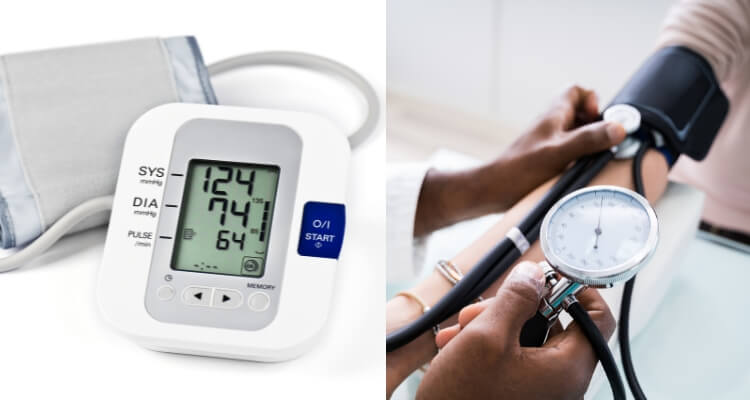
Blood pressure is measured carefully, along with weight, waist circumference, pulses, and heart and lung sounds. An EKG may be done when it would add useful information; routine EKG screening is not recommended for adults without symptoms who are at low risk. Blood work fills in what is missing, ordered or reviewed by our office: a lipid panel, ApoB, lipoprotein(a), A1c, kidney function, and inflammatory markers when relevant.
Your 10-year and 30-year risk are estimated with the PREVENT-ASCVD equations, then interpreted alongside risk-enhancing factors the calculator does not include. Some patients move up or down a category at this step.
Coronary calcium scoring is used selectively. The 2026 ACC/AHA guideline describes it as an option for men over 40 and women over 45 whose risk is borderline or intermediate, when the result could change the treatment decision. It adds a direct look at calcified plaque, but it is one piece of information, not a final verdict, and it involves a small dose of radiation.
Testing
Each test either sharpens the estimate or detects disease that is already present. Most patients need only a few of them.
Total, LDL, HDL, triglycerides, ApoB, and lipoprotein(a). The 2026 ACC/AHA guideline recommends measuring Lp(a) at least once in adulthood because it can change what a given LDL means.
A1c and fasting glucose for diabetes risk; kidney function, which independently raises cardiac risk; hs-CRP for inflammation when it will influence the decision.
A non-contrast CT that measures calcified plaque, used selectively when risk is borderline or intermediate. A score of zero is generally reassuring; higher scores indicate more plaque.
A baseline tracing, and home or 24-hour monitoring when office readings may not represent everyday blood pressure.
An ultrasound of the neck arteries that detects plaque directly. Used in selected patients as an alternative or complement to calcium scoring.
Considered for patients with symptoms or concerning findings, where the question shifts from risk to whether a significant narrowing is present. Arranged by our office at an appropriate facility.
Your Results
Under the 2026 ACC/AHA guideline, 10-year risk calculated with PREVENT-ASCVD is grouped into categories. Older pages and calculators often used Pooled Cohort Equation cutoffs such as 7.5% and 20%; those thresholds do not apply to PREVENT results.
Low risk (below 3% over 10 years). Healthy habits are the focus: activity, diet, weight, and no tobacco. The 30-year estimate can still show whether earlier attention is worthwhile.
Borderline risk (3% to less than 5%). Lifestyle remains central. Risk-enhancing factors, such as family history or elevated Lp(a), and sometimes a calcium score, help decide whether medication is worth discussing.
Intermediate risk (5% to less than 10%). Cholesterol-lowering medication is commonly discussed alongside blood pressure control and lifestyle changes. A calcium score may help in selected patients.
Higher risk (10% or more, or established cardiovascular disease, or other high-risk conditions). Treatment is usually more intensive. The guideline sets LDL cholesterol goals that become stricter as risk rises, from below 100 mg/dL to below 70 or below 55 mg/dL.
Which goal and which medication apply to you is a clinical judgment that Dr. Khalid makes with you, based on your full picture, not on a single number. Whatever the category, the plan includes specific targets and a follow-up interval. Details of how each factor is managed are on the preventive cardiology page, and cholesterol care is covered on our high cholesterol treatment page.
Your Visit
Before the visit, gather recent lab results, home blood pressure readings, a list of medications and supplements, and as much family history as you can find, including ages at which relatives developed heart disease or died. If you have had a calcium score or other imaging, bring the report.
The visit includes a detailed history, an examination, and, when appropriate, an EKG and any blood work that is missing. Dr. Khalid explains your estimated risk in plain language, including how confident the estimate is and whether additional testing such as a calcium score would be likely to change the plan.
You will discuss your risk category, what is driving it, and the outline of a plan. If a calcium score or additional labs are ordered, a follow-up visit is used to review the results and finalize recommendations. Results are shared with you once they are available and reviewed.
Katy Cardiology Care
Patients from Katy, Cinco Ranch, Fulshear, and West Houston visit our Grand Parkway office for a risk assessment after a family member’s heart attack, a high cholesterol result, or simply a decision to take their heart health seriously. Many arrive with a primary care recommendation to “consider a statin” and want a clearer picture before deciding.
EKGs are performed in the office when needed, and laboratory testing and coronary calcium scoring are arranged by our office when they are recommended. For other services at this location, see cardiology care in Katy.
Advanced Cardiology – Katy
410 W Grand Pkwy S Ste 4D
Katy, TX 77494
Phone: (713) 258-6111
Advanced Cardiology – Sugar Land
7102 Tarrington Ave Suite 505
Sugar Land, TX 77479
Phone: (713) 258-6111
Sugar Land Cardiology Care
At the Tarrington Avenue office, Dr. Khalid provides risk assessments for patients from Sugar Land, Richmond, Rosenberg, Missouri City, and Stafford, including people living with diabetes, high blood pressure, or a family pattern of early heart disease.
EKGs are performed in the office when needed, and lab work, calcium scoring, and carotid ultrasound are arranged by our office when recommended. Learn more about cardiology care in Sugar Land.
Serving Greater Houston
Patients come to the Katy and Sugar Land offices from across Greater Houston, including Cypress, Richmond, Rosenberg, Fulshear, and West Houston, for cardiovascular risk assessment. Both offices offer the same physician and the same approach; choose the one that is easier to reach, and the scheduling team can help if you are unsure.
Patient-Centered Cardiology
Care led by Adnan Khalid, MD, with fellowship training in cardiovascular disease, interventional cardiology, and advanced heart failure.
Family history, advanced lipids, and calcium scoring refine the estimate, not just a calculator score.
You discuss your risk category, what is driving it, and what could lower it, so the next steps are clear.
Your risk is explained in plain terms, including how confident the estimate is.
Offices in Katy and Sugar Land serving surrounding Greater Houston communities.
New patients are welcome. Most major insurance plans are accepted, subject to eligibility and coverage verification.
Common Questions
Call our office and our staff will help with appointments, referrals and insurance.
A structured evaluation that estimates your chance of a heart attack or stroke over the next 10 years and, for many adults, over 30 years. It combines your history, family history, examination, blood tests, and the PREVENT-ASCVD risk calculator, and may add imaging such as a coronary calcium score when the estimate is uncertain. The result is a risk category that helps guide how intensively risk factors are treated.
The 2026 ACC/AHA cholesterol guideline uses the PREVENT-ASCVD equations for adults aged 30 to 79. Earlier attention makes sense if you have a family history of early heart disease, high cholesterol, high blood pressure, diabetes, or smoke. How often to repeat the assessment depends on your results; your clinician will suggest an interval.
A lipid panel with ApoB and lipoprotein(a), A1c, kidney function, and careful blood pressure measurement form the core, with an EKG when it adds useful information. A coronary calcium score may be added selectively when calculated risk is borderline or intermediate and the result could change treatment. Stress testing is generally considered for patients with symptoms or concerning findings, not as a routine screen.
Online calculators can be a reasonable first look, but check which equations they use: many still use the older Pooled Cohort Equations, while the 2026 guideline recommends PREVENT-ASCVD. Any calculator gives an average estimate for people like you, not a certainty for you personally, and may not account for family history, lipoprotein(a), inflammatory disease, or existing plaque.
A score of zero means no calcified plaque was detected, which is generally reassuring and may support holding off on medication for some people after discussion with their clinician. It does not rule out soft (non-calcified) plaque. Higher scores indicate more calcified plaque and usually support more intensive prevention.
Meaningfully. Heart disease in a parent, brother, or sister before 55 (men) or 65 (women) is a recognized risk-enhancing factor and can move some patients into a higher treatment category. The details matter: how many relatives, at what ages, and what kind of event. Bring that information to your assessment.
Not automatically. High cholesterol raises risk, but whether medication is warranted depends on your overall risk category, which combines cholesterol with blood pressure, diabetes, smoking, age, family history, and, when needed, a calcium score. Some people with high cholesterol and no other risk factors are managed with lifestyle changes first.
Yes. Lowering LDL cholesterol, controlling blood pressure, treating diabetes, stopping tobacco, and staying active each reduce risk measurably, and the effects add up. A risk assessment tells you which of these will make the biggest difference for you and sets targets so progress can be measured.
Keep Reading
Related services: Preventive Cardiology • Coronary Calcium Scan • Cholesterol Treatment • Hypertension • Cardiovascular Disease
Sources: ACC: 2026 ACC/AHA dyslipidemia guideline • USPSTF: ECG screening • NHLBI: Blood cholesterol • AHA: Heart attack warning signs
Your cardiologist: Adnan Khalid, MD
Cardiology Appointments
Knowing your actual risk replaces worry with a plan. A heart disease risk assessment with Adnan Khalid, MD tells you where you stand and what would change it. New patients are welcome at Advanced Cardiology’s Katy and Sugar Land offices.
Katy: 410 W Grand Pkwy S Ste 4D, Katy, TX 77494
Sugar Land: 7102 Tarrington Ave Suite 505, Sugar Land, TX 77479
If you have chest discomfort that lasts more than a few minutes or comes and goes, shortness of breath, discomfort in the arms, back, neck, jaw or stomach, a cold sweat, nausea, or lightheadedness, call 911. For sudden face drooping, arm weakness or speech difficulty, call 911 even if symptoms go away. Office messages and appointment requests are not for emergencies.
Katy & Sugar Land Cardiologist
Advanced Cardiology welcomes new patients at its offices in Katy and Sugar Land. Call our office or send an appointment request, and our staff will follow up.
Most major insurance plans accepted; coverage is verified individually.
For possible heart attack or stroke symptoms, call 911.
