
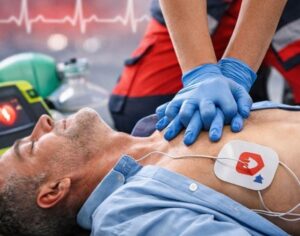
How to Perform CPR on an Adult: Step-by-Step Guide
How to perform CPR on an adult: call 911, push hard and fast 2 inches deep at 100 to 120 per minute, and use an AED. Step-by-step hands-only CPR guide.
Cardiologist Serving Katy, Sugar Land, Greater Houston
Sclerotherapy is a minimally invasive treatment in which a medicine is injected into small varicose veins or spider veins to close them. Adnan Khalid, MD evaluates leg veins at our Katy and Sugar Land offices and helps you decide whether sclerotherapy, another treatment, or no treatment is the right fit.
Dr. Khalid reviews your symptoms, history and test results himself
Visits in Katy and Sugar Land
Catheter and device procedures at an affiliated hospital
Office follow-up on medicines and risk factors
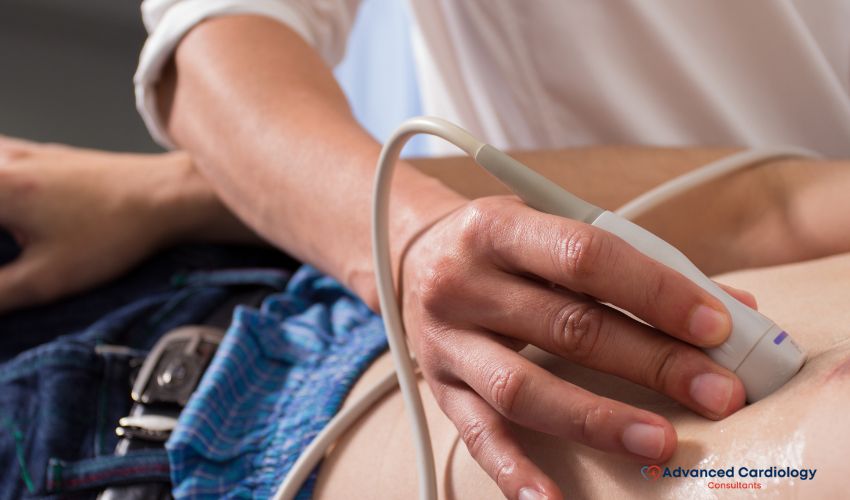
In sclerotherapy, a liquid or foam medicine called a sclerosant is injected through a very fine needle into the problem vein. The medicine irritates the inner lining of the vein so that it seals shut. Over the following weeks, the body gradually absorbs the closed vein, and blood flows through healthier veins instead. For veins below the skin surface, the injection may be guided by ultrasound (ultrasound-guided foam sclerotherapy).
Spider veins, reticular veins, and varicose veins differ. Spider veins are tiny red, purple, or blue lines close to the skin. Reticular veins are slightly larger blue-green veins just under the skin. Varicose veins are larger, rope-like, bulging veins. Sclerotherapy works best for the smaller types; larger varicose veins are often treated with other methods or a combination of approaches.
Sclerotherapy is typically performed as an outpatient procedure in a clinic procedure room or vein center, without general anesthesia. If it is recommended for you, our office will explain who performs it and where it is scheduled. Patients from Sugar Land, Richmond, and the Greater Houston area visit our Katy and Sugar Land offices for the evaluation.
Dr. Khalid, a cardiologist who treats circulation problems, reviews your symptoms, examines your legs, and, when needed, orders a venous ultrasound to check for hidden reflux in larger veins. Treating that reflux first, when present, can make sclerotherapy results more lasting.

Adnan Khalid, MD, Cardiologist
Adnan Khalid, MD, specializes in treating coronary artery disease, peripheral artery disease, heart failure, hypertension, arrhythmias, and hyperlipidemia.
He is fellowship trained in cardiovascular diseases, interventional cardiology, advanced heart failure, and transplant cardiology. He is focused on providing personalized and compassionate care. Dr. Khalid believes in spending time with his patients and listening to their needs and is committed to offering excellent care.
Dr. Khalid is an avid reader. He is eager to learn new things; he likes to work out and spend time with his family. When off from work, he likes to travel and spend time in nature along with family and friends. He is married with three children. Dr. Adnan Khalid is now seeing patients at our Katy and Sugar Land offices and accepting new patients.
American Board of Internal Medicine
Interventional Cardiology
Visible leg veins are often a cosmetic concern, but they can also come with aching, burning, or heaviness. Sclerotherapy may be suggested for small varicose veins, reticular (blue-green) veins, and spider veins, especially when compression or lifestyle changes have not helped enough.
Visible Spider Veins or Small Varicose Veins
Why It Matters: These are enlarged veins near the skin surface. They are usually not dangerous, but they can be bothersome.
How Sclerotherapy May Help: Closing the veins often makes them fade, while blood reroutes through other veins.
Leg Heaviness, Aching, or Burning
Why It Matters: These symptoms can come from blood pooling in faulty veins, but they also have other causes.
How Sclerotherapy May Help: When small veins are the source, treating them may ease local discomfort.
Swelling and Skin Changes
Why It Matters: Swelling or skin darkening can be signs of chronic venous insufficiency, which usually involves larger veins.
How Sclerotherapy May Help: It may be one part of a broader plan that can include treating reflux in larger veins, compression, and skin care.
An evaluation helps sort out which veins are involved, so treatment is aimed at the right problem. Leg swelling in particular can also come from the heart, kidneys, or medicines, so it deserves a full look rather than vein treatment alone.
Treated veins usually fade gradually over several weeks, and larger veins can take a few months. Many people need more than one session, spaced weeks apart, to reach the result they want.
What you can reasonably expect:
Lighter or less visible veins: Results vary from person to person, and some veins may not respond fully.
Possible relief of symptoms: Aching or burning linked to the treated veins may improve.
No cure for the tendency: New spider or varicose veins can form over time, and touch-up treatments are common.
Dr. Khalid can help you set realistic expectations and explain how vein health fits with your overall circulation.
Common, usually temporary effects include bruising, itching, mild swelling, and raised red areas at injection sites. Some people develop brown lines or spots along treated veins (hyperpigmentation), which often fade but can last months, or clusters of tiny new red vessels (matting). Less common risks include tender lumps from trapped blood, inflammation of a surface vein, small skin sores at injection sites, and allergic reactions. Rarely, a blood clot can form in a deep vein, and, particularly with foam, some people have brief visual disturbances or headache. Tell your care team about any history of blood clots, migraines, or a known hole in the heart (PFO).
Sclerotherapy may be a reasonable option when:
You are bothered by visible spider veins, reticular veins, or small varicose veins
You have burning, aching, or leg fatigue linked to these veins, especially after standing
You have tried compression stockings and still have symptoms
An ultrasound, when needed, has shown no larger-vein reflux that should be treated first, or that reflux has already been treated
You want to treat veins that remain after endovenous ablation
Sclerotherapy is usually postponed or avoided during pregnancy and breastfeeding, with an active or recent blood clot, if you cannot walk enough to keep blood moving afterward, or if you have had an allergic reaction to a sclerosing medicine. Some health conditions and medicines also affect whether it is a good choice, so share your full history.
Coverage depends on why sclerotherapy is done. Treatment of spider veins for appearance is usually considered cosmetic and is often not covered, while treatment of symptomatic varicose veins may be covered when medically necessary. Some plans require prior authorization. Our office accepts most major insurance plans, and coverage is verified individually, so ask about your plan before treatment.
After your consultation and any ultrasound, Dr. Adnan Khalid will review the findings and the options with you. Sclerotherapy may be recommended on its own or alongside other approaches, such as:
Compression stockings to support blood flow and ease symptoms
Endovenous ablation or occlusion for larger veins with reflux
Removal of bulging surface veins through tiny incisions (phlebectomy)
Lifestyle steps such as regular walking, weight management, and elevating your legs
You lie on a treatment table with your legs exposed. The skin is cleaned, and the clinician injects small amounts of the sclerosing medicine into each target vein through a very fine needle. You may feel a brief pinch, stinging, or cramping. For deeper veins, ultrasound is used to guide the needle and watch the foam fill the vein. Light pressure or a compression stocking is applied when the injections are finished. How long a session takes depends on how many veins are treated.
Not always. Many people choose it for appearance, but it can also ease aching or burning from small veins. When symptoms point to a larger vein problem, that problem is usually evaluated and treated first.
It varies with the number and size of veins. Some people are satisfied after one session; others need several, spaced weeks apart. Your clinician will suggest a plan after seeing how your veins respond.
A vein that is fully closed usually does not reopen, but some veins only partly close, and new veins can develop. Walking, weight management, and compression when advised may help, but they cannot fully prevent new veins.
Your care team will give you specific instructions. Tell them about all medicines and supplements you take, including blood thinners, and do not stop any medicine unless your care team tells you to. Avoid applying lotion to your legs on the day of treatment, and bring or wear compression stockings if they are recommended.
Most people walk right after treatment and return to many daily activities soon after. You may be asked to wear compression stockings for a period of time and to avoid strenuous exercise, hot baths, and strong sun on the treated areas for a short time. Recovery varies, and a follow-up visit checks your results and whether more sessions would help.
Get medical care promptly if one leg becomes very swollen, painful, warm, or red, or if a skin sore develops. Call 911 for sudden shortness of breath, chest pain, coughing up blood, fainting, or sudden face drooping, arm weakness, or speech difficulty.
Learn more on our varicose vein treatment and leg and ankle swelling pages.
Sources: NHLBI: Varicose veins • MedlinePlus: Varicose veins • American Stroke Association: Stroke symptoms
Please print out your paperwork and bring it to your appointment at Advanced Cardiology. If your insurance requires authorization, please be sure to have that information sent to our office or bring it with you to your appointment, along with any medical records you may have. Please also make sure to bring your insurance cards, photo ID, and medication list.
Thank you, and we look forward to meeting you! Contact us today with any questions.
Most insurance plans accepted
(713) 258-6111
Katy & Sugar Land Cardiologist
# Cooperative & professional staff. Dr. Khalid is highly competent & experienced. Very kind & friendly too.
# He’s A Very Caring & Concerned Doctor. He Asks Important Questions, He Allows Me To Ask Questions & Fully Answers To My Satisfaction. He Diagnosis & Does Whatever It Takes To Fix My Health Issues. He’s A Wonderful Doctor…& Most Of All, I Trust Him & His Staff.
Read More…..
How to perform CPR on an adult: call 911, push hard and fast 2 inches deep at 100 to 120 per minute, and use an AED. Step-by-step hands-only CPR guide.
Cardiac failure and heart failure mean the same thing. Learn the types (HFrEF, HFpEF, left vs right), how it differs from cardiac arrest and how it is treated.

Reasons for shortness of breath include heart failure, coronary disease, asthma, COPD, anemia and anxiety. Learn the clues, when to worry and when to call 911.
When should you see a cardiologist? Learn the symptoms, risk factors and test results that call for a heart specialist, and what to expect at a first visit.
What doctor should you see for chest pain? Learn when to call 911, when to see a cardiologist and which tests to expect in Katy and Sugar Land, TX.
Short of breath walking upstairs? Learn what is normal, when it may signal heart disease or heart failure, the tests a cardiologist uses and when to call 911.
Katy & Sugar Land Cardiologist
Advanced Cardiology welcomes new patients at its offices in Katy and Sugar Land. Call our office or send an appointment request, and our staff will follow up.
Most major insurance plans accepted; coverage is verified individually.
For possible heart attack or stroke symptoms, call 911.