
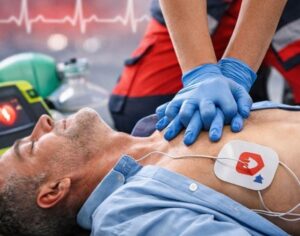
How to Perform CPR on an Adult: Step-by-Step Guide
How to perform CPR on an adult: call 911, push hard and fast 2 inches deep at 100 to 120 per minute, and use an AED. Step-by-step hands-only CPR guide.
Cardiologist Serving Katy, Sugar Land, Greater Houston
A venous ultrasound uses sound waves to look at the veins in your legs and how blood flows through them. Adnan Khalid, MD uses venous ultrasound, performed or arranged by our office, to help evaluate leg pain, swelling, varicose veins, and possible blood clots, and to plan next steps at our Katy and Sugar Land offices.

Dr. Khalid reviews your symptoms, history and test results himself
Visits in Katy and Sugar Land
Catheter and device procedures at an affiliated hospital
Office follow-up on medicines and risk factors
A venous ultrasound, often called a venous duplex scan, is a noninvasive imaging test. It uses sound waves to create pictures of the veins and Doppler signals to show the speed and direction of blood flow. It can help find a blood clot in a deep vein (deep vein thrombosis, or DVT), show whether vein valves are leaking (venous reflux), and explain symptoms such as leg swelling, aching, or heaviness. It uses no radiation and no contrast dye.
At Advanced Cardiology, venous ultrasound is performed or arranged by our office for patients from Katy, Sugar Land, Richmond, and the Greater Houston area. Dr. Khalid reviews the results together with your symptoms and examination, then discusses next steps, which may include compression, lifestyle changes, medicines, or, for selected patients, a minimally invasive vein procedure.

Adnan Khalid, MD, Cardiologist
Adnan Khalid, MD, specializes in treating coronary artery disease, peripheral artery disease, heart failure, hypertension, arrhythmias, and hyperlipidemia.
He is fellowship trained in cardiovascular diseases, interventional cardiology, advanced heart failure, and transplant cardiology. He is focused on providing personalized and compassionate care. Dr. Khalid believes in spending time with his patients and listening to their needs and is committed to offering excellent care.
Dr. Khalid is an avid reader. He is eager to learn new things; he likes to work out and spend time with his family. When off from work, he likes to travel and spend time in nature along with family and friends. He is married with three children. Dr. Adnan Khalid is now seeing patients at our Katy and Sugar Land offices and accepting new patients.
American Board of Internal Medicine
Interventional Cardiology
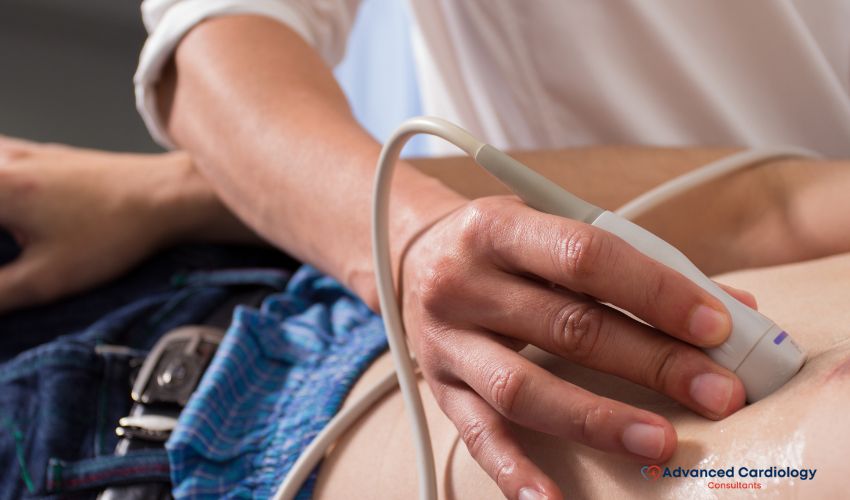
A venous ultrasound is a common first test for blood clots, leaking vein valves, and other vein problems, especially in people with leg discomfort or swelling. Dr. Khalid uses the results to help identify the cause of symptoms and plan treatment for conditions such as DVT or chronic venous insufficiency.
Leg Swelling or Heaviness
Why It Matters: May indicate fluid buildup from poor vein circulation or early signs of venous insufficiency.
How Ultrasound Helps: Reveals valve function and detects any obstruction or backward blood flow in the veins.
Visible Varicose or Spider Veins
Why It Matters: Could be a sign of faulty valves or pressure buildup inside the veins.
How Ultrasound Helps: Assesses the extent of venous reflux, helping determine the best treatment—from conservative care to ablation.
Leg Pain or Cramping (Especially After Standing)
Why It Matters: May be due to poor vein function causing blood to pool in the lower legs.
How Ultrasound Helps: Identifies areas where veins may be stretched, twisted, or malfunctioning.
Skin Discoloration or Ulcers on the Legs
Why It Matters: These are often signs of advanced venous disease and poor circulation.
How Ultrasound Helps: Maps out affected veins and determines severity to guide wound care or intervention.
Suspected Deep Vein Thrombosis (DVT)
Why It Matters: DVT can be serious because part of a clot can break off and travel to the lungs (pulmonary embolism). A suspected DVT should be evaluated promptly; do not wait for a routine appointment.
How Ultrasound Helps: Helps confirm or rule out clots in the deep veins of the leg, which guides whether blood-thinning treatment is needed.
Leg symptoms deserve evaluation. A venous ultrasound, combined with your history and exam, helps your clinician decide on the right next step.
A venous ultrasound offers real-time insights into your vein health, helping your provider detect conditions that may not be visible on the surface. It’s a safe, non-invasive way to identify the cause of leg pain, swelling, and circulation issues—guiding accurate diagnosis and effective treatment.
Deep Vein Thrombosis (DVT):
Ultrasound is the most commonly used test for detecting blood clots in the deep veins of the legs, particularly in the legs. Early diagnosis is critical to prevent pulmonary embolism or long-term complications like post-thrombotic syndrome.
Chronic Venous Insufficiency (CVI):
If valves in your leg veins don’t close properly, blood can pool and cause discomfort. An ultrasound shows valve function and blood flow direction, confirming the presence of reflux.
Superficial Venous Reflux (Varicose Veins):
When varicose veins are more than just cosmetic, ultrasound identifies which superficial veins are affected and whether ablation or other treatment is needed.
Venous Obstruction or Compression:
Sometimes swelling or heaviness is due to a blocked or compressed vein. Ultrasound helps detect narrowing or external pressure on the veins.
Vein Mapping for Procedures:
If you’re considering procedures like ablation or sclerotherapy, an ultrasound is used to map your veins and help plan the treatment.
Dr. Khalid reviews your results with you and explains how they fit with your symptoms and examination.
If you’re experiencing leg pain, swelling, or visible varicose veins, a venous ultrasound can help identify the cause. Ask your clinician about a venous ultrasound if:
You have persistent leg swelling, especially on one side
You experience unexplained leg pain, heaviness, or fatigue
You see bulging varicose veins or spider veins
You’ve had a previous blood clot or are at risk for DVT
You’re being evaluated for vein treatment or surgery
Many health plans cover venous ultrasound when it is medically necessary. Our office accepts most major insurance plans, and coverage is verified individually. If you are unsure about your benefits, contact your insurance company or call our office at (713) 258-6111.
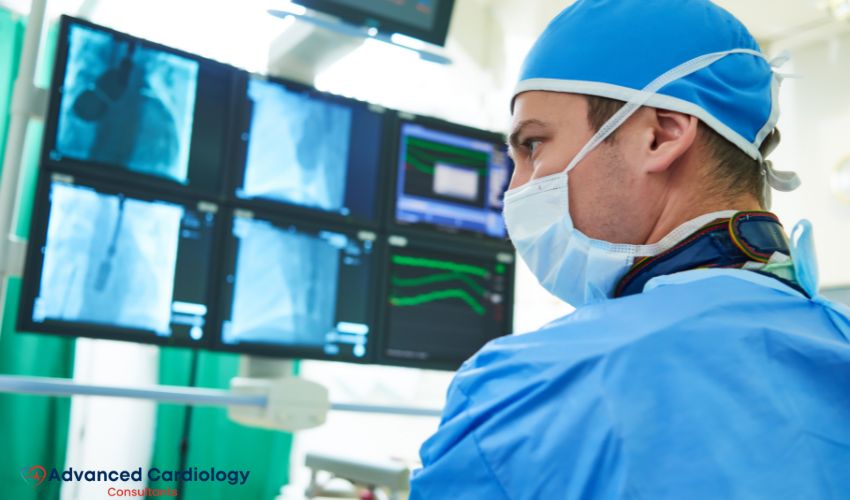
Once your venous ultrasound is complete, the images are interpreted and the results are reviewed by Dr. Khalid, who discusses them with you once they are available. Depending on the findings, he may recommend:
Compression therapy or lifestyle changes
Minimally invasive treatments such as endovenous ablation or sclerotherapy for selected patients
Anticoagulation therapy if a blood clot is detected
Further testing if additional concerns are found
Dr. Khalid will explain your results and the options, including their benefits and limits, so you can decide together on a plan.
Little preparation is usually needed. Wear loose, comfortable clothing, and bring a list of your medications and any prior vein or ultrasound reports. Keep taking your medicines unless your care team gives you different instructions.
During the test you lie on an exam table, sometimes with your leg turned or raised, and may be asked to stand or sit for part of a reflux study. A technologist spreads gel on the skin and moves a handheld probe (transducer) along the leg. To check blood flow, the technologist may press on the vein, squeeze your calf, or ask you to bear down or breathe in a certain way. You may hear whooshing sounds from the Doppler. How long the study takes depends on how many veins are checked and whether a reflux study is included.
The scan is done by a trained ultrasound technologist, and the images are interpreted by a physician. Dr. Khalid then reviews the findings in the context of your symptoms, examination, and medical history. Results are shared with you once they have been interpreted and reviewed, and our office will let you know whether a follow-up visit is needed to discuss them. If the study shows a clot that needs treatment, you will be contacted with next steps. If you have questions about your results, you can call the office or use the patient portal.
Yes. Venous ultrasound uses no radiation and no needles. The main discomfort is pressure from the probe, which can be tender if your leg is swollen or painful. There is no recovery time, and you can usually return to normal activities right away.
Ultrasound is very useful but has limits. Veins deep in the pelvis or abdomen can be harder to see, especially with body size or bowel gas, and a clot in a small calf vein can occasionally be missed. A normal venous study does not rule out other causes of leg symptoms. Leg swelling can also come from heart failure, kidney or liver disease, medicines, or lymph problems, and leg pain with walking may point to peripheral artery disease, which is checked with arterial tests rather than a venous study. Dr. Khalid may recommend other tests if your symptoms and results do not match.
A suspected blood clot should be evaluated promptly. Seek same-day medical care if one leg suddenly becomes swollen, painful, warm, or red. Call 911 if you have sudden shortness of breath, chest pain that is worse when you breathe in, coughing up blood, a racing heartbeat, or fainting, because these can be signs that a clot has traveled to the lungs. Our office is not an emergency department, and appointment requests and messages are not for emergencies.
To learn more about treating vein problems, see our varicose vein treatment page.
Sources: MedlinePlus: Varicose veins • NHLBI: Varicose veins • MedlinePlus: Edema • NHLBI: Heart tests
Please print out your paperwork and bring it to your appointment at Advanced Cardiology. If your insurance requires authorization, please be sure to have that information sent to our office or bring it with you to your appointment, along with any medical records you may have. Please also make sure to bring your insurance cards, photo ID, and medication list.
Thank you, and we look forward to meeting you! Contact us today with any questions.
Most insurance plans accepted
(713) 258-6111
Katy & Sugar Land Cardiologist
# Cooperative & professional staff. Dr. Khalid is highly competent & experienced. Very kind & friendly too.
# He’s A Very Caring & Concerned Doctor. He Asks Important Questions, He Allows Me To Ask Questions & Fully Answers To My Satisfaction. He Diagnosis & Does Whatever It Takes To Fix My Health Issues. He’s A Wonderful Doctor…& Most Of All, I Trust Him & His Staff.
Read More…..
How to perform CPR on an adult: call 911, push hard and fast 2 inches deep at 100 to 120 per minute, and use an AED. Step-by-step hands-only CPR guide.
Cardiac failure and heart failure mean the same thing. Learn the types (HFrEF, HFpEF, left vs right), how it differs from cardiac arrest and how it is treated.

Reasons for shortness of breath include heart failure, coronary disease, asthma, COPD, anemia and anxiety. Learn the clues, when to worry and when to call 911.
When should you see a cardiologist? Learn the symptoms, risk factors and test results that call for a heart specialist, and what to expect at a first visit.
What doctor should you see for chest pain? Learn when to call 911, when to see a cardiologist and which tests to expect in Katy and Sugar Land, TX.
Short of breath walking upstairs? Learn what is normal, when it may signal heart disease or heart failure, the tests a cardiologist uses and when to call 911.
Katy & Sugar Land Cardiologist
Advanced Cardiology welcomes new patients at its offices in Katy and Sugar Land. Call our office or send an appointment request, and our staff will follow up.
Most major insurance plans accepted; coverage is verified individually.
For possible heart attack or stroke symptoms, call 911.