
Heart Valve Care
Heart Murmur Cardiologist in Katy & Sugar Land, TX
A heart murmur is an extra sound heard with a stethoscope as blood moves through the heart. Many murmurs are harmless, especially in children, athletes, and pregnant women, and need no treatment. Others are the first clue to a narrowed or leaking heart valve, a hole between chambers, or a thickened heart muscle. Because the two sound similar to the ear, a murmur found in an adult usually deserves an echocardiogram to settle the question. At Advanced Cardiology, Adnan Khalid, MD evaluates new and long-standing heart murmurs and manages the valve conditions behind them.
Patients are seen in Katy and Sugar Land, with echocardiography arranged from the first visit.
Board-Certified Cardiologist • Katy & Sugar Land • New Patients Welcome
Important Safety Information
When a Heart Murmur Needs Urgent Attention
A murmur itself is not an emergency. Call 911 if you have chest pain, fainting or near-fainting with exertion, severe shortness of breath, or sudden breathlessness when lying flat, particularly if you have been told you have a valve problem. Fever with a new murmur in someone with a known valve condition or a prior valve procedure can signal a valve infection and needs same-day medical evaluation. This page is for patients with a murmur that has been heard on an exam and who are otherwise stable.
Understanding Your Finding
What Is a Heart Murmur?
The normal heartbeat makes two sounds as the valves close. A murmur is an additional whooshing sound produced by turbulent blood flow: blood pushed through a narrowed valve, leaking backward through a valve that does not close fully, passing through an abnormal opening between chambers, or simply moving quickly through a normal heart.
That last category, the innocent or flow murmur, is common. Fever, anemia, pregnancy, an overactive thyroid, and athletic conditioning all increase blood flow and can produce a soft murmur in a structurally normal heart. These murmurs fade when the cause resolves and carry no risk.
Pathologic murmurs come from a structural problem, most often a valve. In adults, the leading causes are age-related calcification of the aortic valve, degeneration or prolapse of the mitral valve, and leakage of the tricuspid valve. A murmur cannot be classified reliably by sound alone, which is why an echocardiogram is the standard next step for any adult murmur that has not already been evaluated.
When to Seek Evaluation
When Should You See a Cardiologist for a Heart Murmur?
A murmur first heard in adulthood should be evaluated with an echocardiogram at least once. Beyond that, a cardiology visit is appropriate when:
- A physician described the murmur as new, loud, or harsh, or recommended follow-up
- You have shortness of breath with activity or when lying flat, or reduced exercise tolerance
- You have chest pressure, lightheadedness, or fainting, particularly with exertion
- You have palpitations or have been diagnosed with atrial fibrillation
- You have swelling in the legs or unexplained fatigue
- You were told as a child that you had a murmur or a valve abnormality and have not been rechecked as an adult
- You have a bicuspid aortic valve, mitral valve prolapse, or a family history of valve disease or aortic aneurysm
- You have had rheumatic fever, radiation to the chest, or a valve infection in the past
Patients with a known valve condition who have not had an echocardiogram in more than a year or two should also be reassessed, since valve disease progresses slowly and quietly.
Symptoms & Findings
Symptoms That Can Accompany a Heart Murmur
Innocent murmurs cause no symptoms. When a valve problem is significant, these are the signs it may be affecting the heart.
Shortness of Breath
The most common symptom of significant valve disease. It usually appears with exertion first, then with less activity, then when lying flat.
Symptoms With Exertion
Chest pressure, lightheadedness, or fainting during activity are the classic warning signs of a severely narrowed aortic valve.
Palpitations
A leaking or narrowed mitral valve enlarges the left atrium and often leads to atrial fibrillation, felt as an irregular, racing heartbeat.
Fatigue
Reduced forward blood flow leaves muscles short of oxygen, and fatigue is often the first thing patients notice.
Leg Swelling
Ankle swelling and abdominal fullness suggest the right side of the heart is under strain from a valve problem or rising lung pressure.
No Symptoms at All
Many significant valve problems produce no symptoms for years. The murmur itself, heard at a routine exam, is often the only clue.

Meet Your Cardiologist
Evaluation With Adnan Khalid, MD
Adnan Khalid, MD is a board-certified cardiologist with fellowship training in cardiovascular disease, interventional cardiology, and advanced heart failure and transplant cardiology. Valve disease runs through all three: it is diagnosed and followed with echocardiography, it is a common cause of heart failure when it advances, and many valve problems are now treated with catheter-based procedures rather than open surgery.
Dr. Khalid's approach is to characterize the murmur precisely with an echocardiogram, grade the severity of any valve problem, and establish a monitoring schedule matched to that grade. Most patients need periodic imaging and nothing more. When a valve reaches the point where treatment is warranted, he coordinates evaluation with the appropriate structural heart or surgical team and manages the cardiac care before and after.
Possible Causes
What Can Cause a Heart Murmur?
Murmurs fall into two groups: fast flow through a normal heart, and a structural problem. The echocardiogram tells them apart.
Innocent (Flow) Murmurs
Anemia, fever, pregnancy, hyperthyroidism, and athletic conditioning increase blood flow and can create a soft murmur in a normal heart. These need no cardiac treatment and often disappear when the cause resolves.
Valve Narrowing (Stenosis)
Aortic stenosis is the most important adult murmur. The valve stiffens with calcium over decades, and once severe it can cause chest pain, fainting, and heart failure. People born with a two-leaflet (bicuspid) aortic valve develop it earlier. Mitral stenosis, usually from prior rheumatic fever, is less common.
Valve Leakage (Regurgitation)
Mitral regurgitation from valve prolapse or a stretched, weakened heart is the most common leaking valve. Aortic regurgitation can result from a bicuspid valve, an enlarged aorta, or prior infection. Tricuspid regurgitation is usually a consequence of pressure or enlargement on the right side of the heart.
Other Structural Causes
A hole between the chambers, a thickened septum in hypertrophic cardiomyopathy, and, rarely, an infection on a valve (endocarditis) all produce murmurs, and each is managed differently.
Your Evaluation
How a Cardiologist Evaluates a Heart Murmur
The evaluation answers three questions: where is the murmur coming from, how severe is the underlying problem, and is it affecting the heart's size or function.
History
Dr. Khalid asks when the murmur was first heard, whether you had a murmur or rheumatic fever as a child, whether anyone in your family has valve disease or an aortic aneurysm, and whether you have symptoms with exertion. Prior echocardiogram reports are the most useful thing you can bring.
Examination
The murmur's timing, location, loudness, and how it changes with breathing and position give a strong initial impression of which valve is involved. The exam also checks pulses, blood pressure, lungs, and legs for signs of strain.
Echocardiogram
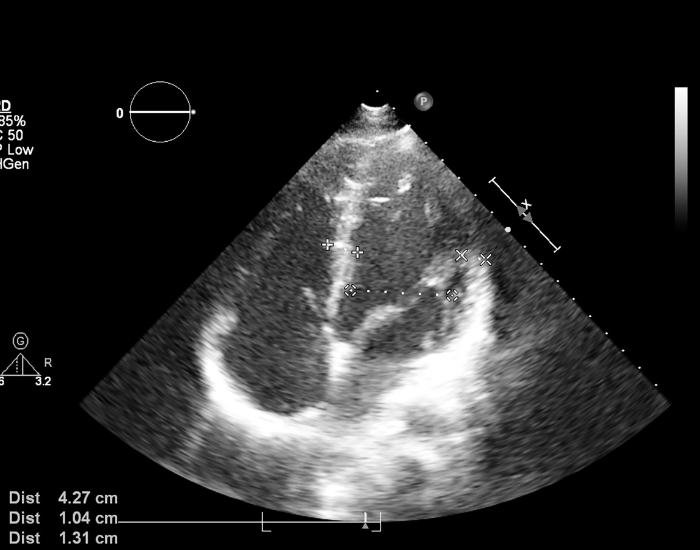
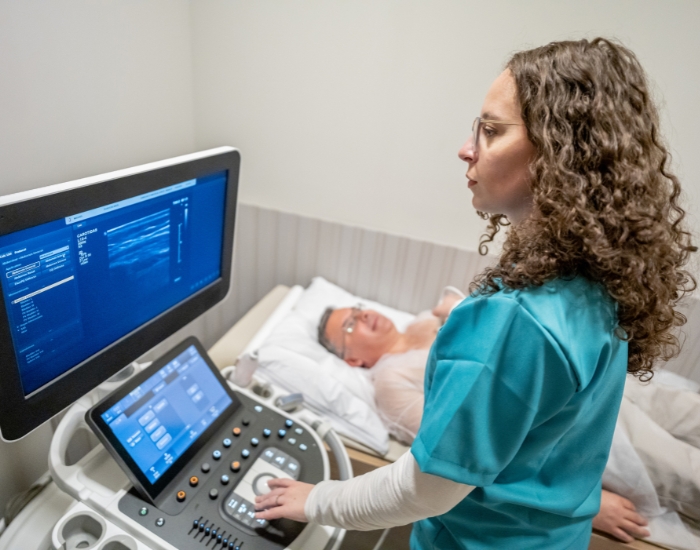
An ultrasound of the heart confirms the source of the murmur, measures how narrowed or leaky a valve is, and checks whether the chambers have enlarged or weakened. This single test settles most murmur questions.
Setting a Plan
Innocent murmurs are explained and dismissed. Mild valve disease is monitored at intervals. Moderate or severe disease is followed closely, and when it reaches treatment thresholds, the next step is coordinated with the appropriate team.

Cardiac Testing
Cardiac Testing That May Be Recommended
The echocardiogram is the core test. The others are added when the picture needs more detail or the heart's response to exertion matters.
Transthoracic Echocardiogram
Ultrasound with Doppler flow measurement identifies the valve involved, grades the severity, and assesses chamber size and pumping function. Painless and performed in the office.
Electrocardiogram (EKG)
Checks for chamber enlargement, rhythm problems such as atrial fibrillation, and strain patterns that accompany significant valve disease.
Transesophageal Echo (TEE)
An ultrasound probe passed into the esophagus gives a close, detailed view of the valves when the standard echo is unclear or before a valve procedure. Coordinated at a hospital facility.
Exercise or Stress Echo
Shows whether symptoms appear with exertion and how the valve and heart respond to workload, which helps time treatment in patients whose disease looks severe but who report no symptoms.
Blood Tests
BNP indicates strain on the heart; a blood count and thyroid test identify flow-related causes such as anemia or hyperthyroidism.
Advanced Imaging When Needed
Cardiac CT or MRI may be coordinated at an outside facility to measure valve calcium, assess the aorta, or clarify heart muscle findings before a procedure.
Management
Treatment Depends on the Underlying Cause
A murmur is not treated; the valve or condition behind it is, and only when it needs to be. For an innocent murmur, the treatment is an explanation. For mild valve disease, it is a schedule of follow-up echocardiograms, typically every one to three years.
Moderate and severe valve disease is followed more closely, with attention to blood pressure control, treatment of atrial fibrillation if it develops, and management of any heart failure symptoms. Medications do not repair a valve, but they reduce strain on the heart while the timing of treatment is decided.
When a valve becomes severe and symptoms appear, or the heart begins to enlarge or weaken, repair or replacement is recommended. Many patients are now candidates for catheter-based options such as transcatheter aortic valve replacement (TAVR) or mitral clip procedures rather than open surgery. Dr. Khalid coordinates that evaluation with a structural heart or cardiac surgery team and manages cardiac care afterward. Whether you need antibiotics before dental procedures is discussed at the visit.
Your Visit
What to Expect During Your Cardiology Visit
Bring any prior echocardiogram reports or images, even from years ago, since comparison over time is how valve disease is tracked. Bring a medication list and a note of any symptoms with exertion, however minor. If you were told of a murmur as a child, mention it.
The visit includes a detailed history, a careful listening examination, and an EKG. In most cases an echocardiogram is performed in the office or scheduled promptly. Dr. Khalid will explain what the murmur is, which valve is involved, how severe the problem is, and whether it is affecting the heart.
You will leave with a clear answer if the murmur is innocent, or with a monitoring schedule and a list of symptoms to report if a valve condition is found.
Katy Cardiology Care
Heart Murmur Cardiologist in Katy, TX
Patients from Katy, Cinco Ranch, Fulshear, and West Houston come to the Grand Parkway office after a murmur is heard at an annual physical, a pre-operative exam, or a visit for something unrelated. Many are adults who were told of a murmur decades ago and never had it imaged; others have a known valve condition and need an up-to-date assessment.
Echocardiography and EKG are performed on site, so most murmur evaluations are completed without a second trip. Patients with established valve disease can have their follow-up imaging scheduled here at the interval that fits their condition. For other services at this location, see cardiology care in Katy.
Advanced Cardiology – Katy
410 W Grand Pkwy S Ste 4D
Katy, TX 77494
Phone: (713) 258-6111
Advanced Cardiology – Sugar Land
7102 Tarrington Ave Suite 505
Sugar Land, TX 77479
Phone: (713) 258-6111
Sugar Land Cardiology Care
Heart Murmur Cardiologist in Sugar Land, TX
At the Tarrington Avenue office, Dr. Khalid evaluates patients from Sugar Land, Richmond, Rosenberg, Missouri City, and Stafford with a newly heard murmur or a known valve condition. Older adults with aortic stenosis and patients with mitral valve prolapse or a bicuspid aortic valve make up a large share of these visits, and many are managed with periodic imaging for years before any treatment is considered.
The office performs echocardiography and EKG and coordinates TEE, stress echo, and structural heart evaluation when indicated. If you have had a valve repair or replacement elsewhere and need ongoing follow-up closer to home, bring your records. Learn more about cardiology care in Sugar Land.
Serving Greater Houston
Serving Patients Across Greater Houston
Patients come to the Katy and Sugar Land offices from across Greater Houston, including Cypress, Richmond, Rosenberg, Fulshear, and West Houston, for heart murmur and valve evaluation. Both offices offer the same physician and the same approach; choose the one that is easier to reach, and the scheduling team can help if you are unsure.
Patient-Centered Cardiology
Why Patients Choose Advanced Cardiology
Board-Certified Cardiology Expertise
Care led by Adnan Khalid, MD, with fellowship training in cardiovascular disease, interventional cardiology, and advanced heart failure.
In-Office Echocardiography
Most murmur evaluations, including the echocardiogram, are completed in one visit at the office.
Structured Follow-Up
Valve disease is followed at intervals matched to its severity, so treatment is timed neither too early nor too late.
Clear Patient Communication
You learn which valve is involved, how severe it is, and what would change the plan.
Two Convenient Locations
Offices in Katy and Sugar Land serving surrounding Greater Houston communities.
New Patients Welcome
New patients are welcome. Most major insurance plans are accepted, subject to eligibility and coverage verification.
Common Questions
Frequently Asked Questions About Heart Murmurs
Is a heart murmur serious?
Often, no. Many murmurs are innocent flow murmurs in a structurally normal heart, particularly in young people, athletes, and during pregnancy. Others reflect a narrowed or leaking valve that may need monitoring or, eventually, treatment. An echocardiogram is the reliable way to tell which type you have.
What causes a heart murmur in adults?
In adults, the most common causes are age-related stiffening of the aortic valve, mitral valve prolapse or leakage, and tricuspid leakage from pressure changes in the heart. Anemia, thyroid overactivity, and pregnancy can cause temporary flow murmurs. Less commonly, a hole between chambers or a thickened heart muscle is responsible.
I was told I had a murmur as a child. Should I get it checked now?
Yes, if it has never been imaged, or if it has been more than a couple of years since your last echocardiogram. Innocent murmurs need no follow-up, but a murmur that was actually mild valve disease can progress silently. One echocardiogram settles the question and establishes a baseline.
What symptoms suggest a heart murmur is a problem?
Shortness of breath with activity or when lying flat, chest pressure or lightheadedness with exertion, palpitations or a new irregular heartbeat, fatigue, and leg swelling all suggest a valve problem is affecting the heart. Fainting with exertion in someone with a known murmur needs prompt evaluation.
What test is done for a heart murmur?
An echocardiogram is the key test: an ultrasound that shows which valve is involved, how narrowed or leaky it is, and whether the heart has enlarged or weakened. An EKG is usually added. A transesophageal echo, stress echo, or cardiac CT or MRI is used only when more detail is needed.
Will a heart murmur need surgery?
Most do not, at least not right away. Mild valve disease is monitored with periodic echocardiograms, often for many years. Treatment, whether catheter-based or surgical, is recommended when the valve becomes severe and symptoms or changes in heart size or function appear. Innocent murmurs never need treatment.
How often should a heart valve problem be rechecked?
It depends on the valve and the severity. Mild disease is often rechecked every two to three years, moderate disease every one to two years, and severe disease every six to twelve months or sooner if symptoms change. Your cardiologist sets the interval based on your echocardiogram findings.
Keep Reading
Related Heart Health Resources
- What Are Early Signs of Heart Failure?
- Reasons for Shortness of Breath: Heart-Related Causes
- What Do Heart Palpitations Feel Like? When to Worry
- Why Do I Feel Dizzy and Weak Suddenly?
Related services: Echocardiography • Transesophageal Echocardiogram (TEE) • Stress Echocardiography • Heart Failure • Atrial Fibrillation • Leg & Ankle Swelling
Medical Review: Adnan Khalid, MD
Cardiology Appointments
Take the Next Step
If a murmur has been heard and never imaged, or you have a known valve condition that is due for a recheck, a cardiology visit with an echocardiogram can tell you exactly where things stand. Adnan Khalid, MD welcomes new patients at Advanced Cardiology's Katy and Sugar Land offices.
Katy: 410 W Grand Pkwy S Ste 4D, Katy, TX 77494
Sugar Land: 7102 Tarrington Ave Suite 505, Sugar Land, TX 77479
Chest pain, fainting with exertion, or severe shortness of breath in someone with a known valve problem is an emergency. Call 911.