
2002 Medical School : Nishtar Medical College
2008 Residency:
University of Missouri – Kansas City
2012 Fellowship:
University of Missouri – Kansas City
Cardiologist Serving Katy, Sugar Land, Greater Houston
PFO closure is a hospital-based, catheter-based procedure that seals a small opening between the heart’s upper chambers. It may be considered for selected adults who have had a stroke thought to be related to that opening. Evaluation and follow-up take place at our Katy and Sugar Land offices.

Dr. Khalid reviews your symptoms, history and test results himself
Visits in Katy and Sugar Land
Catheter and device procedures at an affiliated hospital
Office follow-up on medicines and risk factors
A patent foramen ovale (PFO) is a small, flap-like opening between the upper chambers of the heart. Everyone has this opening before birth, and in most people it closes in infancy. In many adults it stays partly open. Most people with a PFO never have a problem from it and do not need treatment.
In some people, a small clot from a vein can cross through the PFO and travel to the brain, causing a stroke. When a careful evaluation suggests this happened and no other cause is found, closing the PFO with a device may lower the chance of another stroke compared with medication alone in selected patients. The decision is usually made together with a neurologist.
PFO closure is performed in a hospital catheterization laboratory, not in our office. At Advanced Cardiology, Adnan Khalid, MD evaluates whether closure is appropriate, performs or coordinates the procedure at an affiliated hospital where appropriate, and provides follow-up care. The office will explain where your procedure will be scheduled.

Adnan Khalid, MD, Cardiologist
Adnan Khalid, MD, specializes in treating coronary artery disease, peripheral artery disease, heart failure, hypertension, arrhythmias, and hyperlipidemia. He has over 10 years of experience in the field of cardiovascular medicine.
Dr. Khalid graduated from his medical school among the top 10 out of 250 medical students in his class. He is fellowship trained in cardiovascular diseases, interventional cardiology, advanced heart failure, and transplant cardiology. He is focused on providing personalized and compassionate care. Dr. Khalid believes in spending time with his patients and listening to their needs and is committed to offering excellent care.
Dr. Khalid is an avid reader. He is eager to learn new things; He likes to work out and spend time with his family. When off from work, he likes to travel and spend time in nature along with family and friends. He is married with three children. Dr. Adnan Khalid is now seeing patients at our Katy and Sugar Land offices and welcomes new patients from across the greater Houston area.
American Board of Internal Medicine
Interventional Cardiology
PFO closure is not a routine treatment for everyone with a PFO. Dr. Khalid evaluates each situation carefully, usually together with a neurologist, to decide whether the procedure is likely to help.
Why it matters: A PFO can allow a clot to pass from the right side of the heart to the left and travel to the brain, causing a stroke or transient ischemic attack (TIA).
How closure may help: In selected adults, generally younger patients whose stroke has no other identified cause after a thorough workup, closure plus medication has been shown to lower the risk of another stroke compared with medication alone. It does not remove every stroke risk.
What is known: PFO is more common in people with migraine with aura, but research has not established that closure is an effective migraine treatment. PFO closure is not a standard treatment for migraine, and migraine care usually begins with a neurologist.
What is known: In some divers, a PFO may allow gas bubbles to cross into the arteries. For selected divers with a history of decompression illness, closure may be discussed with dive-medicine and cardiology specialists, but changing diving practices is often the first step.
If you have had a stroke or TIA and were told you have a PFO, Dr. Khalid can review your records and testing with you. Learn more about cardiac care after a stroke.
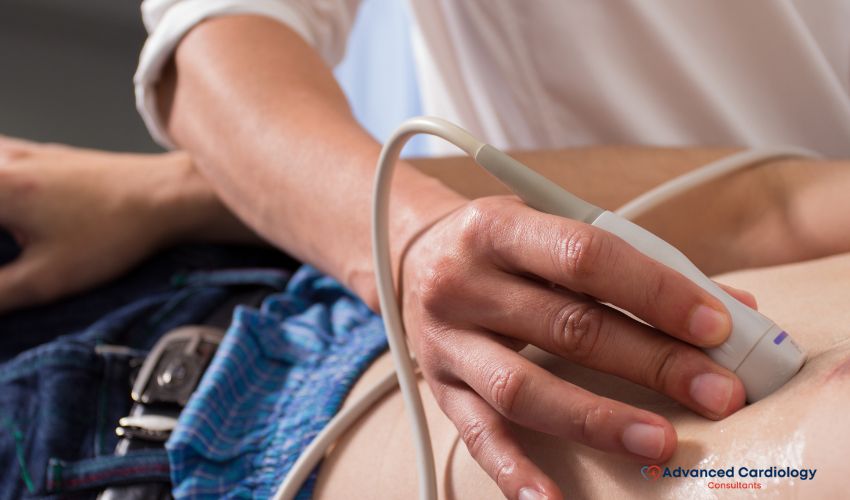
Echocardiogram with bubble study: A standard echocardiogram is done while a small amount of agitated saline (tiny bubbles) is injected into a vein. If bubbles cross to the left side of the heart, a PFO or other shunt may be present.
Transesophageal echocardiogram (TEE): A TEE uses a small ultrasound probe passed into the esophagus under sedation to show the PFO and the wall between the upper chambers in detail. It is a hospital-based procedure.
Heart rhythm monitoring: Because atrial fibrillation is another important cause of stroke, extended monitoring, sometimes with an implantable rhythm recorder, may be used to look for it.
Other stroke workup: Brain imaging, imaging of the neck and brain arteries, and blood tests, often coordinated with a neurologist, look for other causes.
Imaging can show that a PFO is present and how large the passage appears. It cannot prove that the PFO caused a stroke. That conclusion depends on ruling out other causes and weighing your age, the type of stroke, and the features of the PFO. Based on the full picture, Dr. Khalid will explain whether closure, medication alone, or another approach is more appropriate.
It may be worth discussing PFO closure with Dr. Khalid if:
A PFO found by chance in someone who has never had a stroke usually does not need closure.
For many patients, medication alone is appropriate. This usually means an antiplatelet medicine, or in some cases an anticoagulant, plus treatment of blood pressure, cholesterol, diabetes, and smoking. Your care team decides which medicine fits your situation. Healthy habits such as regular activity, a heart-healthy diet, and limiting alcohol also lower overall stroke risk, whether or not the PFO is closed.
Follow the specific instructions your care team and the hospital give you. You will usually be asked not to eat or drink for several hours beforehand. Blood thinners, diabetes medicines, and other drugs may need to be adjusted, but only as directed; do not stop any medication on your own. Tell the team about allergies, especially to nickel or contrast dye, and arrange for someone to drive you home.
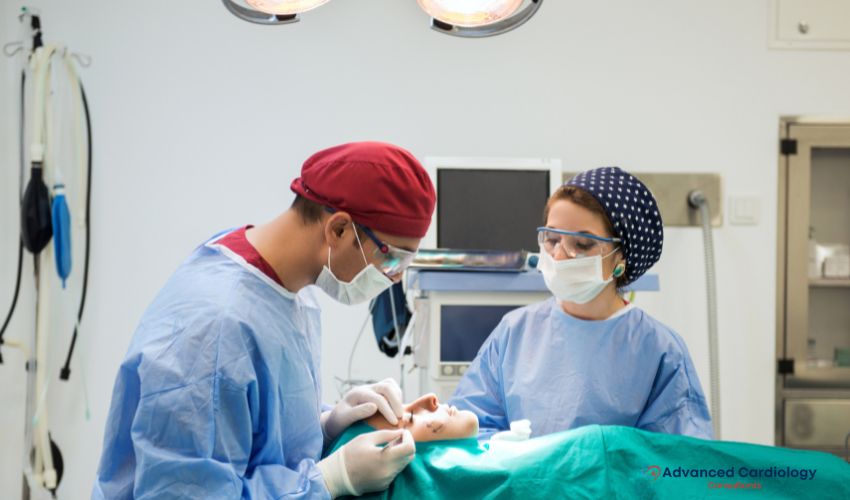
The procedure is done in a hospital catheterization laboratory, usually with sedation or anesthesia. A catheter is placed in a vein in the groin and guided to the heart. Using X-ray and ultrasound guidance, often TEE or a small ultrasound probe inside the heart, the physician places a folding closure device that sits on both sides of the opening. Over the following months, heart tissue grows over the device. The procedure often takes about an hour, and many people go home the same day or the next day.
Possible risks include bleeding or bruising at the groin, a new irregular heart rhythm such as atrial fibrillation, device problems, and, rarely, injury to the heart, a clot on the device, stroke, or the need for surgery. Your care team reviews your individual risks with you.
Recovery varies. Many people resume light activity within a few days, with limits on heavy lifting for a short period. You will usually take an antiplatelet medicine for a period after closure, and you may be asked to take antibiotics before certain dental procedures for a time. A follow-up echocardiogram checks the device position and seal. Dr. Khalid follows your care at the Katy or Sugar Land office.
Can a PFO close on its own in adulthood? It is unlikely. A PFO that is present in adulthood usually stays, but most cause no problems.
Will I feel the device? No. A few people notice palpitations in the first weeks; report these to your care team.
Can I stop my blood thinner after closure? Not on your own. The type and length of medicine after closure is set by your care team based on your history.
Is a PFO the same as a hole in the heart from birth that needs surgery? No. A PFO is a flap-like opening, different from larger defects such as an atrial septal defect, which are evaluated and treated differently.
Call 911 for stroke signs (face drooping, arm weakness, speech difficulty), chest discomfort lasting more than a few minutes or coming and going, or sudden shortness of breath, even if symptoms go away.
Most major insurance plans are accepted, and coverage is verified individually. PFO closure generally requires prior authorization, and hospital charges are billed separately. Contact our office or your plan to confirm your coverage.

Whether or not you have closure, your care plan may include:
Sources: American Stroke Association: Stroke Symptoms · MedlinePlus: Stroke · NHLBI: Heart Tests · NHLBI: Cardiac Catheterization
Please print out your paperwork and bring it to your appointment at Advanced Cardiology. If your insurance requires authorization, please be sure to have that information sent to our office or bring it with you to your appointment, along with any medical records you may have. Please also make sure to bring your insurance cards, photo ID, and medication list.
Thank you, and we look forward to meeting you! Contact us today with any questions.
Most insurance plans accepted
(713) 258-6111
Katy & Sugar Land Cardiologist
# Cooperative & professional staff. Dr. Khalid is highly competent & experienced. Very kind & friendly too.
# He’s A Very Caring & Concerned Doctor. He Asks Important Questions, He Allows Me To Ask Questions & Fully Answers To My Satisfaction. He Diagnosis & Does Whatever It Takes To Fix My Health Issues. He’s A Wonderful Doctor…& Most Of All, I Trust Him & His Staff.
Read More…..
Katy & Sugar Land Cardiologist
Advanced Cardiology welcomes new patients at its offices in Katy and Sugar Land. Call our office or send an appointment request, and our staff will follow up.
Most major insurance plans accepted; coverage is verified individually.
For possible heart attack or stroke symptoms, call 911.
Need Consultation / Appointment