
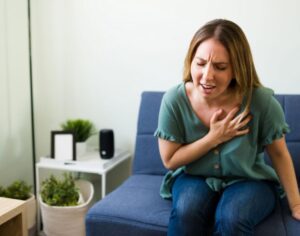
When Is Shortness of Breath an Emergency?
Shortness of breath is an emergency when sudden or severe, or with chest pain, fainting or blue lips. Learn heart and lung causes and when to call 911.
Cardiologist Serving Katy, Sugar Land, Greater Houston
Event monitor testing helps your cardiologist catch irregular heartbeats that come and go. You wear a small recorder for several weeks, and it saves your heart rhythm when you have symptoms or when it detects certain rhythm changes.
Dr. Khalid reviews your symptoms, history and test results himself
Visits in Katy and Sugar Land
Catheter and device procedures at an affiliated hospital
Office follow-up on medicines and risk factors
An event monitor is a small, wearable heart rhythm recorder used for several weeks, often up to about 30 days. Unlike a Holter monitor, which saves every heartbeat for a day or two, an event monitor is designed to save the stretches of rhythm that matter most: when you press a button because you feel symptoms and, on many models, when the device automatically detects an unusually fast, slow or irregular rhythm. This makes it useful for symptoms that happen only every few days or weeks and are easy to miss on a standard EKG.
Advanced Cardiology sees patients at our Katy and Sugar Land offices, including patients from Richmond and nearby communities. Event monitor testing is performed or arranged by our office.
Your recordings are reviewed by our board-certified cardiologist, Dr. Adnan Khalid, who interprets them together with your symptoms, history and other test results to guide your care.

Adnan Khalid, MD, Cardiologist
Adnan Khalid, MD, specializes in treating coronary artery disease, peripheral artery disease, heart failure, hypertension, arrhythmias, and hyperlipidemia. He has over 10 years of experience in the field of cardiovascular medicine.
Dr. Khalid graduated from his medical school among the top 10 out of 250 medical students in his class. He is fellowship trained in cardiovascular diseases, interventional cardiology, advanced heart failure, and transplant cardiology. He is focused on providing personalized and compassionate care. Dr. Khalid believes in spending time with his patients and listening to their needs and is committed to offering excellent care.
Dr. Khalid is an avid reader. He is eager to learn new things, and he likes to work out and spend time with his family. When off from work, he likes to travel and spend time in nature along with family and friends. He is married with three children. Dr. Adnan Khalid is now seeing patients at our Katy and Sugar Land clinics—accepting new patients from Houston and surrounding areas.
American Board of Internal Medicine
Interventional Cardiology
Your cardiologist may recommend an event monitor when symptoms are intermittent and hard to catch with a standard EKG or a short Holter recording. Because the monitor is worn for weeks, it has a better chance of recording your heart rhythm at the moment symptoms occur, which helps confirm or rule out a heart rhythm problem.
Irregular Heartbeat or Palpitations
Why it matters: Could be caused by premature beats, atrial fibrillation (AFib) or supraventricular tachycardia (SVT).
How an event monitor helps: Records the rhythm during palpitations so the cause can be identified. Learn more about palpitations care in Sugar Land and Katy.
Dizziness, Near-Fainting or Fatigue Without a Clear Reason
Why it matters: These symptoms are sometimes linked to a heart rate that is too slow, too fast or pausing, although many non-cardiac causes exist.
How an event monitor helps: Shows whether a rhythm change happens at the same time as your symptoms. See our page on dizziness and fainting evaluation.
Shortness of Breath
Why it matters: Breathlessness can be related to heart rhythm problems, heart failure, lung conditions or other causes.
How an event monitor helps: Checks whether a rhythm problem plays a role; other tests are used to look at heart pumping and the lungs.
Brief, Recurring Chest Discomfort
Why it matters: Chest discomfort needs careful evaluation because it may be related to narrowed heart arteries (angina) rather than a rhythm problem.
How an event monitor helps: It can show whether a rhythm change occurs during discomfort, but it cannot detect blocked arteries. Read more about chest pain evaluation.
Call 911 for possible emergency symptoms. Chest discomfort that lasts more than a few minutes or goes away and comes back; shortness of breath; discomfort in the arms, back, neck, jaw or stomach; or a cold sweat, nausea or lightheadedness may be signs of a heart attack. Sudden face drooping, arm weakness or speech difficulty may be signs of a stroke. Call 911 even if symptoms go away—do not wait for a monitor appointment.
For symptoms that come and go but are not an emergency, call our office to ask about current appointment availability at our Katy or Sugar Land office.
Intermittent arrhythmias:
Event monitors can capture irregular, fast or slow heartbeats such as atrial fibrillation (AFib), supraventricular tachycardia (SVT) or bradycardia. This information helps guide treatment, medication adjustments and, for some patients, decisions about a device.
Occasional heart block or pauses:
The monitor can detect delays or pauses in the heart’s electrical signals that may not appear on a standard EKG but can cause dizziness or fainting.
Symptom-rhythm correlation:
Your recordings show whether symptoms like palpitations or lightheadedness line up with an actual rhythm change. A normal rhythm during symptoms is also useful information, because it suggests looking for other causes.
Effect of heart rhythm medicines:
Monitoring can show how well medications are controlling a known arrhythmia over time.
An event monitor records electrical rhythm only. It does not show blockages in the heart arteries, the strength of the heart muscle or how the valves work. It may also miss rhythms that cause no symptoms if your device saves only patient-triggered recordings, and if you have no symptoms during the monitoring period, the result may be inconclusive. Your cardiologist will explain what your results do and do not tell you.
Based on your findings, your cardiologist may recommend further testing, lifestyle changes, medication changes or other treatment.
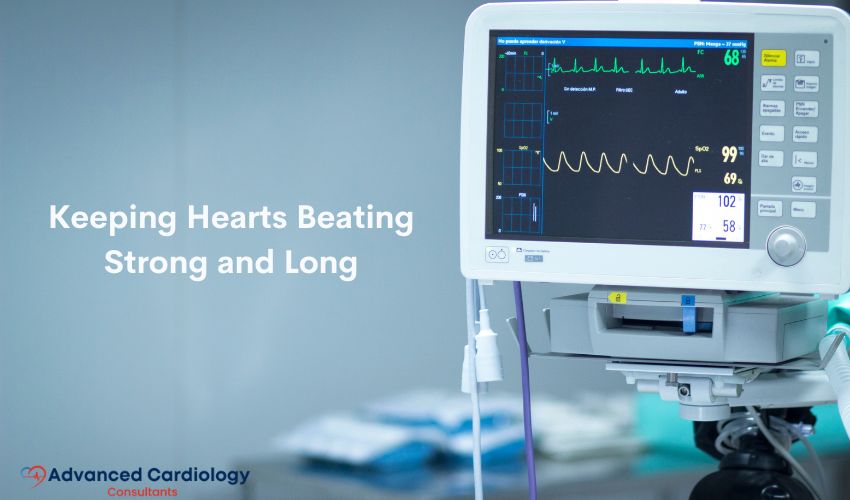
If you have unexplained or occasional symptoms, an event monitor can provide useful insight. Your cardiologist may suggest one if:
You have intermittent symptoms such as palpitations, dizziness or near-fainting that have not shown up on a standard EKG
An arrhythmia is suspected that occurs only now and then or only during certain activities
You are being checked to see how well heart rhythm medicines are working
Longer monitoring is needed to identify triggers and patterns of irregular heartbeats
An event monitor lets you go about most daily activities while it waits for symptoms. It cannot guarantee that every episode will be recorded, so follow the wearing and recording instructions you are given.
Advanced Cardiology accepts most major insurance plans, and coverage is verified individually. Coverage for event monitoring usually depends on medical necessity and your plan’s rules, so please confirm with our clinic or your insurance provider before your appointment.
Whether you have intermittent palpitations or unexplained dizziness, event monitor results help Dr. Khalid make decisions such as:
Starting, stopping or adjusting heart medicines
Ordering further tests, such as an echocardiogram or a different type of monitor
Prompt treatment planning if a serious rhythm problem is found
Lifestyle and treatment plans tailored to your needs, or reassurance when no rhythm problem is found
Our team shows you how to place the electrodes or patch, how to record a symptom and how the device sends recordings. Most people wear the monitor during normal daily activities. Keep a short diary of what you felt and what you were doing when you pressed the button. Ask how to bathe or shower with your specific device, and do not stop or change any medicines unless your care team gives you specific instructions.
Important: An event monitor is not an emergency alert system. If you have signs of a possible heart attack or stroke while wearing it, call 911 right away.
Event monitoring is non-invasive. The most common issue is skin irritation or itching under the electrodes or patch. Let our office know if your skin becomes very red or sore.
When monitoring ends, the recordings are compiled into a report that Dr. Khalid reviews. He will go over the results with you, usually at a follow-up visit, and explain any next steps. Timing depends on how long you wear the monitor and when the report is completed.
If you had no symptoms during the monitoring period, your cardiologist may discuss repeating the test, a longer-term option such as an implantable loop recorder, or other evaluations, depending on your situation.
Sources: NHLBI: Heart Tests; NHLBI: Arrhythmias; MedlinePlus: Arrhythmia; American Heart Association: Warning Signs of a Heart Attack.
Please print out your paperwork and bring it to your appointment at Advanced Cardiology. If your insurance requires authorization, please be sure to have that information sent to our office or bring it with you to your appointment, along with any medical records you may have. Please also make sure to bring your insurance cards, photo ID, and medication list.
Thank you, and we look forward to meeting you! Contact us with any questions.
Most insurance plans accepted
(713) 258-6111
Katy & Sugar Land Cardiologist
# Cooperative & professional staff. Dr. Khalid is highly competent & experienced. Very kind & friendly too.
# He’s A Very Caring & Concerned Doctor. He Asks Important Questions, He Allows Me To Ask Questions & Fully Answers To My Satisfaction. He Diagnosis & Does Whatever It Takes To Fix My Health Issues. He’s A Wonderful Doctor…& Most Of All, I Trust Him & His Staff.
Read More…..
Shortness of breath is an emergency when sudden or severe, or with chest pain, fainting or blue lips. Learn heart and lung causes and when to call 911.
Feeling dizzy and weak suddenly can be low blood pressure, dehydration or low blood sugar, or a heart rhythm problem or stroke. Learn when to call 911.
Dehydration can cause chest discomfort, dizziness and a racing heart, and can unmask heart disease. Learn the warning signs, who is at risk and when to get help.
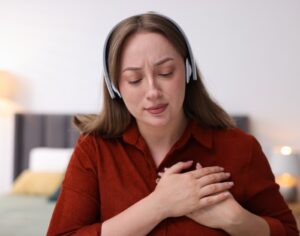
Heart attack symptoms in women can include breathlessness, nausea, fatigue and back or jaw pain, even without chest pain. Learn the signs and when to call 911.
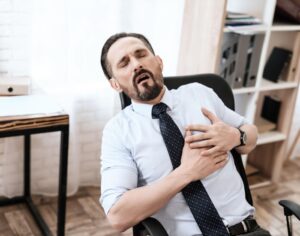
Signs of a silent heart attack can feel like indigestion, fatigue or mild breathlessness. Learn who is at risk, how it is found on tests and what to do next.
Acid reflux can feel like chest pain or even a heart attack. Learn how reflux differs from heart pain, red flags that need 911, and how doctors tell them apart.
Katy & Sugar Land Cardiologist
Advanced Cardiology welcomes new patients at its offices in Katy and Sugar Land. Call our office or send an appointment request, and our staff will follow up.
Most major insurance plans accepted; coverage is verified individually.
For possible heart attack or stroke symptoms, call 911.