
2002 Medical SchoolNishtar Medical College
2008 ResidencyUniversity of Missouri – Kansas City
2012 FellowshipUniversity of Missouri – Kansas City
Cardiologist Serving Katy, Sugar Land, Greater Houston
Expert Care for Every Beat.
Looking for a cardiologist in the Houston area? Advanced Cardiology does not have an office inside the city of Houston. Instead, patients from across Greater Houston see cardiologist Adnan Khalid, MD, at our two offices in Katy and Sugar Land. Dr. Khalid has over a decade of experience diagnosing, treating and preventing diseases of the heart and blood vessels. Call or request an appointment at the office that is more convenient for you.
Dr. Khalid reviews your symptoms, history and test results himself
Visits in Katy and Sugar Land
Catheter and device procedures at an affiliated hospital
Office follow-up on medicines and risk factors
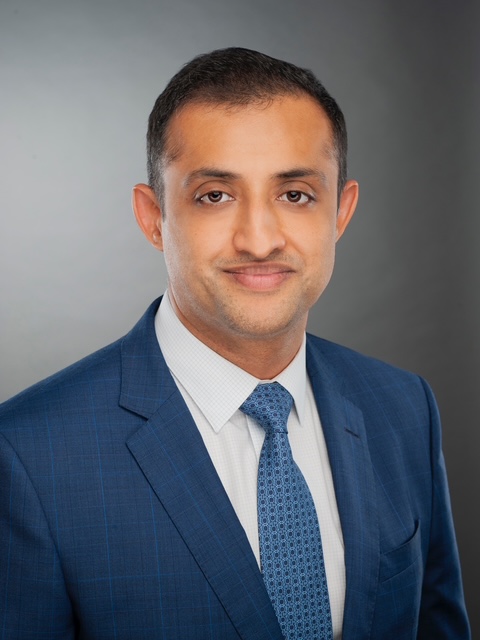
Adnan Khalid, MD, treats coronary artery disease, peripheral artery disease, heart failure, high blood pressure, heart rhythm disorders and high cholesterol. He has over 10 years of experience in cardiovascular medicine.
Dr. Khalid earned his medical degree at Nishtar Medical College and completed his residency and fellowship training at the University of Missouri–Kansas City. He is fellowship-trained in cardiovascular disease, interventional cardiology, advanced heart failure and transplant cardiology. Memorial Hermann lists him as affiliated with Memorial Hermann Katy, Sugar Land and Southwest hospitals, and he speaks English, Arabic, Hindi and Urdu.
Dr. Khalid focuses on personalized, compassionate care, spending time with patients and listening to their needs. He is an avid reader who is eager to learn new things, and he likes to work out and spend time with his family. When off from work, he likes to travel and spend time in nature with family and friends. He is married with three children. Read Dr. Khalid’s full profile.
Adnan Khalid, MD, Cardiologist
American Board of Internal Medicine
Interventional Cardiology
Cardiology Care for Greater Houston. Your Heart, Our Priority
A cardiologist is a physician who specializes in diagnosing and treating conditions of the heart and blood vessels. Cardiologists help prevent heart disease, find the cause of symptoms and provide ongoing care for people with established heart conditions. Your primary care physician may refer you, or you may decide to schedule a visit yourself if your insurance allows it.
Reasons to see a cardiologist include recurring chest discomfort, shortness of breath with activity, palpitations, dizziness or fainting, leg swelling, hard-to-control blood pressure or cholesterol, an abnormal EKG or stress test, and a strong family history of heart disease. If you are unsure whether you need a cardiologist, your primary care physician can help you decide, or you can call our office to ask.
Do not wait for an appointment if symptoms could be a heart attack or stroke. Call 911 for chest discomfort that lasts more than a few minutes or goes away and comes back; shortness of breath; discomfort in the arms, back, neck, jaw or stomach; a cold sweat, nausea or lightheadedness; or stroke signs such as face drooping, arm weakness or trouble speaking, even if they go away.

At Advanced Cardiology, Dr. Khalid cares for patients with everything from heart disease prevention to conditions that may need advanced, hospital-based procedures. He evaluates and treats a wide range of heart conditions, including:
Coronary artery disease: The arteries that supply blood to the heart become narrowed or blocked by plaque, reducing blood flow to the heart muscle.
Heart rhythm disorders: Abnormal heart rhythms, also called arrhythmias, can make the heart beat too fast, too slow or irregularly. Atrial fibrillation is one common example.
Heart valve disease: One or more heart valves do not open or close properly, which can strain the heart and affect blood flow to the rest of the body.
Heart failure: The heart cannot pump or fill well enough to meet the body’s needs. Ongoing care from a cardiologist is important; sudden or worsening shortness of breath can be an emergency. Learn more about heart failure care.
High blood pressure: Blood pressure in the arteries stays elevated, raising the risk of heart disease, stroke and kidney problems, often without symptoms.
Diagnosis
Diagnosis starts with a conversation. Dr. Khalid reviews your symptoms, medical and family history, lifestyle habits, medications and any prior test results, then performs a physical examination, including vital signs. If a heart problem is suspected, he may recommend one or more tests. Each test answers a different question, and none of them shows everything:
Electrocardiogram (ECG or EKG): Records the heart’s electrical activity for a few seconds to look for rhythm problems and some signs of past heart damage. It can be done during an office visit, but a normal EKG cannot rule out every heart condition.
Echocardiogram: Uses sound waves to create moving images of the heart’s chambers, valves and pumping function. It shows structure and function but does not directly show the coronary arteries.
Heart rhythm monitoring: Holter, event and mobile telemetry monitors record your rhythm for days or weeks to capture symptoms that come and go.
Stress Test: Measures how the heart responds to exertion, usually on a treadmill or stationary bike, with monitoring of heart rate, blood pressure and EKG. Some stress tests add ultrasound or nuclear imaging; not every stress test uses a radioactive tracer.
Cardiac Catheterization: A hospital-based procedure in which a thin tube is guided through an artery, often at the wrist or groin, to the heart to take detailed pictures of the coronary arteries and, when needed, treat blockages.
Cardiac CT or Cardiac MRI: Advanced imaging that provides detailed pictures of the heart and its blood vessels.
EKGs are done in the office; other tests are performed or arranged by our office, and your care team will give you preparation instructions. See our full list of tests and treatments.
Treatment
At our Katy and Sugar Land offices, we focus on compassionate, high-quality care tailored to each patient’s cardiovascular needs. Once a heart condition has been diagnosed, Dr. Khalid develops a treatment plan based on the specific condition, your other health conditions and your preferences. Treatment may include:
Making Lifestyle Changes: Many cardiac conditions can be controlled, or even prevented, with healthier habits: a heart-healthy diet, regular physical activity, quitting smoking and managing stress.
Using Medication: Many medications can help manage heart conditions, including beta-blockers, statins, calcium channel blockers, blood thinners and ACE inhibitors. Do not start, stop or change a heart medicine on your own; follow the specific instructions from your care team.
Undergoing Medical Procedures or Surgeries: Some conditions need a procedure, such as angioplasty and stent placement, ablation, pacemaker or defibrillator implantation, valve repair or replacement, or bypass surgery. These are performed in a hospital. Dr. Khalid performs catheter-based procedures at an affiliated hospital, and when another specialist or surgeon is needed, he coordinates the referral. Choosing between a stent and bypass surgery depends on much more than the number of narrowed arteries.
Participating in Cardiac Rehabilitation: A supervised program that combines exercise training, education about heart-healthy habits and stress management to help people return to an active life after a heart event or procedure.
Throughout this process, Dr. Khalid remains a close partner, working with your primary care physician and other providers when needed. Treatment plans are reviewed and adjusted at follow-up visits, and patients receive education to help them manage their condition and build habits that benefit heart health. How often you need follow-up varies: some patients need a single consultation, while others with chronic heart conditions are seen regularly over many years.
Why Our Clinic
1. Patient-Centered Approach: You are a partner in your care. Dr. Khalid takes time to understand your concerns, answer your questions and involve you in important decisions about testing and treatment.
2. Thoughtful Use of Testing: Tests are chosen to answer specific questions about your heart, not ordered by routine. Dr. Khalid explains what each test can and cannot show and reviews the results with you.
3. Two Offices for Greater Houston Patients: Patients from across the Houston area visit our Katy office at 410 W Grand Pkwy S, Suite 4D, Katy, TX 77494, or our Sugar Land office at 7102 Tarrington Ave, Suite 505, Sugar Land, TX 77479. Both offices use one phone number, (713) 258-6111. Office hours may differ, so please call to confirm office hours for each location. Visit the Katy office page or the Sugar Land office page for details and directions.
4. New Patients Welcome: Advanced Cardiology accepts new patients, and most major insurance plans are accepted, with coverage verified individually. Request a visit through our secure appointment request form. If you would like to know whether a video visit is appropriate, ask our office. Please call ahead rather than walking in; our offices are not emergency departments.
Do you have an office in Houston?
No. Our offices are in Katy and Sugar Land. Many patients who live or work in Houston choose whichever of these two offices is easier for them to reach.
Can my Houston primary care doctor refer me?
Yes. Referrals can come from any physician, and some insurance plans require one. Ask your doctor’s office to send your referral and recent records, and Dr. Khalid can share his findings with your doctor.
Where would a procedure take place?
Office visits and EKGs take place at our Katy or Sugar Land office. Hospital-based procedures, such as cardiac catheterization, are scheduled at an affiliated hospital. Memorial Hermann lists Dr. Khalid as affiliated with its Katy, Sugar Land and Southwest hospitals, and our office will explain where your procedure will be done.
I already have a cardiologist. Can I get a second opinion?
Yes. Bring your prior test results, imaging reports and medication list. Learn more about a cardiology second opinion.
What if I have chest pain right now?
Call 911 right away. Do not drive yourself to our office or wait for a callback.
Sources: American Heart Association: Warning signs of a heart attack · American Stroke Association: Stroke symptoms · NHLBI: Heart tests · MedlinePlus: Electrocardiogram
You can complete your registration forms online through the patient portal, or print them and bring them to your appointment. If your insurance requires a referral or authorization, please have that information sent to our office or bring it with you, along with any medical records you have. Please also bring your insurance cards, photo ID and a current medication list.
Thank you, and we look forward to meeting you! Contact us with any questions.
Most insurance plans accepted
(713) 258-6111
Katy & Sugar Land Cardiologist
Advanced Cardiology welcomes new patients at its offices in Katy and Sugar Land. Call our office or send an appointment request, and our staff will follow up.
Most major insurance plans accepted; coverage is verified individually.
For possible heart attack or stroke symptoms, call 911.